

6.4 SEDIMENTARY MODELS, INCREMENTS, AND CYCLES
279
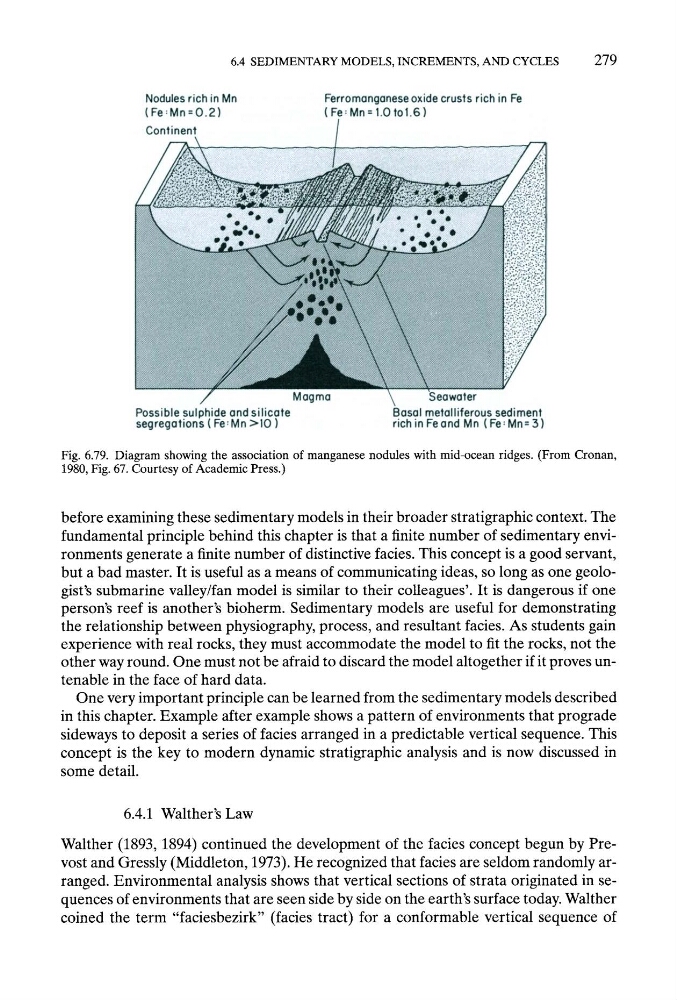
Fig. 6.79. Diagram showing the association of manganese nodules with mid-ocean ridges. (From Cronan,
1980, Fig. 67. Courtesy of Academic Press.)
before examining these sedimentary models in their broader stratigraphic context. The
fundamental principle behind this chapter is that a finite number of sedimentary environments generate a finite number of distinctive facies. This concept is a good servant,
but a bad master. It is useful as a means of communicating ideas, so long as one geologist's submarine valley/fan model is similar to their colleagues'. It is dangerous if one
person's reef is another's bioherm. Sedimentary models are useful for demonstrating
the relationship between physiography, process, and resultant facies. As students gain
experience with real rocks, they must accommodate the model to fit the rocks, not the
other way round. One must not be afraid to discard the model altogether if it proves untenable in the face of hard data.
One very important principle can be learned from the sedimentary models described
in this chapter. Example after example shows a pattern of environments that prograde
sideways to deposit a series of facies arranged in a predictable vertical sequence. This
concept is the key to modern dynamic stratigraphic analysis and is now discussed in
some detail.
6.4.1 Walther's Law
Walther (1893, 1894) continued the development of the facies concept begun by Prevost and Gressly (Middleton, 1973). He recognized that facies are seldom randomly arranged. Environmental analysis shows that vertical sections of strata originated in sequences of environments that are seen side by side on the earth's surface today. Walther
coined the term "faciesbezirk" (facies tract) for a conformable vertical sequence of
279
Fig. 6.79. Diagram showing the association of manganese nodules with mid-ocean ridges. (From Cronan,
1980, Fig. 67. Courtesy of Academic Press.)
before examining these sedimentary models in their broader stratigraphic context. The
fundamental principle behind this chapter is that a finite number of sedimentary environments generate a finite number of distinctive facies. This concept is a good servant,
but a bad master. It is useful as a means of communicating ideas, so long as one geologist's submarine valley/fan model is similar to their colleagues'. It is dangerous if one
person's reef is another's bioherm. Sedimentary models are useful for demonstrating
the relationship between physiography, process, and resultant facies. As students gain
experience with real rocks, they must accommodate the model to fit the rocks, not the
other way round. One must not be afraid to discard the model altogether if it proves untenable in the face of hard data.
One very important principle can be learned from the sedimentary models described
in this chapter. Example after example shows a pattern of environments that prograde
sideways to deposit a series of facies arranged in a predictable vertical sequence. This
concept is the key to modern dynamic stratigraphic analysis and is now discussed in
some detail.
6.4.1 Walther's Law
Walther (1893, 1894) continued the development of the facies concept begun by Prevost and Gressly (Middleton, 1973). He recognized that facies are seldom randomly arranged. Environmental analysis shows that vertical sections of strata originated in sequences of environments that are seen side by side on the earth's surface today. Walther
coined the term "faciesbezirk" (facies tract) for a conformable vertical sequence of