

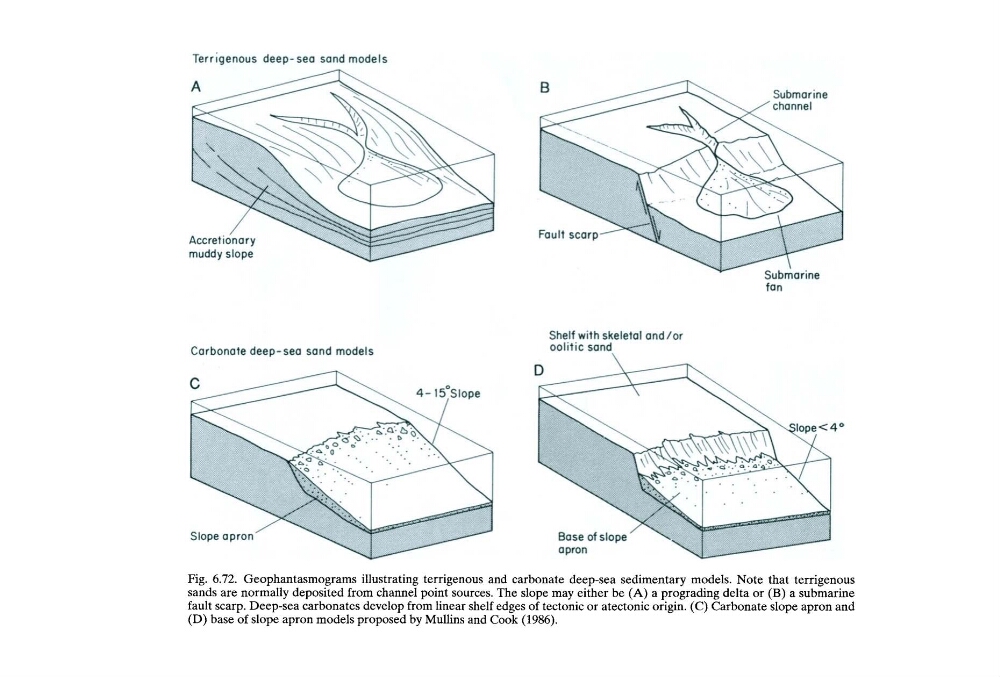
Fig. 6.72. Geophantasmograms illustrating terrigenous and carbonate deep-sea sedimentary models. Note that terrigenous
sands are normally deposited from channel point sources. The slope may either be (A) a prograding delta or (B) a submarine
fault scarp. Deep-sea carbonates develop from linear shelf edges of tectonic or atectonic origin. (C) Carbonate slope apron and
(D) base of slope apron models proposed by Mullins and Cook (1986).
sands are normally deposited from channel point sources. The slope may either be (A) a prograding delta or (B) a submarine
fault scarp. Deep-sea carbonates develop from linear shelf edges of tectonic or atectonic origin. (C) Carbonate slope apron and
(D) base of slope apron models proposed by Mullins and Cook (1986).