

6.3 SEDIMENTARY MODELS
211
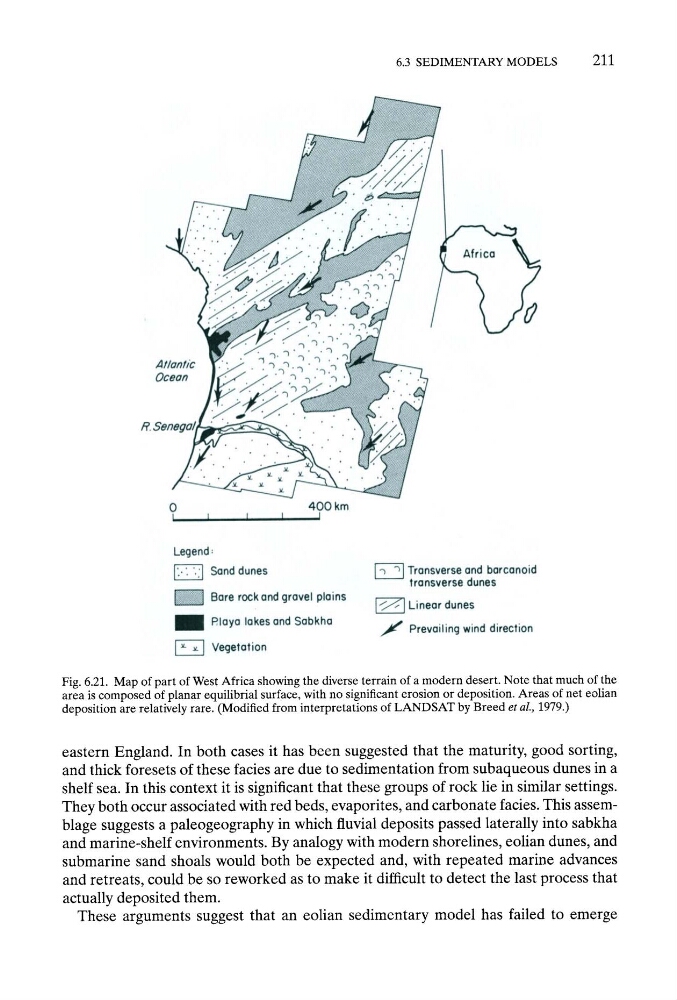
Fig. 6.21. Map of part of West Africa showing the diverse terrain of a modern desert. Note that much of the
area is composed of planar equilibrial surface, with no significant erosion or deposition. Areas of net eolian
deposition are relatively rare. (Modified from interpretations of LANDSAT by Breed et al., 1979.)
eastern England. In both cases it has been suggested that the maturity, good sorting,
and thick foresets of these facies are due to sedimentation from subaqueous dunes in a
shelf sea. In this context it is significant that these groups of rock lie in similar settings.
They both occur associated with red beds, evaporites, and carbonate facies. This assemblage suggests a paleogeography in which fluvial deposits passed laterally into sabkha
and marine-shelf environments. By analogy with modern shorelines, eolian dunes, and
submarine sand shoals would both be expected and, with repeated marine advances
and retreats, could be so reworked as to make it difficult to detect the last process that
actually deposited them.
These arguments suggest that an eolian sedimentary model has failed to emerge
211
Fig. 6.21. Map of part of West Africa showing the diverse terrain of a modern desert. Note that much of the
area is composed of planar equilibrial surface, with no significant erosion or deposition. Areas of net eolian
deposition are relatively rare. (Modified from interpretations of LANDSAT by Breed et al., 1979.)
eastern England. In both cases it has been suggested that the maturity, good sorting,
and thick foresets of these facies are due to sedimentation from subaqueous dunes in a
shelf sea. In this context it is significant that these groups of rock lie in similar settings.
They both occur associated with red beds, evaporites, and carbonate facies. This assemblage suggests a paleogeography in which fluvial deposits passed laterally into sabkha
and marine-shelf environments. By analogy with modern shorelines, eolian dunes, and
submarine sand shoals would both be expected and, with repeated marine advances
and retreats, could be so reworked as to make it difficult to detect the last process that
actually deposited them.
These arguments suggest that an eolian sedimentary model has failed to emerge