

208
6 DEPOSITIONAL SYSTEMS
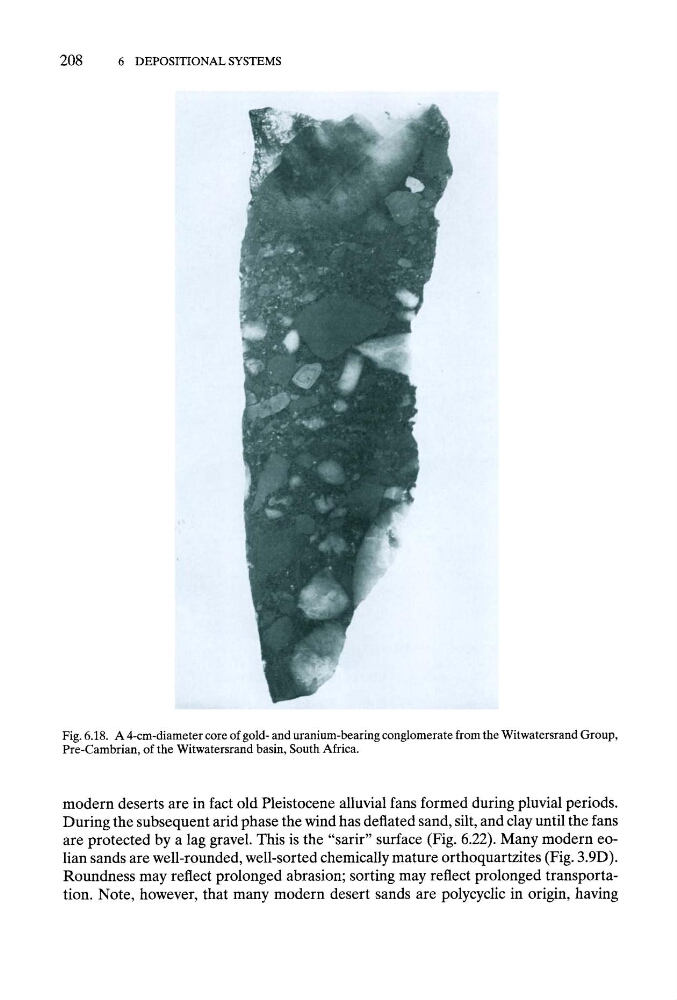
Fig. 6.18. A 4-cm-diameter core of gold- and uranium-bearing conglomerate from the Witwatersrand Group,
Pre-Cambrian, of the Witwatersrand basin, South Africa.
modern deserts are in fact old Pleistocene alluvial fans formed during pluvial periods.
During the subsequent arid phase the wind has deflated sand, silt, and clay until the fans
are protected by a lag gravel. This is the "sarir" surface (Fig. 6.22). Many modern eolian sands are well-rounded, well-sorted chemically mature orthoquartzites (Fig. 3.9D).
Roundness may reflect prolonged abrasion; sorting may reflect prolonged transportation. Note, however, that many modern desert sands are polycyclic in origin, having
6 DEPOSITIONAL SYSTEMS
Fig. 6.18. A 4-cm-diameter core of gold- and uranium-bearing conglomerate from the Witwatersrand Group,
Pre-Cambrian, of the Witwatersrand basin, South Africa.
modern deserts are in fact old Pleistocene alluvial fans formed during pluvial periods.
During the subsequent arid phase the wind has deflated sand, silt, and clay until the fans
are protected by a lag gravel. This is the "sarir" surface (Fig. 6.22). Many modern eolian sands are well-rounded, well-sorted chemically mature orthoquartzites (Fig. 3.9D).
Roundness may reflect prolonged abrasion; sorting may reflect prolonged transportation. Note, however, that many modern desert sands are polycyclic in origin, having