

192
6 DEPOSITIONAL SYSTEMS
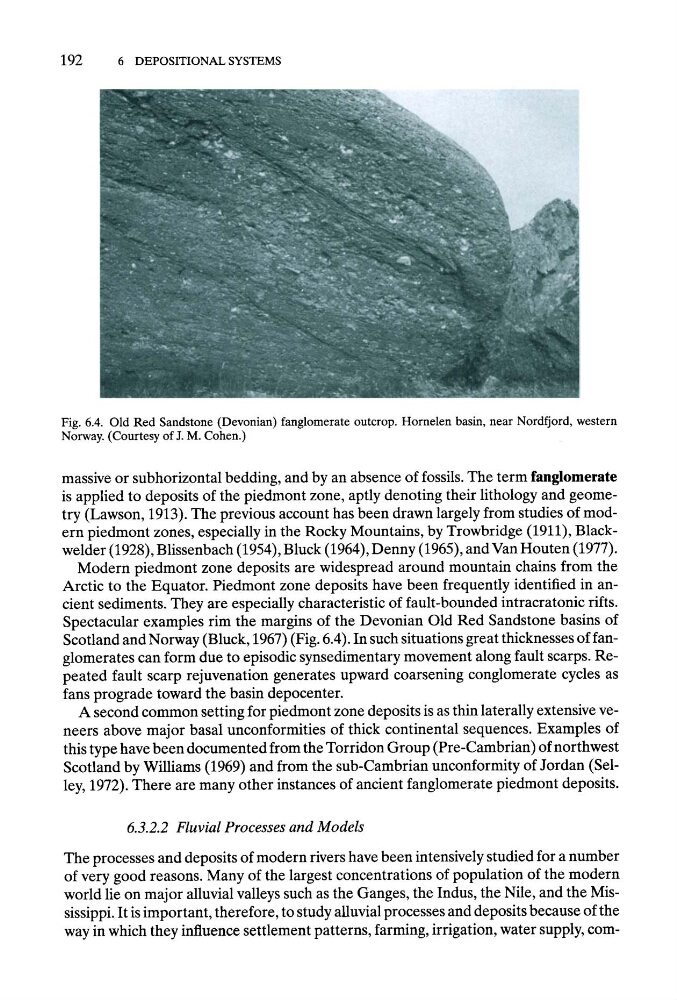
Fig. 6.4. Old Red Sandstone (Devonian) fanglomerate outcrop. Hornelen basin, near Nordfjord, western
Norway. (Courtesy of J. M. Cohen.)
massive or subhorizontal bedding, and by an absence of fossils. The term fanglomerate
is applied to deposits of the piedmont zone, aptly denoting their lithology and geometry (Lawson, 1913). The previous account has been drawn largely from studies of modern piedmont zones, especially in the Rocky Mountains, by Trowbridge (1911), Blackwelder (1928), Blissenbach (1954), Bluck (1964), Denny (1965), and Van Houten (1977).
Modern piedmont zone deposits are widespread around mountain chains from the
Arctic to the Equator. Piedmont zone deposits have been frequently identified in ancient sediments. They are especially characteristic of fault-bounded intracratonic rifts.
Spectacular examples rim the margins of the Devonian Old Red Sandstone basins of
Scotland and Norway (Bluck, 1967) (Fig. 6.4). In such situations great thicknesses of fanglomerates can form due to episodic synsedimentary movement along fault scarps. Repeated fault scarp rejuvenation generates upward coarsening conglomerate cycles as
fans prograde toward the basin depocenter.
A second common setting for piedmont zone deposits is as thin laterally extensive veneers above major basal unconformities of thick continental sequences. Examples of
this type have been documented from the Torridon Group (Pre-Cambrian) of northwest
Scotland by Williams (1969) and from the sub-Cambrian unconformity of Jordan (Selley, 1972). There are many other instances of ancient fanglomerate piedmont deposits.
6.3.2.2 Fluvial Processes and Models
The processes and deposits of modern rivers have been intensively studied for a number
of very good reasons. Many of the largest concentrations of population of the modern
world lie on major alluvial valleys such as the Ganges, the Indus, the Nile, and the Mississippi. It is important, therefore, to study alluvial processes and deposits because of the
way in which they influence settlement patterns, farming, irrigation, water supply, com-
6 DEPOSITIONAL SYSTEMS
Fig. 6.4. Old Red Sandstone (Devonian) fanglomerate outcrop. Hornelen basin, near Nordfjord, western
Norway. (Courtesy of J. M. Cohen.)
massive or subhorizontal bedding, and by an absence of fossils. The term fanglomerate
is applied to deposits of the piedmont zone, aptly denoting their lithology and geometry (Lawson, 1913). The previous account has been drawn largely from studies of modern piedmont zones, especially in the Rocky Mountains, by Trowbridge (1911), Blackwelder (1928), Blissenbach (1954), Bluck (1964), Denny (1965), and Van Houten (1977).
Modern piedmont zone deposits are widespread around mountain chains from the
Arctic to the Equator. Piedmont zone deposits have been frequently identified in ancient sediments. They are especially characteristic of fault-bounded intracratonic rifts.
Spectacular examples rim the margins of the Devonian Old Red Sandstone basins of
Scotland and Norway (Bluck, 1967) (Fig. 6.4). In such situations great thicknesses of fanglomerates can form due to episodic synsedimentary movement along fault scarps. Repeated fault scarp rejuvenation generates upward coarsening conglomerate cycles as
fans prograde toward the basin depocenter.
A second common setting for piedmont zone deposits is as thin laterally extensive veneers above major basal unconformities of thick continental sequences. Examples of
this type have been documented from the Torridon Group (Pre-Cambrian) of northwest
Scotland by Williams (1969) and from the sub-Cambrian unconformity of Jordan (Selley, 1972). There are many other instances of ancient fanglomerate piedmont deposits.
6.3.2.2 Fluvial Processes and Models
The processes and deposits of modern rivers have been intensively studied for a number
of very good reasons. Many of the largest concentrations of population of the modern
world lie on major alluvial valleys such as the Ganges, the Indus, the Nile, and the Mississippi. It is important, therefore, to study alluvial processes and deposits because of the
way in which they influence settlement patterns, farming, irrigation, water supply, com-