

6.3 SEDIMENTARY MODELS
191
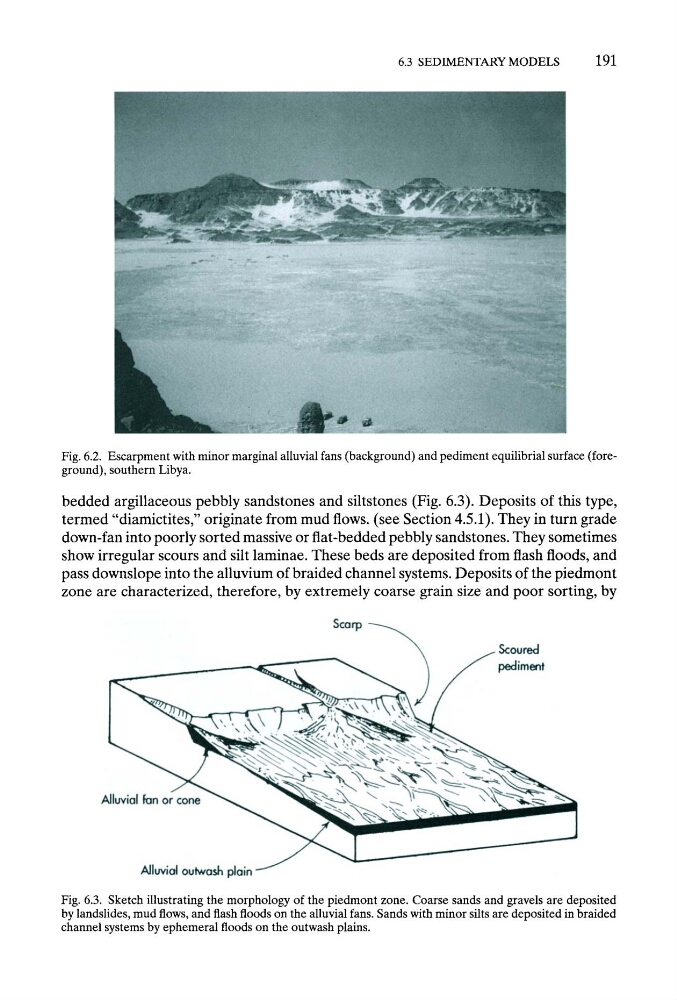
Fig. 6.2. Escarpment with minor marginal alluvial fans (background) and pediment equilibrial surface (foreground), southern Libya.
bedded argillaceous pebbly sandstones and siltstones (Fig. 6.3). Deposits of this type,
termed "diamictites," originate from mud flows. (see Section 4.5.1). They in turn grade
down-fan into poorly sorted massive or flat-bedded pebbly sandstones. They sometimes
show irregular scours and silt laminae. These beds are deposited from flash floods, and
pass downslope into the alluvium of braided channel systems. Deposits of the piedmont
zone are characterized, therefore, by extremely coarse grain size and poor sorting, by
Fig. 6.3. Sketch illustrating the morphology of the piedmont zone. Coarse sands and gravels are deposited
by landslides, mud flows, and flash floods on the alluvial fans. Sands with minor silts are deposited in braided
channel systems by ephemeral floods on the outwash plains.
191
Fig. 6.2. Escarpment with minor marginal alluvial fans (background) and pediment equilibrial surface (foreground), southern Libya.
bedded argillaceous pebbly sandstones and siltstones (Fig. 6.3). Deposits of this type,
termed "diamictites," originate from mud flows. (see Section 4.5.1). They in turn grade
down-fan into poorly sorted massive or flat-bedded pebbly sandstones. They sometimes
show irregular scours and silt laminae. These beds are deposited from flash floods, and
pass downslope into the alluvium of braided channel systems. Deposits of the piedmont
zone are characterized, therefore, by extremely coarse grain size and poor sorting, by
Fig. 6.3. Sketch illustrating the morphology of the piedmont zone. Coarse sands and gravels are deposited
by landslides, mud flows, and flash floods on the alluvial fans. Sands with minor silts are deposited in braided
channel systems by ephemeral floods on the outwash plains.