

36
was reduced to 2–5 % with added nutrients also dependent on the proportion of
plants present, but there were no mortalities (Bush and Van Auken 1989 ).
When simulated herbivory of B. curtipendula was added to a competition experiment with and without nutrients, the results were very telling (Van Auken and Bush
1989 ). Aboveground, belowground, and total dry grass mass was highest with complete nutrients (N, P, K, and S) and reduced when any one nutrient was not added,
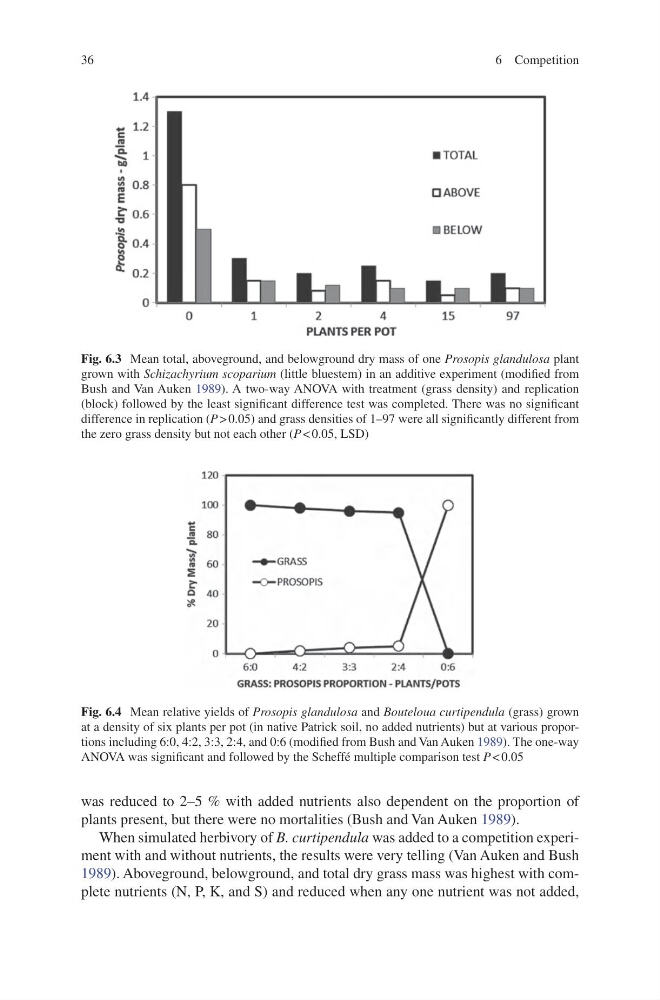
Fig. 6.3 Mean total, aboveground, and belowground dry mass of one Prosopis glandulosa plant
grown with Schizachyrium scoparium (little bluestem) in an additive experiment (modifi ed from
Bush and Van Auken 1989 ). A two-way ANOVA with treatment (grass density) and replication
(block) followed by the least signifi cant difference test was completed. There was no signifi cant
difference in replication ( P > 0.05) and grass densities of 1–97 were all signifi cantly different from
the zero grass density but not each other ( P < 0.05, LSD)
Fig. 6.4 Mean relative yields of Prosopis glandulosa and Bouteloua curtipendula (grass) grown
at a density of six plants per pot (in native Patrick soil, no added nutrients) but at various proportions including 6:0, 4:2, 3:3, 2:4, and 0:6 (modifi ed from Bush and Van Auken 1989 ). The one-way
ANOVA was signifi cant and followed by the Scheffé multiple comparison test P < 0.05
6 Competition
was reduced to 2–5 % with added nutrients also dependent on the proportion of
plants present, but there were no mortalities (Bush and Van Auken 1989 ).
When simulated herbivory of B. curtipendula was added to a competition experiment with and without nutrients, the results were very telling (Van Auken and Bush
1989 ). Aboveground, belowground, and total dry grass mass was highest with complete nutrients (N, P, K, and S) and reduced when any one nutrient was not added,
Fig. 6.3 Mean total, aboveground, and belowground dry mass of one Prosopis glandulosa plant
grown with Schizachyrium scoparium (little bluestem) in an additive experiment (modifi ed from
Bush and Van Auken 1989 ). A two-way ANOVA with treatment (grass density) and replication
(block) followed by the least signifi cant difference test was completed. There was no signifi cant
difference in replication ( P > 0.05) and grass densities of 1–97 were all signifi cantly different from
the zero grass density but not each other ( P < 0.05, LSD)
Fig. 6.4 Mean relative yields of Prosopis glandulosa and Bouteloua curtipendula (grass) grown
at a density of six plants per pot (in native Patrick soil, no added nutrients) but at various proportions including 6:0, 4:2, 3:3, 2:4, and 0:6 (modifi ed from Bush and Van Auken 1989 ). The one-way
ANOVA was signifi cant and followed by the Scheffé multiple comparison test P < 0.05
6 Competition