
 French
Permalien :
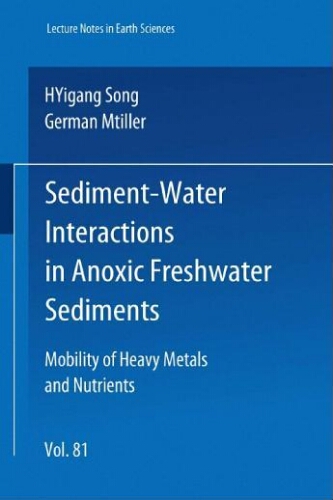
Sediment-water interactions in anoxic freshwater sediments : mobility of feavy metals and nutrients
- Date_TXT
- Berlin : Springer , 1999
- Cote
- 628.34 SON
- Auteur
- Song, Yigang, German Miller
- Type de document
- Livre
Description :
Major rivers within Germany (Rhine, Neckar, Main, Weser, and Elbe) drain densely populated and important industrial areas. The rivers had been polluted with heavy metals and organic pollutants by industrial and municipal emissions mainly before 1970 or - in the case of the Elbe - before 1990.
An important ecological problem still exists in the high heavy metal concentration of the river sediments. To assess the risk of heavy metal remobilization from sediments, pore-water and sediment samples were examined from 10 sites in these rivers. For comparison pore waters from Lake Constance were also analyzed. Further investigations were carried out on sediment profiles of the Lean River (China) draining a hinterland with one of the largest copper mines of the world, and the Oka River (with its important tributary, the Moscow River) in Russia. The distributions of Fe, Mn, Cd, Zn, Pb,
Furthermore, these reactions occur directly below the sediment water interface (between 0-20 cm), suggesting strong anoxic condition in the sediments.
Rates of N03 - reduction appear to depend on temperature, The higher, the temperature, the faster, the reaction rate. As the mineralization of organic matter is mainly biologically catalyzed, higher temperature may result in higher bacteria activities, and consequently higher degradation rate of the organic matter. In addition, the availability of labile organic matter and N03- has also an effect on the reaction rates.
During the mineralization of organic matter, Mn2+ and Fe2+ are released into the pore water as a result of the reduction of Mn and Fe oxides. Solubility calculations indicate that the pore'2ater is supersaturated in respect to rhodochrosite (MnC03) and siderite (FeC03). Mn + and Fe + seem to ~e controlled by the formation of Mn and Fe carbonate in the anoxic pore water. Mn + and Fe2+ diffuse upward due to their concentration gradients. They are reoxidized and precipitated as Mn and Fe oxides in the oxic surface layer. However, significant accumulations of particulate Mn and Fe in the surface sediments have not been found. This can be attributed to high geogenic Fe and Mn concentrations already existing in the sediments. In addition, mixing processes of the sediments by bio-turbation ancl/or re-suspension might prevent an enrichment.
As products of the mineralization of organic matter, the concentrations of NH4 + and alkalinity increase with depth. They are very different at different sites due to different intensity of organic matter decomposition. In most cases, NH4 + and alkalinity profiles can be separated into two zones: the soi- reduction zone and the CH4 fermentation zone.
P043- is released into pore water not only by the degradation of organic matter, but also by' the reduction of Fe oxides, at which P04 is adsorbed. In anoxic sediments, P04 concentrations appear to be controlled by the formation of vivianite (Fe3[P04]2 8H20). The pore water is supersaturated in respect to vivianite, suggesting the slow kinetics of vivianite precipitation.
The concentrations of Br" increase with depth. The very high positive correlations between Br", NH4+, and alkalinity reflect that bromine, originally a constituent of the organic matter in the sediments, is released as Br" during the decomposition of organic matter. Therefore, the sediments act both as sinks and sources for bromine in aquatic systems.
The high concentrations of NH4 + and P043- in the pore water result from the mineralization of organic matter. However, the flux of NH4 + and P04 - from the sediments into overlying water is low. This can be explained by the existence of an oxic surface layer. In this layer, P043- diffused from the deeper sediments can be adsorbed on the freshly formed Fe oxides, while NH4 + will be oxidized to N03-. When the oxic layer is destroyed (e.g. by flood or dredging), a release of NH4 +, P04 -, and Fe2+ from the sediments into the overlying water may occur. The spontaneous oxidation of NH4 + and Fe + can cause a severe 0-f-depletion in the overlying water, which might lead to fish kills. In addition, NH4 is toxic for fish, too.
As compared with the sup-mating water, the concentrations of the metals Cu, Pb, Zn, and Cd in the pore waters of the anoxic sediments are considerably lower. This can be explained by the formation of highly insoluble metal-sulphides. In contras