
 French

Permalien :
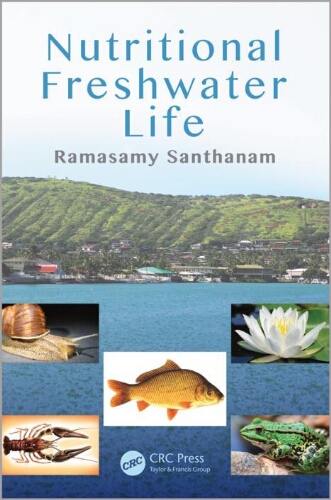
Nutritional freshwater life
- Cote
- 577.6 RAM
- Auteur
- Santhanam, Ramasamy
Description :
Today, fishing is considered to be the largest extractive use of wildlife in the world. Freshwater fisheries provide food and a livelihood for millions of the poorest people, and also contribute to the overall economic well-being by means of export commodity trade, tourism, and recreation. It is estimated that
freshwater fishes make up more than 6% of the world’s annual animal protein supplies for humans. It is the major and often only source of animal protein for low-income families. Global freshwater supports at least 100,000 species out of approximately 1.8 million—almost 6% of all described species. Inland waters
and freshwater biodiversity constitute a valuable natural resource in economic, cultural, aesthetic, scientific, and educational terms. It is always important to know the nutritional facts of freshwater flora and fauna occupying different habitats.
Although several books are available on limnology and aquatic biology, no books on the nutritional aspects of edible freshwater life are available presently. Keeping this in consideration, an attempt has now been made. This book deals with nutritional facts of different groups of edible freshwater life, viz., algae and plants, crustaceans (prawns, crayfish, and crabs), molluscs (bivalves
and gastropods), fish, and frogs, along with their characteristics, such as classification, common names, habitats, global distribution, and biological features. When published, this book will be of great use for the undergraduate and postgraduate students of disciplines such as fisheries science, aquatic biology, biotechnology, environmental science, and life sciences, besides serving as a standard reference in the libraries of colleges and universities.