

48
2. Results and Discussion
As mentioned before, when all the data is input into the software, it generates a report of all the
estimated results. This part of the manuscript details each of the chosen parameters in our study:
I i D i NS R i Ambivalence Implication Convergence Divergence 1MAO 2MAO
2.1. Direct, and indirect influences MDII
2.1.1. Matrix of Direct, and Indirect Influences (MDII)
The influence actor A has on actor B is called a direct influence. If it influences actor C, who
influences actor B, it will be called indirect influence. The MDII matrix determines the direct,
and indirect influences of order 2 between actors. The utility of this matrix is its more complete
vision of the games of competitiveness (an actor can reduce the number of choices of another by
influencing it through an intermediary actor).
The "sum" operation is used to calculate the MDII. It does not produce (in this new matrix) the
same scale of intensities adopted to evaluate direct influences in MDI. Despite this, values in
MDII are a good indicator of the importance of direct, and indirect influences actors have on
each other. Two indicators are calculated from the MDII:
- The degree of direct, and indirect influence of each actor (Ii, by summing rows).
- The degree of direct, and indirect dependence of each actor (Di, by summing columns).
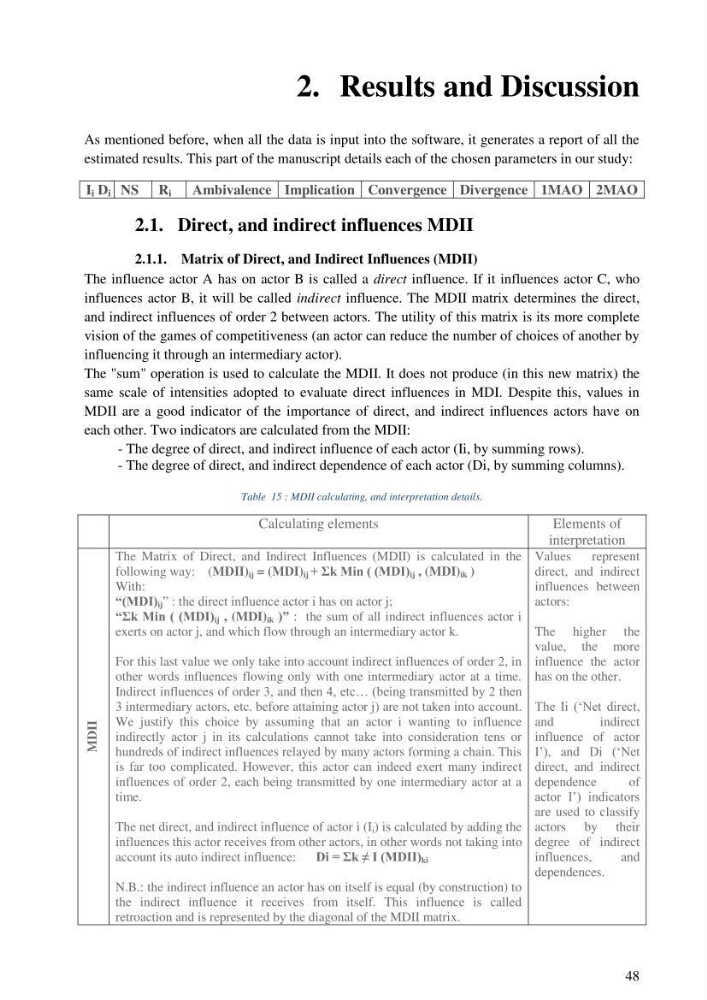
Table 15 : MDII calculating, and interpretation details.
Calculating elements
Elements of
interpretation
MDII
The Matrix of Direct, and Indirect Influences (MDII) is calculated in the
following way: (MDII) ij = (MDI) ij + Σk Min ( (MDI) ij , (MDI) ik )
With:
“(MDI) ij ” : the direct influence actor i has on actor j;
“Σk Min ( (MDI) ij , (MDI) ik )” : the sum of all indirect influences actor i
exerts on actor j, and which flow through an intermediary actor k.
For this last value we only take into account indirect influences of order 2, in
other words influences flowing only with one intermediary actor at a time.
Indirect influences of order 3, and then 4, etc… (being transmitted by 2 then
3 intermediary actors, etc. before attaining actor j) are not taken into account.
We justify this choice by assuming that an actor i wanting to influence
indirectly actor j in its calculations cannot take into consideration tens or
hundreds of indirect influences relayed by many actors forming a chain. This
is far too complicated. However, this actor can indeed exert many indirect
influences of order 2, each being transmitted by one intermediary actor at a
time.
The net direct, and indirect influence of actor i (I i ) is calculated by adding the
influences this actor receives from other actors, in other words not taking into
account its auto indirect influence:
Di = Σk ≠ I (MDII) ki
N.B.: the indirect influence an actor has on itself is equal (by construction) to
the indirect influence it receives from itself. This influence is called
retroaction and is represented by the diagonal of the MDII matrix.
Values
represent
direct, and indirect
influences between
actors:
The higher the
value, the more
influence the actor
has on the other.
The Ii („Net direct,
and
indirect
influence of actor
I‟), and Di („Net
direct, and indirect
dependence
of
actor I‟) indicators
are used to classify
actors by their
degree of indirect
influences,
and
dependences.
2. Results and Discussion
As mentioned before, when all the data is input into the software, it generates a report of all the
estimated results. This part of the manuscript details each of the chosen parameters in our study:
I i D i NS R i Ambivalence Implication Convergence Divergence 1MAO 2MAO
2.1. Direct, and indirect influences MDII
2.1.1. Matrix of Direct, and Indirect Influences (MDII)
The influence actor A has on actor B is called a direct influence. If it influences actor C, who
influences actor B, it will be called indirect influence. The MDII matrix determines the direct,
and indirect influences of order 2 between actors. The utility of this matrix is its more complete
vision of the games of competitiveness (an actor can reduce the number of choices of another by
influencing it through an intermediary actor).
The "sum" operation is used to calculate the MDII. It does not produce (in this new matrix) the
same scale of intensities adopted to evaluate direct influences in MDI. Despite this, values in
MDII are a good indicator of the importance of direct, and indirect influences actors have on
each other. Two indicators are calculated from the MDII:
- The degree of direct, and indirect influence of each actor (Ii, by summing rows).
- The degree of direct, and indirect dependence of each actor (Di, by summing columns).
Table 15 : MDII calculating, and interpretation details.
Calculating elements
Elements of
interpretation
MDII
The Matrix of Direct, and Indirect Influences (MDII) is calculated in the
following way: (MDII) ij = (MDI) ij + Σk Min ( (MDI) ij , (MDI) ik )
With:
“(MDI) ij ” : the direct influence actor i has on actor j;
“Σk Min ( (MDI) ij , (MDI) ik )” : the sum of all indirect influences actor i
exerts on actor j, and which flow through an intermediary actor k.
For this last value we only take into account indirect influences of order 2, in
other words influences flowing only with one intermediary actor at a time.
Indirect influences of order 3, and then 4, etc… (being transmitted by 2 then
3 intermediary actors, etc. before attaining actor j) are not taken into account.
We justify this choice by assuming that an actor i wanting to influence
indirectly actor j in its calculations cannot take into consideration tens or
hundreds of indirect influences relayed by many actors forming a chain. This
is far too complicated. However, this actor can indeed exert many indirect
influences of order 2, each being transmitted by one intermediary actor at a
time.
The net direct, and indirect influence of actor i (I i ) is calculated by adding the
influences this actor receives from other actors, in other words not taking into
account its auto indirect influence:
Di = Σk ≠ I (MDII) ki
N.B.: the indirect influence an actor has on itself is equal (by construction) to
the indirect influence it receives from itself. This influence is called
retroaction and is represented by the diagonal of the MDII matrix.
Values
represent
direct, and indirect
influences between
actors:
The higher the
value, the more
influence the actor
has on the other.
The Ii („Net direct,
and
indirect
influence of actor
I‟), and Di („Net
direct, and indirect
dependence
of
actor I‟) indicators
are used to classify
actors by their
degree of indirect
influences,
and
dependences.