

II. ENVIRONMENTAL IMPACTS AND RISKS EVALUATION OF OFFSHORE DRILLING
_____________________________________________________________________________
68
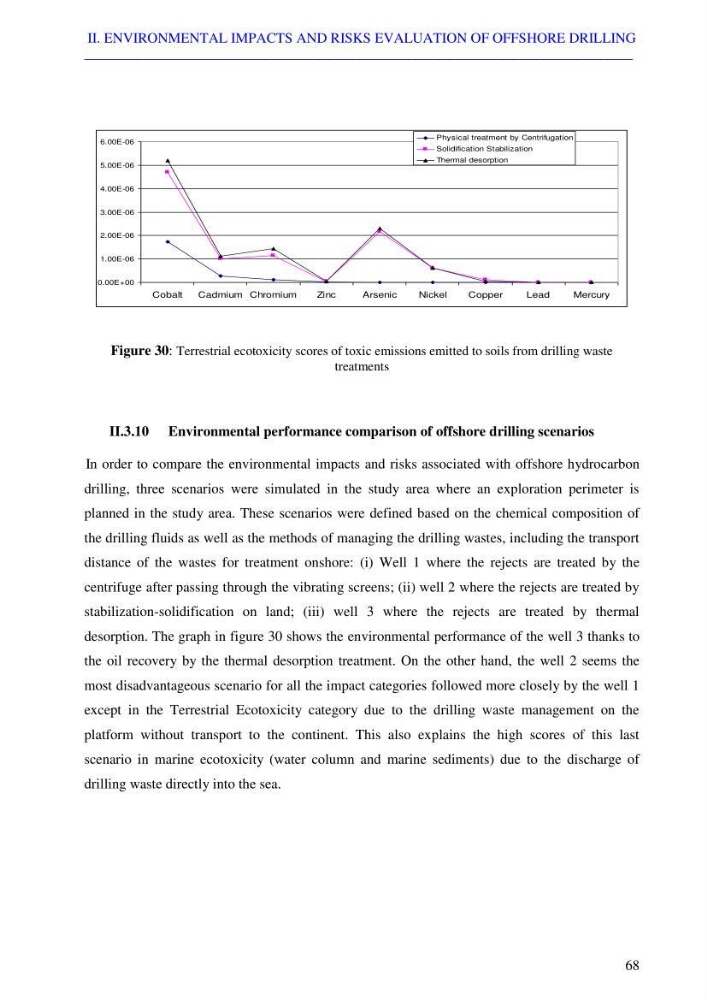
Figure 30: Terrestrial ecotoxicity scores of toxic emissions emitted to soils from drilling waste
treatments
II.3.10 Environmental performance comparison of offshore drilling scenarios
In order to compare the environmental impacts and risks associated with offshore hydrocarbon
drilling, three scenarios were simulated in the study area where an exploration perimeter is
planned in the study area. These scenarios were defined based on the chemical composition of
the drilling fluids as well as the methods of managing the drilling wastes, including the transport
distance of the wastes for treatment onshore: (i) Well 1 where the rejects are treated by the
centrifuge after passing through the vibrating screens; (ii) well 2 where the rejects are treated by
stabilization-solidification on land; (iii) well 3 where the rejects are treated by thermal
desorption. The graph in figure 30 shows the environmental performance of the well 3 thanks to
the oil recovery by the thermal desorption treatment. On the other hand, the well 2 seems the
most disadvantageous scenario for all the impact categories followed more closely by the well 1
except in the Terrestrial Ecotoxicity category due to the drilling waste management on the
platform without transport to the continent. This also explains the high scores of this last
scenario in marine ecotoxicity (water column and marine sediments) due to the discharge of
drilling waste directly into the sea.
0.00E+00
1.00E-06
2.00E-06
3.00E-06
4.00E-06
5.00E-06
6.00E-06
Cobalt
Cadmium Chromium
Zinc
Arsenic
Nickel
Copper
Lead
Mercury
Physical treatment by Centrifugation
Solidification Stabilization
Thermal desorption
_____________________________________________________________________________
68
Figure 30: Terrestrial ecotoxicity scores of toxic emissions emitted to soils from drilling waste
treatments
II.3.10 Environmental performance comparison of offshore drilling scenarios
In order to compare the environmental impacts and risks associated with offshore hydrocarbon
drilling, three scenarios were simulated in the study area where an exploration perimeter is
planned in the study area. These scenarios were defined based on the chemical composition of
the drilling fluids as well as the methods of managing the drilling wastes, including the transport
distance of the wastes for treatment onshore: (i) Well 1 where the rejects are treated by the
centrifuge after passing through the vibrating screens; (ii) well 2 where the rejects are treated by
stabilization-solidification on land; (iii) well 3 where the rejects are treated by thermal
desorption. The graph in figure 30 shows the environmental performance of the well 3 thanks to
the oil recovery by the thermal desorption treatment. On the other hand, the well 2 seems the
most disadvantageous scenario for all the impact categories followed more closely by the well 1
except in the Terrestrial Ecotoxicity category due to the drilling waste management on the
platform without transport to the continent. This also explains the high scores of this last
scenario in marine ecotoxicity (water column and marine sediments) due to the discharge of
drilling waste directly into the sea.
0.00E+00
1.00E-06
2.00E-06
3.00E-06
4.00E-06
5.00E-06
6.00E-06
Cobalt
Cadmium Chromium
Zinc
Arsenic
Nickel
Copper
Lead
Mercury
Physical treatment by Centrifugation
Solidification Stabilization
Thermal desorption