

II. ENVIRONMENTAL IMPACTS AND RISKS EVALUATION OF OFFSHORE DRILLING
_____________________________________________________________________________
64
0. 00 E +0 0
5. 00 E +0 3
1. 00 E +0 4
1. 50 E +0 4
2. 00 E +0 4
Acidification
Eutrophication
PDF*m2*yr
Section 8 1/2"
Section 12 1/4"
Section 17 1/2"
Section 26"
Section 36"
Section 8 1/2"
1.12E+04
2.30E+03
Section 12 1/4"
1.21E+04
2.69E+03
Section 17 1/2"
1.28E+04
2.97E+03
Section 26"
1.78E+04
4.35E+03
Section 36"
9.76E+03
2.33E+03
Acidif ication
Eutrophication
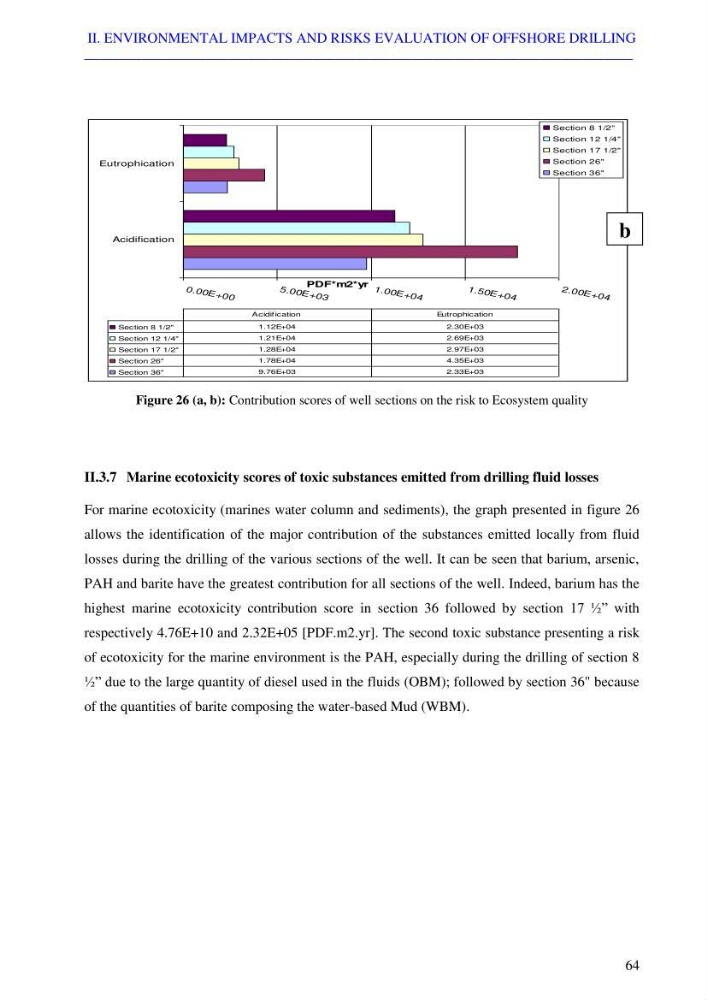
Figure 26 (a, b): Contribution scores of well sections on the risk to Ecosystem quality
II.3.7 Marine ecotoxicity scores of toxic substances emitted from drilling fluid losses
For marine ecotoxicity (marines water column and sediments), the graph presented in figure 26
allows the identification of the major contribution of the substances emitted locally from fluid
losses during the drilling of the various sections of the well. It can be seen that barium, arsenic,
PAH and barite have the greatest contribution for all sections of the well. Indeed, barium has the
highest marine ecotoxicity contribution score in section 36 followed by section 17 ½” with
respectively 4.76E+10 and 2.32E+05 [PDF.m2.yr]. The second toxic substance presenting a risk
of ecotoxicity for the marine environment is the PAH, especially during the drilling of section 8
½” due to the large quantity of diesel used in the fluids (OBM); followed by section 36" because
of the quantities of barite composing the water-based Mud (WBM).
b
_____________________________________________________________________________
64
0. 00 E +0 0
5. 00 E +0 3
1. 00 E +0 4
1. 50 E +0 4
2. 00 E +0 4
Acidification
Eutrophication
PDF*m2*yr
Section 8 1/2"
Section 12 1/4"
Section 17 1/2"
Section 26"
Section 36"
Section 8 1/2"
1.12E+04
2.30E+03
Section 12 1/4"
1.21E+04
2.69E+03
Section 17 1/2"
1.28E+04
2.97E+03
Section 26"
1.78E+04
4.35E+03
Section 36"
9.76E+03
2.33E+03
Acidif ication
Eutrophication
Figure 26 (a, b): Contribution scores of well sections on the risk to Ecosystem quality
II.3.7 Marine ecotoxicity scores of toxic substances emitted from drilling fluid losses
For marine ecotoxicity (marines water column and sediments), the graph presented in figure 26
allows the identification of the major contribution of the substances emitted locally from fluid
losses during the drilling of the various sections of the well. It can be seen that barium, arsenic,
PAH and barite have the greatest contribution for all sections of the well. Indeed, barium has the
highest marine ecotoxicity contribution score in section 36 followed by section 17 ½” with
respectively 4.76E+10 and 2.32E+05 [PDF.m2.yr]. The second toxic substance presenting a risk
of ecotoxicity for the marine environment is the PAH, especially during the drilling of section 8
½” due to the large quantity of diesel used in the fluids (OBM); followed by section 36" because
of the quantities of barite composing the water-based Mud (WBM).
b