

I. LITERATURE REVIEW OF OFFSHORE OIL AND GAS DRILLING
21
This is based on the characteristics of the substance or product in terms of persistence in the
marine environment, bioaccumulation potential, acute toxicity and possible endocrine effects.
In general, good practice guidelines and best management practices have been developed for
onshore and offshore sites (Brandt/EPI, 1996; OGD, 2001; UKOOA, 2002; U.S. EPA, 2001).
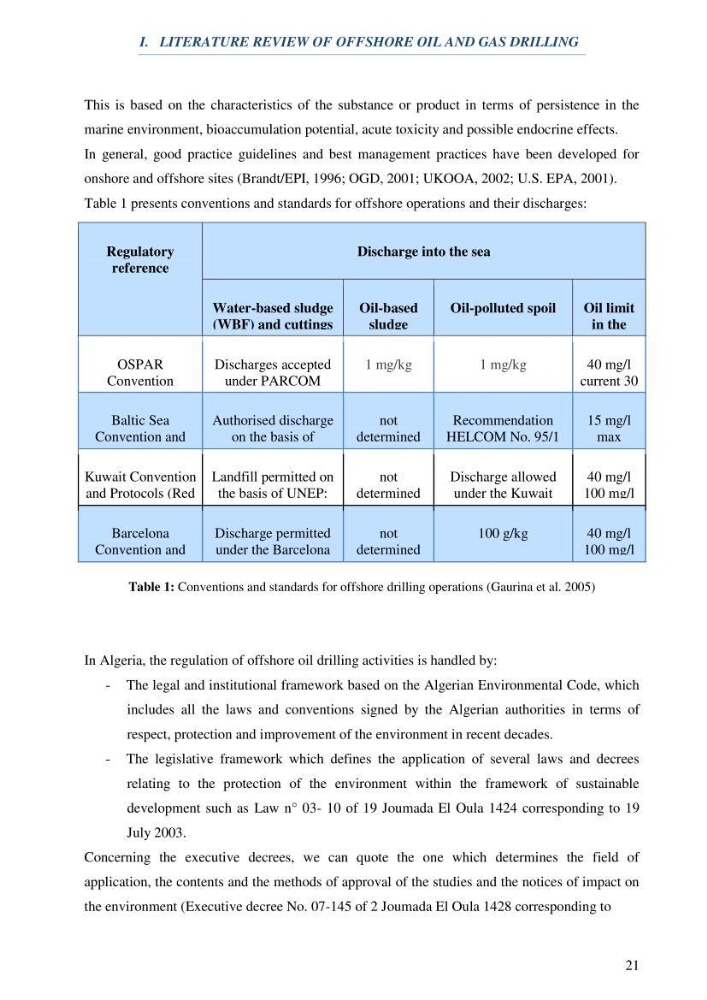
Table 1 presents conventions and standards for offshore operations and their discharges:
Table 1: Conventions and standards for offshore drilling operations (Gaurina et al. 2005)
In Algeria, the regulation of offshore oil drilling activities is handled by:
- The legal and institutional framework based on the Algerian Environmental Code, which
includes all the laws and conventions signed by the Algerian authorities in terms of
respect, protection and improvement of the environment in recent decades.
- The legislative framework which defines the application of several laws and decrees
relating to the protection of the environment within the framework of sustainable
development such as Law n° 03- 10 of 19 Joumada El Oula 1424 corresponding to 19
July 2003.
Concerning the executive decrees, we can quote the one which determines the field of
application, the contents and the methods of approval of the studies and the notices of impact on
the environment (Executive decree No. 07-145 of 2 Joumada El Oula 1428 corresponding to
Regulatory
reference
Discharge into the sea
Water-based sludge
(WBF) and cuttings
Oil-based
sludge
(OBM) and
cuttings
Oil-polluted spoil
Oil limit
in the
effluent
OSPAR
Convention
(Country,North
Sea)
Discharges accepted
under PARCOM
1 mg/kg
1 mg/kg
40 mg/l
current 30
mg/l
before
2006
Baltic Sea
Convention and
HELCOM
standards
Authorised discharge
on the basis of
HELCOM
recommendation no.
95/1
not
determined
Recommendation
HELCOM No. 95/1
15 mg/l
max
40 mg/l if
BAT
cannot
reach
15 mg/l
Kuwait Convention
and Protocols (Red
Sea Region)
Landfill permitted on
the basis of UNEP:
Kuwait Protocol on
Pollution Protection
not
determined
Discharge allowed
under the Kuwait
Protocol on a case-by
case basis
40 mg/l
100 mg/l
max
Barcelona
Convention and
Protocol
(Mediterranean
countries)
Discharge permitted
under the Barcelona
Protocol
not
determined
100 g/kg
40 mg/l
100 mg/l
max
21
This is based on the characteristics of the substance or product in terms of persistence in the
marine environment, bioaccumulation potential, acute toxicity and possible endocrine effects.
In general, good practice guidelines and best management practices have been developed for
onshore and offshore sites (Brandt/EPI, 1996; OGD, 2001; UKOOA, 2002; U.S. EPA, 2001).
Table 1 presents conventions and standards for offshore operations and their discharges:
Table 1: Conventions and standards for offshore drilling operations (Gaurina et al. 2005)
In Algeria, the regulation of offshore oil drilling activities is handled by:
- The legal and institutional framework based on the Algerian Environmental Code, which
includes all the laws and conventions signed by the Algerian authorities in terms of
respect, protection and improvement of the environment in recent decades.
- The legislative framework which defines the application of several laws and decrees
relating to the protection of the environment within the framework of sustainable
development such as Law n° 03- 10 of 19 Joumada El Oula 1424 corresponding to 19
July 2003.
Concerning the executive decrees, we can quote the one which determines the field of
application, the contents and the methods of approval of the studies and the notices of impact on
the environment (Executive decree No. 07-145 of 2 Joumada El Oula 1428 corresponding to
Regulatory
reference
Discharge into the sea
Water-based sludge
(WBF) and cuttings
Oil-based
sludge
(OBM) and
cuttings
Oil-polluted spoil
Oil limit
in the
effluent
OSPAR
Convention
(Country,North
Sea)
Discharges accepted
under PARCOM
1 mg/kg
1 mg/kg
40 mg/l
current 30
mg/l
before
2006
Baltic Sea
Convention and
HELCOM
standards
Authorised discharge
on the basis of
HELCOM
recommendation no.
95/1
not
determined
Recommendation
HELCOM No. 95/1
15 mg/l
max
40 mg/l if
BAT
cannot
reach
15 mg/l
Kuwait Convention
and Protocols (Red
Sea Region)
Landfill permitted on
the basis of UNEP:
Kuwait Protocol on
Pollution Protection
not
determined
Discharge allowed
under the Kuwait
Protocol on a case-by
case basis
40 mg/l
100 mg/l
max
Barcelona
Convention and
Protocol
(Mediterranean
countries)
Discharge permitted
under the Barcelona
Protocol
not
determined
100 g/kg
40 mg/l
100 mg/l
max