

THERMAL DEGRADA”IÏON OF vnmsns
119
—
.I11250,1°C/……
î Difference for Sîgnîfîcance
l.250,—70° C/min.
.
@ 1:15,000;l°C/mîn.
_
100
1:15,000,-70°C/…m
_
.
'::2
._.
_
80
?
'
.;
'
"r-.
%
.“:
='
:'7
_7
%
%
‘f°
.%
.%
%
%
'
°\°
°ÎÏ'/
-°'-,/
:69/
_'/
»—2—1/
V 40
%
%
=r/
%
>.
—'—°.
@
.
.p__.
_.
.
….
>
“""
$…=°o‘ °
°-=“'
-î-='îä
o
%Ë
%â
%:
%ä
+10
+20
+30
+50
+lOO
Bath Temperature (°C)
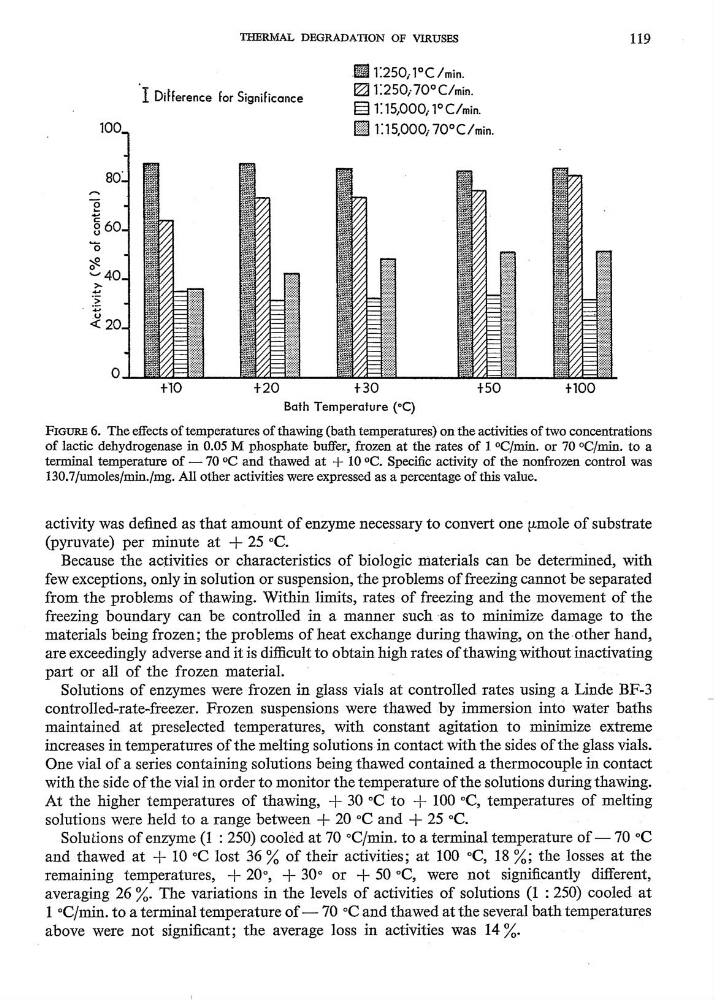
FIGURE 6. The effects of temperatures of thawing (bath temperatures) on the activities of two concentrations
of lactic dehydrogenase in 0.05 M phosphate buffer, frozen at the rates of 1 °C/min. or 70 °C/min. to a
terminal temperature of —— 70 °C and thawed at + 10 °C. Specic activity of the nonfrozen control was
130.7/umoles/min. /mg. All other activities were expressed as a percentage of this value.
activity was dened as that amount of enzyme necessary to convert one p.mole of substrate
(pyruvate) per minute at + 25 °C.
Because the activities or characteristics of biologie materials can be determined, with
few exceptions, only in solution or suspension, the problems of freezing cannot be separated
from the problems of thawing. Within limits, rates of freezing and the movement of the
freezing boundary can be controlled in a manner such as to minimize damage to the
materials being frozen; the problems of heat exchange during thawing, on theother hand,
are exceedingly adverse and it is diicult to obtain high rates of thawing without inactivating
part or all of the frozen material.
'
.
Solutions of enzymes were frozen in glass vials at controlled rates using a Linde BF—3
_
controlled—rate—freezer. Frozen suspensions were thawed by immersion into water baths
maintained at preselected temperatures, with constant agitation to minimize extreme
increases in temperatures of the melting solutionsin contact with the sides of the glass vials.
One via] of a series containing solutions being thawed contained a thermocouple in contact
With the side of the Vial in order to monitor the temperature of the solutions during thawing.
At the higher temperatures of thawing, + 30 °C to + 100 °C, temperatures of melting
solutions were held to a range between + 20 °C and + 25 °C.
Solutions of enzyme (l : 250) cooled at 70 °C/min. to a terminal temperature of — 70 °C
and thawed at + 10 °C lost 36 % of their activities; at 100 °C, 18 %; the losses at the
remaining temperatures, + 20°, + 30° or + 50 °C, were not signicantly different,
averaging 26 %. The variations in the levels of activities of solutions (1 :250) cooled at
1 °C/min. to a terminal temperature of —— 70 °C and thawed at the several bath temperatures
above were not signicant; the average loss in activities was 14 %.
119
—
.I11250,1°C/……
î Difference for Sîgnîfîcance
l.250,—70° C/min.
.
@ 1:15,000;l°C/mîn.
_
100
1:15,000,-70°C/…m
_
.
'::2
._.
_
80
?
'
.;
'
"r-.
%
.“:
='
:'7
_7
%
%
‘f°
.%
.%
%
%
'
°\°
°ÎÏ'/
-°'-,/
:69/
_'/
»—2—1/
V 40
%
%
=r/
%
>.
—'—°.
@
.
.p__.
_.
.
….
>
“""
$…=°o‘ °
°-=“'
-î-='îä
o
%Ë
%â
%:
%ä
+10
+20
+30
+50
+lOO
Bath Temperature (°C)
FIGURE 6. The effects of temperatures of thawing (bath temperatures) on the activities of two concentrations
of lactic dehydrogenase in 0.05 M phosphate buffer, frozen at the rates of 1 °C/min. or 70 °C/min. to a
terminal temperature of —— 70 °C and thawed at + 10 °C. Specic activity of the nonfrozen control was
130.7/umoles/min. /mg. All other activities were expressed as a percentage of this value.
activity was dened as that amount of enzyme necessary to convert one p.mole of substrate
(pyruvate) per minute at + 25 °C.
Because the activities or characteristics of biologie materials can be determined, with
few exceptions, only in solution or suspension, the problems of freezing cannot be separated
from the problems of thawing. Within limits, rates of freezing and the movement of the
freezing boundary can be controlled in a manner such as to minimize damage to the
materials being frozen; the problems of heat exchange during thawing, on theother hand,
are exceedingly adverse and it is diicult to obtain high rates of thawing without inactivating
part or all of the frozen material.
'
.
Solutions of enzymes were frozen in glass vials at controlled rates using a Linde BF—3
_
controlled—rate—freezer. Frozen suspensions were thawed by immersion into water baths
maintained at preselected temperatures, with constant agitation to minimize extreme
increases in temperatures of the melting solutionsin contact with the sides of the glass vials.
One via] of a series containing solutions being thawed contained a thermocouple in contact
With the side of the Vial in order to monitor the temperature of the solutions during thawing.
At the higher temperatures of thawing, + 30 °C to + 100 °C, temperatures of melting
solutions were held to a range between + 20 °C and + 25 °C.
Solutions of enzyme (l : 250) cooled at 70 °C/min. to a terminal temperature of — 70 °C
and thawed at + 10 °C lost 36 % of their activities; at 100 °C, 18 %; the losses at the
remaining temperatures, + 20°, + 30° or + 50 °C, were not signicantly different,
averaging 26 %. The variations in the levels of activities of solutions (1 :250) cooled at
1 °C/min. to a terminal temperature of —— 70 °C and thawed at the several bath temperatures
above were not signicant; the average loss in activities was 14 %.