

The distribution of diversity: challenges and applications
77
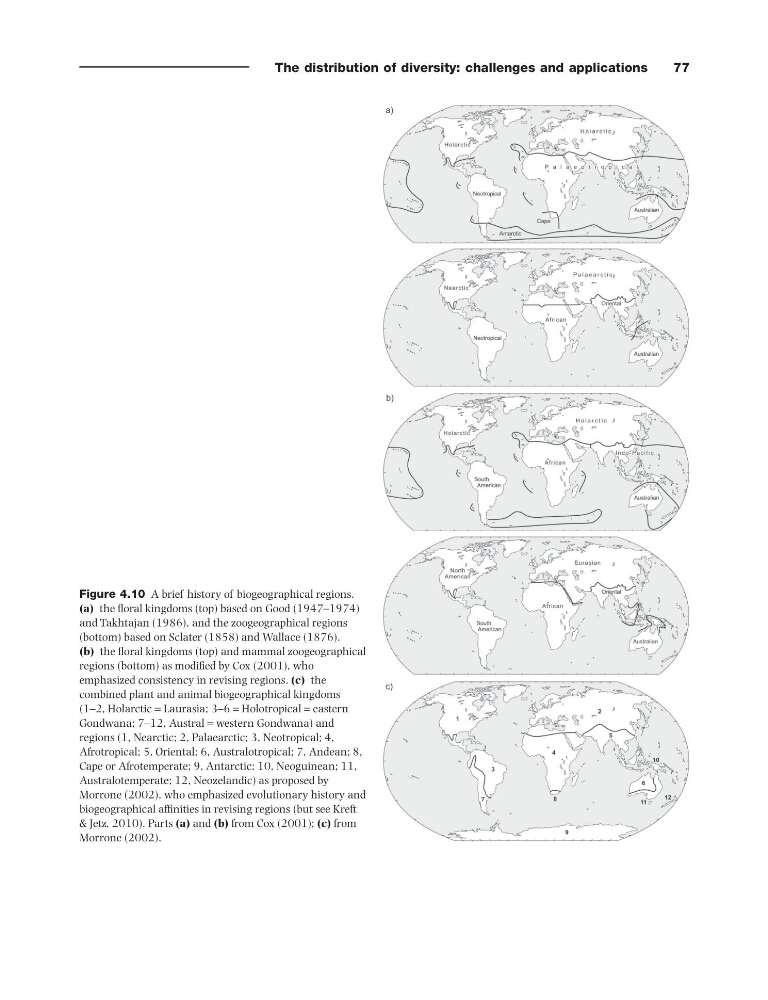
Figure 4.10 A brief history of biogeographical regions.
(a) the fl oral kingdoms (top) based on Good (1947 – 1974)
and Takhtajan (1986) , and the zoogeographical regions
(bottom) based on Sclater (1858) and Wallace (1876) .
(b) the fl oral kingdoms (top) and mammal zoogeographical
regions (bottom) as modifi ed by Cox (2001) , who
emphasized consistency in revising regions. (c) the
combined plant and animal biogeographical kingdoms
(1 – 2, Holarctic = Laurasia; 3 – 6 = Holotropical = eastern
Gondwana; 7 – 12, Austral = western Gondwana) and
regions (1, Nearctic; 2, Palaearctic; 3, Neotropical; 4,
Afrotropical; 5, Oriental; 6, Australotropical; 7, Andean; 8,
Cape or Afrotemperate; 9, Antarctic; 10, Neoguinean; 11,
Australotemperate; 12, Neozelandic) as proposed by
Morrone (2002) , who emphasized evolutionary history and
biogeographical affi nities in revising regions (but see Kreft
& Jetz, 2010 ). Parts (a) and (b) from Cox (2001) ; (c) from
Morrone (2002) .
77
Figure 4.10 A brief history of biogeographical regions.
(a) the fl oral kingdoms (top) based on Good (1947 – 1974)
and Takhtajan (1986) , and the zoogeographical regions
(bottom) based on Sclater (1858) and Wallace (1876) .
(b) the fl oral kingdoms (top) and mammal zoogeographical
regions (bottom) as modifi ed by Cox (2001) , who
emphasized consistency in revising regions. (c) the
combined plant and animal biogeographical kingdoms
(1 – 2, Holarctic = Laurasia; 3 – 6 = Holotropical = eastern
Gondwana; 7 – 12, Austral = western Gondwana) and
regions (1, Nearctic; 2, Palaearctic; 3, Neotropical; 4,
Afrotropical; 5, Oriental; 6, Australotropical; 7, Andean; 8,
Cape or Afrotemperate; 9, Antarctic; 10, Neoguinean; 11,
Australotemperate; 12, Neozelandic) as proposed by
Morrone (2002) , who emphasized evolutionary history and
biogeographical affi nities in revising regions (but see Kreft
& Jetz, 2010 ). Parts (a) and (b) from Cox (2001) ; (c) from
Morrone (2002) .