

202
Applied island biogeography
A classic illustration of this problem is provided by
the tropical moist forests of the Atlantic seaboard of
Brazil, known as the Mata Atlantica, which have been
reduced over the past few centuries to only about 7 per
cent of their estimated former cover (Ribon et al. ,
2003 ). This is a large region and the remnants are
numerous and widely distributed, so the ‘ 90 per cent
habitat loss = 50 per cent species loss ’ rule of thumb
(above) should not really be expected to apply.
Nonetheless, such habitat loss and insularization
should have driven signifi cant losses.
To date, however, no extinctions have been documented with any degree of certainty, although many
species appear on IUCN ‘ Red Lists ’ as ‘ vulnerable ’ ,
nearby mainland forest cover is retained, as these
forests provide the source of the transient birds and
occasional new colonists (those that stay to breed)
observed on Barro Colorado Island.
The most signifi cant problem with predicting future
extinctions in such systems is that we have an inadequate theoretical and empirical basis by which
to estimate the rate at which species will be lost over
time or the total time period required for a new
(dynamic) equilibrium to be achieved. Precise estimates of the ‘ time to extinction ’ of each species under
threat remains an unrealistic aim for both true and
habitat islands, as it will largely be species - and
system - specifi c.
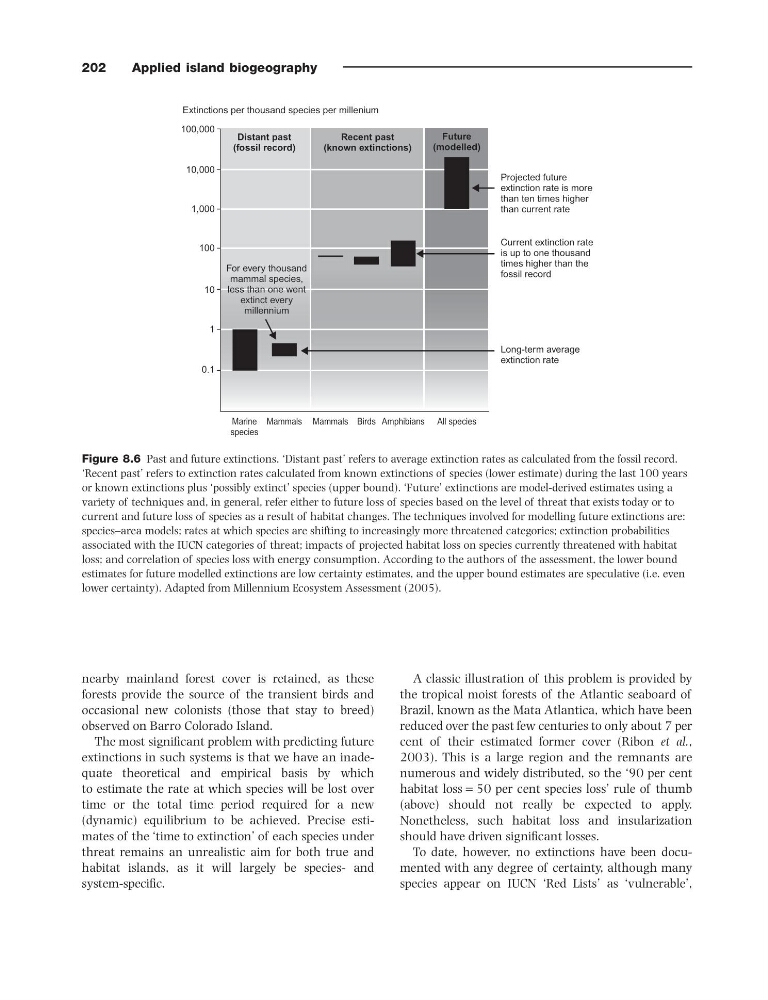
Figure 8.6 Past and future extinctions. ‘ Distant past ’ refers to average extinction rates as calculated from the fossil record.
‘ Recent past ’ refers to extinction rates calculated from known extinctions of species (lower estimate) during the last 100 years
or known extinctions plus ‘ possibly extinct ’ species (upper bound). ‘ Future ’ extinctions are model - derived estimates using a
variety of techniques and, in general, refer either to future loss of species based on the level of threat that exists today or to
current and future loss of species as a result of habitat changes. The techniques involved for modelling future extinctions are:
species – area models; rates at which species are shifting to increasingly more threatened categories; extinction probabilities
associated with the IUCN categories of threat; impacts of projected habitat loss on species currently threatened with habitat
loss; and correlation of species loss with energy consumption. According to the authors of the assessment, the lower bound
estimates for future modelled extinctions are low certainty estimates, and the upper bound estimates are speculative (i.e. even
lower certainty). Adapted from Millennium Ecosystem Assessment (2005) .
10,000
1,000
100
10
1
0.1
100,000
Extinctions per thousand species per millenium
Marine
species
Mammals Mammals Birds Amphibians All species
Distant past
(fossil record)
Recent past
(known extinctions)
Future
(modelled)
For every thousand
mammal species,
less than one went
extinct every
millennium
Long-term average
extinction rate
Current extinction rate
is up to one thousand
times higher than the
fossil record
Projected future
extinction rate is more
than ten times higher
than current rate
Applied island biogeography
A classic illustration of this problem is provided by
the tropical moist forests of the Atlantic seaboard of
Brazil, known as the Mata Atlantica, which have been
reduced over the past few centuries to only about 7 per
cent of their estimated former cover (Ribon et al. ,
2003 ). This is a large region and the remnants are
numerous and widely distributed, so the ‘ 90 per cent
habitat loss = 50 per cent species loss ’ rule of thumb
(above) should not really be expected to apply.
Nonetheless, such habitat loss and insularization
should have driven signifi cant losses.
To date, however, no extinctions have been documented with any degree of certainty, although many
species appear on IUCN ‘ Red Lists ’ as ‘ vulnerable ’ ,
nearby mainland forest cover is retained, as these
forests provide the source of the transient birds and
occasional new colonists (those that stay to breed)
observed on Barro Colorado Island.
The most signifi cant problem with predicting future
extinctions in such systems is that we have an inadequate theoretical and empirical basis by which
to estimate the rate at which species will be lost over
time or the total time period required for a new
(dynamic) equilibrium to be achieved. Precise estimates of the ‘ time to extinction ’ of each species under
threat remains an unrealistic aim for both true and
habitat islands, as it will largely be species - and
system - specifi c.
Figure 8.6 Past and future extinctions. ‘ Distant past ’ refers to average extinction rates as calculated from the fossil record.
‘ Recent past ’ refers to extinction rates calculated from known extinctions of species (lower estimate) during the last 100 years
or known extinctions plus ‘ possibly extinct ’ species (upper bound). ‘ Future ’ extinctions are model - derived estimates using a
variety of techniques and, in general, refer either to future loss of species based on the level of threat that exists today or to
current and future loss of species as a result of habitat changes. The techniques involved for modelling future extinctions are:
species – area models; rates at which species are shifting to increasingly more threatened categories; extinction probabilities
associated with the IUCN categories of threat; impacts of projected habitat loss on species currently threatened with habitat
loss; and correlation of species loss with energy consumption. According to the authors of the assessment, the lower bound
estimates for future modelled extinctions are low certainty estimates, and the upper bound estimates are speculative (i.e. even
lower certainty). Adapted from Millennium Ecosystem Assessment (2005) .
10,000
1,000
100
10
1
0.1
100,000
Extinctions per thousand species per millenium
Marine
species
Mammals Mammals Birds Amphibians All species
Distant past
(fossil record)
Recent past
(known extinctions)
Future
(modelled)
For every thousand
mammal species,
less than one went
extinct every
millennium
Long-term average
extinction rate
Current extinction rate
is up to one thousand
times higher than the
fossil record
Projected future
extinction rate is more
than ten times higher
than current rate