

56
Martin V. ANGEL
0
500
1000
1500
1:1 1:2 1:3 1:4
2:1
3:1
4:1
Ratio of 1 mm fraction:0.3mm fraction
Night
Day
Depth m
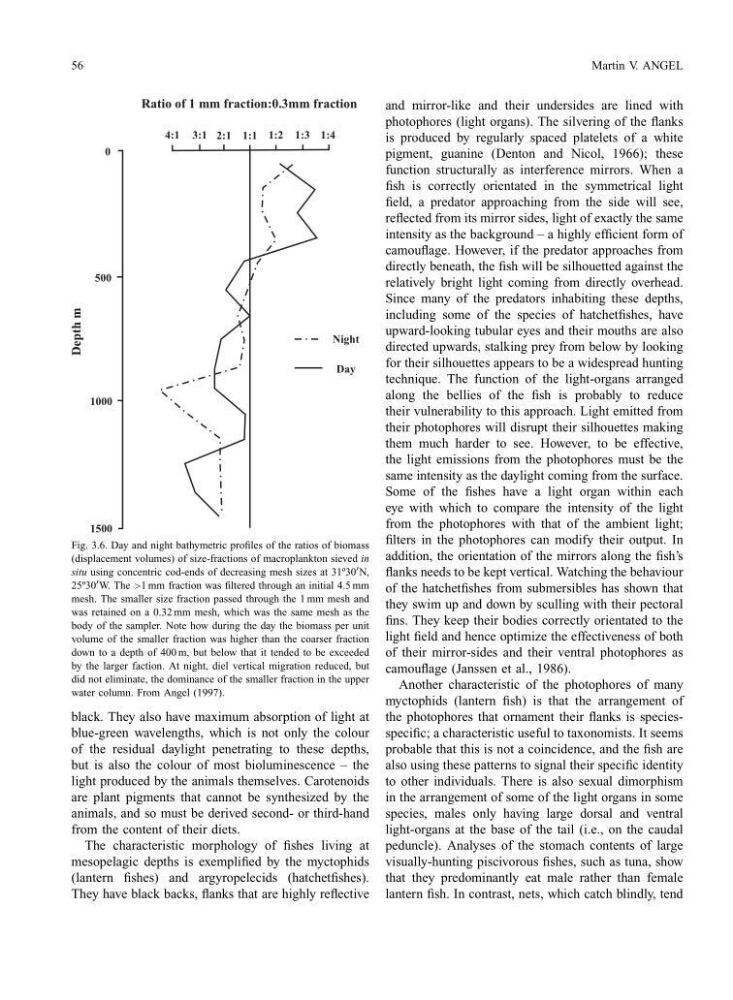
Fig. 3.6. Day and night bathymetric profiles of the ratios of biomass
(displacement volumes) of size-fractions of macroplankton sieved in
situ using concentric cod-ends of decreasing mesh sizes at 31º30 N,
25º30 W. The >1 mm fraction was filtered through an initial 4.5 mm
mesh. The smaller size fraction passed through the 1 mm mesh and
was retained on a 0.32 mm mesh, which was the same mesh as the
body of the sampler. Note how during the day the biomass per unit
volume of the smaller fraction was higher than the coarser fraction
down to a depth of 400 m, but below that it tended to be exceeded
by the larger faction. At night, diel vertical migration reduced, but
did not eliminate, the dominance of the smaller fraction in the upper
water column. From Angel (1997).
black. They also have maximum absorption of light at
blue-green wavelengths, which is not only the colour
of the residual daylight penetrating to these depths,
but is also the colour of most bioluminescence – the
light produced by the animals themselves. Carotenoids
are plant pigments that cannot be synthesized by the
animals, and so must be derived second- or third-hand
from the content of their diets.
The characteristic morphology of fishes living at
mesopelagic depths is exemplified by the myctophids
(lantern fishes) and argyropelecids (hatchetfishes).
They have black backs, flanks that are highly reflective
and mirror-like and their undersides are lined with
photophores (light organs). The silvering of the flanks
is produced by regularly spaced platelets of a white
pigment, guanine (Denton and Nicol, 1966); these
function structurally as interference mirrors. When a
fish is correctly orientated in the symmetrical light
field, a predator approaching from the side will see,
reflected from its mirror sides, light of exactly the same
intensity as the background – a highly efficient form of
camouflage. However, if the predator approaches from
directly beneath, the fish will be silhouetted against the
relatively bright light coming from directly overhead.
Since many of the predators inhabiting these depths,
including some of the species of hatchetfishes, have
upward-looking tubular eyes and their mouths are also
directed upwards, stalking prey from below by looking
for their silhouettes appears to be a widespread hunting
technique. The function of the light-organs arranged
along the bellies of the fish is probably to reduce
their vulnerability to this approach. Light emitted from
their photophores will disrupt their silhouettes making
them much harder to see. However, to be effective,
the light emissions from the photophores must be the
same intensity as the daylight coming from the surface.
Some of the fishes have a light organ within each
eye with which to compare the intensity of the light
from the photophores with that of the ambient light;
filters in the photophores can modify their output. In
addition, the orientation of the mirrors along the fish’s
flanks needs to be kept vertical. Watching the behaviour
of the hatchetfishes from submersibles has shown that
they swim up and down by sculling with their pectoral
fins. They keep their bodies correctly orientated to the
light field and hence optimize the effectiveness of both
of their mirror-sides and their ventral photophores as
camouflage (Janssen et al., 1986).
Another characteristic of the photophores of many
myctophids (lantern fish) is that the arrangement of
the photophores that ornament their flanks is speciesspecific; a characteristic useful to taxonomists. It seems
probable that this is not a coincidence, and the fish are
also using these patterns to signal their specific identity
to other individuals. There is also sexual dimorphism
in the arrangement of some of the light organs in some
species, males only having large dorsal and ventral
light-organs at the base of the tail (i.e., on the caudal
peduncle). Analyses of the stomach contents of large
visually-hunting piscivorous fishes, such as tuna, show
that they predominantly eat male rather than female
lantern fish. In contrast, nets, which catch blindly, tend
Martin V. ANGEL
0
500
1000
1500
1:1 1:2 1:3 1:4
2:1
3:1
4:1
Ratio of 1 mm fraction:0.3mm fraction
Night
Day
Depth m
Fig. 3.6. Day and night bathymetric profiles of the ratios of biomass
(displacement volumes) of size-fractions of macroplankton sieved in
situ using concentric cod-ends of decreasing mesh sizes at 31º30 N,
25º30 W. The >1 mm fraction was filtered through an initial 4.5 mm
mesh. The smaller size fraction passed through the 1 mm mesh and
was retained on a 0.32 mm mesh, which was the same mesh as the
body of the sampler. Note how during the day the biomass per unit
volume of the smaller fraction was higher than the coarser fraction
down to a depth of 400 m, but below that it tended to be exceeded
by the larger faction. At night, diel vertical migration reduced, but
did not eliminate, the dominance of the smaller fraction in the upper
water column. From Angel (1997).
black. They also have maximum absorption of light at
blue-green wavelengths, which is not only the colour
of the residual daylight penetrating to these depths,
but is also the colour of most bioluminescence – the
light produced by the animals themselves. Carotenoids
are plant pigments that cannot be synthesized by the
animals, and so must be derived second- or third-hand
from the content of their diets.
The characteristic morphology of fishes living at
mesopelagic depths is exemplified by the myctophids
(lantern fishes) and argyropelecids (hatchetfishes).
They have black backs, flanks that are highly reflective
and mirror-like and their undersides are lined with
photophores (light organs). The silvering of the flanks
is produced by regularly spaced platelets of a white
pigment, guanine (Denton and Nicol, 1966); these
function structurally as interference mirrors. When a
fish is correctly orientated in the symmetrical light
field, a predator approaching from the side will see,
reflected from its mirror sides, light of exactly the same
intensity as the background – a highly efficient form of
camouflage. However, if the predator approaches from
directly beneath, the fish will be silhouetted against the
relatively bright light coming from directly overhead.
Since many of the predators inhabiting these depths,
including some of the species of hatchetfishes, have
upward-looking tubular eyes and their mouths are also
directed upwards, stalking prey from below by looking
for their silhouettes appears to be a widespread hunting
technique. The function of the light-organs arranged
along the bellies of the fish is probably to reduce
their vulnerability to this approach. Light emitted from
their photophores will disrupt their silhouettes making
them much harder to see. However, to be effective,
the light emissions from the photophores must be the
same intensity as the daylight coming from the surface.
Some of the fishes have a light organ within each
eye with which to compare the intensity of the light
from the photophores with that of the ambient light;
filters in the photophores can modify their output. In
addition, the orientation of the mirrors along the fish’s
flanks needs to be kept vertical. Watching the behaviour
of the hatchetfishes from submersibles has shown that
they swim up and down by sculling with their pectoral
fins. They keep their bodies correctly orientated to the
light field and hence optimize the effectiveness of both
of their mirror-sides and their ventral photophores as
camouflage (Janssen et al., 1986).
Another characteristic of the photophores of many
myctophids (lantern fish) is that the arrangement of
the photophores that ornament their flanks is speciesspecific; a characteristic useful to taxonomists. It seems
probable that this is not a coincidence, and the fish are
also using these patterns to signal their specific identity
to other individuals. There is also sexual dimorphism
in the arrangement of some of the light organs in some
species, males only having large dorsal and ventral
light-organs at the base of the tail (i.e., on the caudal
peduncle). Analyses of the stomach contents of large
visually-hunting piscivorous fishes, such as tuna, show
that they predominantly eat male rather than female
lantern fish. In contrast, nets, which catch blindly, tend