

FOOD INPUTS, UTILIZATION, CARBON FLOW AND ENERGETICS
351
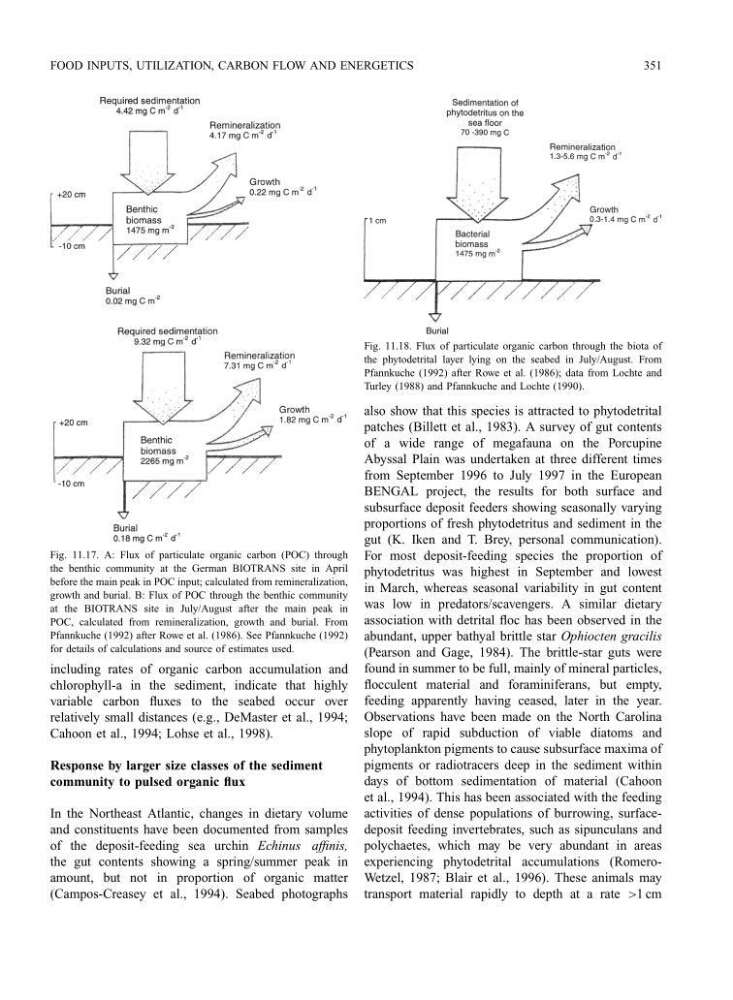
Fig. 11.17. A: Flux of particulate organic carbon (POC) through
the benthic community at the German BIOTRANS site in April
before the main peak in POC input; calculated from remineralization,
growth and burial. B: Flux of POC through the benthic community
at the BIOTRANS site in July/August after the main peak in
POC, calculated from remineralization, growth and burial. From
Pfannkuche (1992) after Rowe et al. (1986). See Pfannkuche (1992)
for details of calculations and source of estimates used.
including rates of organic carbon accumulation and
chlorophyll-a in the sediment, indicate that highly
variable carbon fluxes to the seabed occur over
relatively small distances (e.g., DeMaster et al., 1994;
Cahoon et al., 1994; Lohse et al., 1998).
Response by larger size classes of the sediment
community to pulsed organic flux
In the Northeast Atlantic, changes in dietary volume
and constituents have been documented from samples
of the deposit-feeding sea urchin Echinus affinis,
the gut contents showing a spring/summer peak in
amount, but not in proportion of organic matter
(Campos-Creasey et al., 1994). Seabed photographs
Fig. 11.18. Flux of particulate organic carbon through the biota of
the phytodetrital layer lying on the seabed in July/August. From
Pfannkuche (1992) after Rowe et al. (1986); data from Lochte and
Turley (1988) and Pfannkuche and Lochte (1990).
also show that this species is attracted to phytodetrital
patches (Billett et al., 1983). A survey of gut contents
of a wide range of megafauna on the Porcupine
Abyssal Plain was undertaken at three different times
from September 1996 to July 1997 in the European
BENGAL project, the results for both surface and
subsurface deposit feeders showing seasonally varying
proportions of fresh phytodetritus and sediment in the
gut (K. Iken and T. Brey, personal communication).
For most deposit-feeding species the proportion of
phytodetritus was highest in September and lowest
in March, whereas seasonal variability in gut content
was low in predators/scavengers. A similar dietary
association with detrital floc has been observed in the
abundant, upper bathyal brittle star Ophiocten gracilis
(Pearson and Gage, 1984). The brittle-star guts were
found in summer to be full, mainly of mineral particles,
flocculent material and foraminiferans, but empty,
feeding apparently having ceased, later in the year.
Observations have been made on the North Carolina
slope of rapid subduction of viable diatoms and
phytoplankton pigments to cause subsurface maxima of
pigments or radiotracers deep in the sediment within
days of bottom sedimentation of material (Cahoon
et al., 1994). This has been associated with the feeding
activities of dense populations of burrowing, surfacedeposit feeding invertebrates, such as sipunculans and
polychaetes, which may be very abundant in areas
experiencing phytodetrital accumulations (RomeroWetzel, 1987; Blair et al., 1996). These animals may
transport material rapidly to depth at a rate >1 cm
351
Fig. 11.17. A: Flux of particulate organic carbon (POC) through
the benthic community at the German BIOTRANS site in April
before the main peak in POC input; calculated from remineralization,
growth and burial. B: Flux of POC through the benthic community
at the BIOTRANS site in July/August after the main peak in
POC, calculated from remineralization, growth and burial. From
Pfannkuche (1992) after Rowe et al. (1986). See Pfannkuche (1992)
for details of calculations and source of estimates used.
including rates of organic carbon accumulation and
chlorophyll-a in the sediment, indicate that highly
variable carbon fluxes to the seabed occur over
relatively small distances (e.g., DeMaster et al., 1994;
Cahoon et al., 1994; Lohse et al., 1998).
Response by larger size classes of the sediment
community to pulsed organic flux
In the Northeast Atlantic, changes in dietary volume
and constituents have been documented from samples
of the deposit-feeding sea urchin Echinus affinis,
the gut contents showing a spring/summer peak in
amount, but not in proportion of organic matter
(Campos-Creasey et al., 1994). Seabed photographs
Fig. 11.18. Flux of particulate organic carbon through the biota of
the phytodetrital layer lying on the seabed in July/August. From
Pfannkuche (1992) after Rowe et al. (1986); data from Lochte and
Turley (1988) and Pfannkuche and Lochte (1990).
also show that this species is attracted to phytodetrital
patches (Billett et al., 1983). A survey of gut contents
of a wide range of megafauna on the Porcupine
Abyssal Plain was undertaken at three different times
from September 1996 to July 1997 in the European
BENGAL project, the results for both surface and
subsurface deposit feeders showing seasonally varying
proportions of fresh phytodetritus and sediment in the
gut (K. Iken and T. Brey, personal communication).
For most deposit-feeding species the proportion of
phytodetritus was highest in September and lowest
in March, whereas seasonal variability in gut content
was low in predators/scavengers. A similar dietary
association with detrital floc has been observed in the
abundant, upper bathyal brittle star Ophiocten gracilis
(Pearson and Gage, 1984). The brittle-star guts were
found in summer to be full, mainly of mineral particles,
flocculent material and foraminiferans, but empty,
feeding apparently having ceased, later in the year.
Observations have been made on the North Carolina
slope of rapid subduction of viable diatoms and
phytoplankton pigments to cause subsurface maxima of
pigments or radiotracers deep in the sediment within
days of bottom sedimentation of material (Cahoon
et al., 1994). This has been associated with the feeding
activities of dense populations of burrowing, surfacedeposit feeding invertebrates, such as sipunculans and
polychaetes, which may be very abundant in areas
experiencing phytodetrital accumulations (RomeroWetzel, 1987; Blair et al., 1996). These animals may
transport material rapidly to depth at a rate >1 cm