

LARGE-SCALE SPATIAL AND TEMPORAL PATTERNS OF DEEP-SEA BENTHIC SPECIES DIVERSITY
305
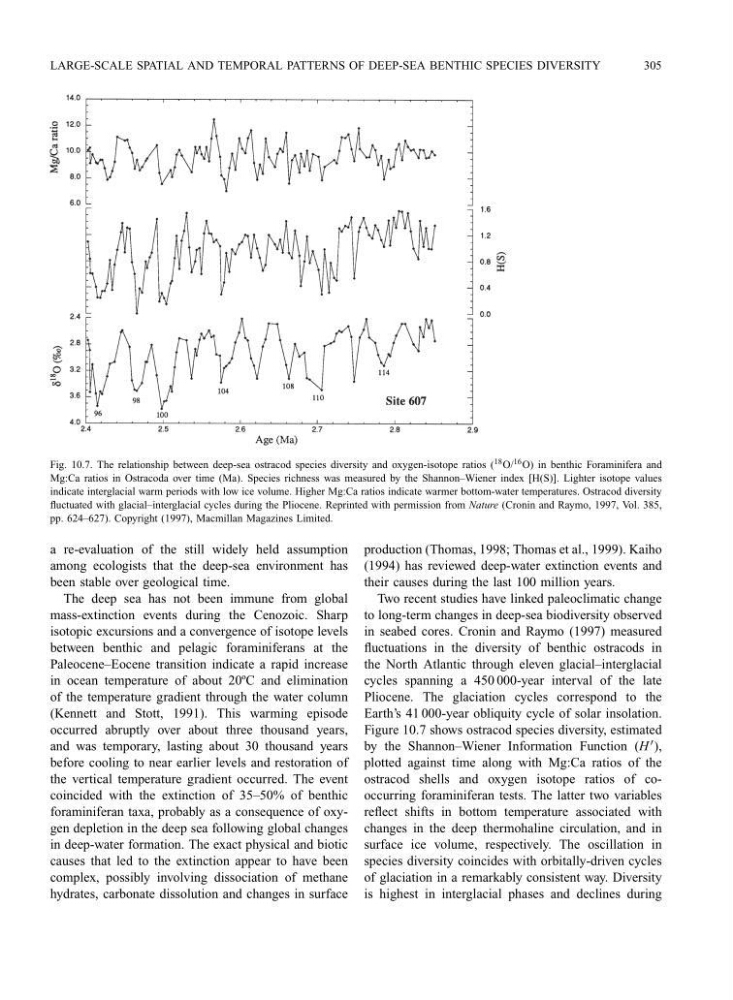
Fig. 10.7. The relationship between deep-sea ostracod species diversity and oxygen-isotope ratios ( 18 O/ 16 O) in benthic Foraminifera and
Mg:Ca ratios in Ostracoda over time (Ma). Species richness was measured by the Shannon–Wiener index [H(S)]. Lighter isotope values
indicate interglacial warm periods with low ice volume. Higher Mg:Ca ratios indicate warmer bottom-water temperatures. Ostracod diversity
fluctuated with glacial–interglacial cycles during the Pliocene. Reprinted with permission from Nature (Cronin and Raymo, 1997, Vol. 385,
pp. 624–627). Copyright (1997), Macmillan Magazines Limited.
a re-evaluation of the still widely held assumption
among ecologists that the deep-sea environment has
been stable over geological time.
The deep sea has not been immune from global
mass-extinction events during the Cenozoic. Sharp
isotopic excursions and a convergence of isotope levels
between benthic and pelagic foraminiferans at the
Paleocene–Eocene transition indicate a rapid increase
in ocean temperature of about 20ºC and elimination
of the temperature gradient through the water column
(Kennett and Stott, 1991). This warming episode
occurred abruptly over about three thousand years,
and was temporary, lasting about 30 thousand years
before cooling to near earlier levels and restoration of
the vertical temperature gradient occurred. The event
coincided with the extinction of 35–50% of benthic
foraminiferan taxa, probably as a consequence of oxygen depletion in the deep sea following global changes
in deep-water formation. The exact physical and biotic
causes that led to the extinction appear to have been
complex, possibly involving dissociation of methane
hydrates, carbonate dissolution and changes in surface
production (Thomas, 1998; Thomas et al., 1999). Kaiho
(1994) has reviewed deep-water extinction events and
their causes during the last 100 million years.
Two recent studies have linked paleoclimatic change
to long-term changes in deep-sea biodiversity observed
in seabed cores. Cronin and Raymo (1997) measured
fluctuations in the diversity of benthic ostracods in
the North Atlantic through eleven glacial–interglacial
cycles spanning a 450 000-year interval of the late
Pliocene. The glaciation cycles correspond to the
Earth’s 41 000-year obliquity cycle of solar insolation.
Figure 10.7 shows ostracod species diversity, estimated
by the Shannon–Wiener Information Function (H
),
plotted against time along with Mg:Ca ratios of the
ostracod shells and oxygen isotope ratios of cooccurring foraminiferan tests. The latter two variables
reflect shifts in bottom temperature associated with
changes in the deep thermohaline circulation, and in
surface ice volume, respectively. The oscillation in
species diversity coincides with orbitally-driven cycles
of glaciation in a remarkably consistent way. Diversity
is highest in interglacial phases and declines during
305
Fig. 10.7. The relationship between deep-sea ostracod species diversity and oxygen-isotope ratios ( 18 O/ 16 O) in benthic Foraminifera and
Mg:Ca ratios in Ostracoda over time (Ma). Species richness was measured by the Shannon–Wiener index [H(S)]. Lighter isotope values
indicate interglacial warm periods with low ice volume. Higher Mg:Ca ratios indicate warmer bottom-water temperatures. Ostracod diversity
fluctuated with glacial–interglacial cycles during the Pliocene. Reprinted with permission from Nature (Cronin and Raymo, 1997, Vol. 385,
pp. 624–627). Copyright (1997), Macmillan Magazines Limited.
a re-evaluation of the still widely held assumption
among ecologists that the deep-sea environment has
been stable over geological time.
The deep sea has not been immune from global
mass-extinction events during the Cenozoic. Sharp
isotopic excursions and a convergence of isotope levels
between benthic and pelagic foraminiferans at the
Paleocene–Eocene transition indicate a rapid increase
in ocean temperature of about 20ºC and elimination
of the temperature gradient through the water column
(Kennett and Stott, 1991). This warming episode
occurred abruptly over about three thousand years,
and was temporary, lasting about 30 thousand years
before cooling to near earlier levels and restoration of
the vertical temperature gradient occurred. The event
coincided with the extinction of 35–50% of benthic
foraminiferan taxa, probably as a consequence of oxygen depletion in the deep sea following global changes
in deep-water formation. The exact physical and biotic
causes that led to the extinction appear to have been
complex, possibly involving dissociation of methane
hydrates, carbonate dissolution and changes in surface
production (Thomas, 1998; Thomas et al., 1999). Kaiho
(1994) has reviewed deep-water extinction events and
their causes during the last 100 million years.
Two recent studies have linked paleoclimatic change
to long-term changes in deep-sea biodiversity observed
in seabed cores. Cronin and Raymo (1997) measured
fluctuations in the diversity of benthic ostracods in
the North Atlantic through eleven glacial–interglacial
cycles spanning a 450 000-year interval of the late
Pliocene. The glaciation cycles correspond to the
Earth’s 41 000-year obliquity cycle of solar insolation.
Figure 10.7 shows ostracod species diversity, estimated
by the Shannon–Wiener Information Function (H
),
plotted against time along with Mg:Ca ratios of the
ostracod shells and oxygen isotope ratios of cooccurring foraminiferan tests. The latter two variables
reflect shifts in bottom temperature associated with
changes in the deep thermohaline circulation, and in
surface ice volume, respectively. The oscillation in
species diversity coincides with orbitally-driven cycles
of glaciation in a remarkably consistent way. Diversity
is highest in interglacial phases and declines during