

198
Craig R. SMITH and Amanda W.J. DEMOPOULOS
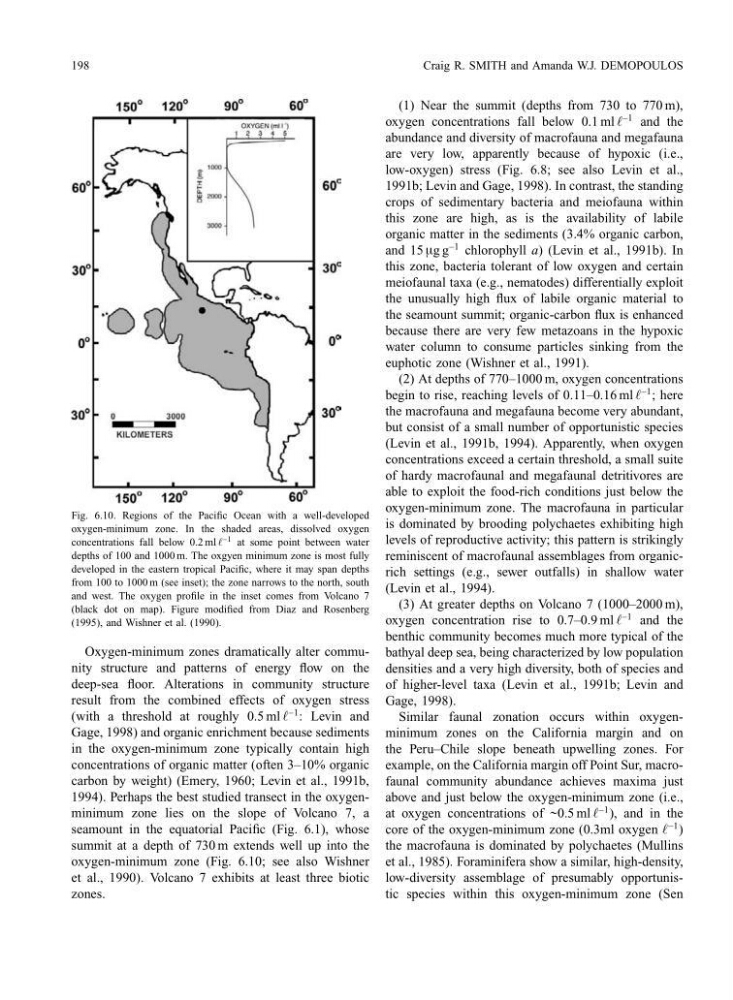
Fig. 6.10. Regions of the Pacific Ocean with a well-developed
oxygen-minimum zone. In the shaded areas, dissolved oxygen
concentrations fall below 0.2 ml ° −1 at some point between water
depths of 100 and 1000 m. The oxgyen minimum zone is most fully
developed in the eastern tropical Pacific, where it may span depths
from 100 to 1000 m (see inset); the zone narrows to the north, south
and west. The oxygen profile in the inset comes from Volcano 7
(black dot on map). Figure modified from Diaz and Rosenberg
(1995), and Wishner et al. (1990).
Oxygen-minimum zones dramatically alter community structure and patterns of energy flow on the
deep-sea floor. Alterations in community structure
result from the combined effects of oxygen stress
(with a threshold at roughly 0.5 ml °
−1 : Levin and
Gage, 1998) and organic enrichment because sediments
in the oxygen-minimum zone typically contain high
concentrations of organic matter (often 3–10% organic
carbon by weight) (Emery, 1960; Levin et al., 1991b,
1994). Perhaps the best studied transect in the oxygenminimum zone lies on the slope of Volcano 7, a
seamount in the equatorial Pacific (Fig. 6.1), whose
summit at a depth of 730 m extends well up into the
oxygen-minimum zone (Fig. 6.10; see also Wishner
et al., 1990). Volcano 7 exhibits at least three biotic
zones.
(1) Near the summit (depths from 730 to 770 m),
oxygen concentrations fall below 0.1 ml °
−1 and the
abundance and diversity of macrofauna and megafauna
are very low, apparently because of hypoxic (i.e.,
low-oxygen) stress (Fig. 6.8; see also Levin et al.,
1991b; Levin and Gage, 1998). In contrast, the standing
crops of sedimentary bacteria and meiofauna within
this zone are high, as is the availability of labile
organic matter in the sediments (3.4% organic carbon,
and 15 mg g
−1 chlorophyll a) (Levin et al., 1991b). In
this zone, bacteria tolerant of low oxygen and certain
meiofaunal taxa (e.g., nematodes) differentially exploit
the unusually high flux of labile organic material to
the seamount summit; organic-carbon flux is enhanced
because there are very few metazoans in the hypoxic
water column to consume particles sinking from the
euphotic zone (Wishner et al., 1991).
(2) At depths of 770–1000 m, oxygen concentrations
begin to rise, reaching levels of 0.11–0.16 ml °
−1 ; here
the macrofauna and megafauna become very abundant,
but consist of a small number of opportunistic species
(Levin et al., 1991b, 1994). Apparently, when oxygen
concentrations exceed a certain threshold, a small suite
of hardy macrofaunal and megafaunal detritivores are
able to exploit the food-rich conditions just below the
oxygen-minimum zone. The macrofauna in particular
is dominated by brooding polychaetes exhibiting high
levels of reproductive activity; this pattern is strikingly
reminiscent of macrofaunal assemblages from organicrich settings (e.g., sewer outfalls) in shallow water
(Levin et al., 1994).
(3) At greater depths on Volcano 7 (1000–2000 m),
oxygen concentration rise to 0.7–0.9 ml °
−1 and the
benthic community becomes much more typical of the
bathyal deep sea, being characterized by low population
densities and a very high diversity, both of species and
of higher-level taxa (Levin et al., 1991b; Levin and
Gage, 1998).
Similar faunal zonation occurs within oxygenminimum zones on the California margin and on
the Peru–Chile slope beneath upwelling zones. For
example, on the California margin off Point Sur, macrofaunal community abundance achieves maxima just
above and just below the oxygen-minimum zone (i.e.,
at oxygen concentrations of ~0.5 ml °
−1 ), and in the
core of the oxygen-minimum zone (0.3ml oxygen °
−1 )
the macrofauna is dominated by polychaetes (Mullins
et al., 1985). Foraminifera show a similar, high-density,
low-diversity assemblage of presumably opportunistic species within this oxygen-minimum zone (Sen
Craig R. SMITH and Amanda W.J. DEMOPOULOS
Fig. 6.10. Regions of the Pacific Ocean with a well-developed
oxygen-minimum zone. In the shaded areas, dissolved oxygen
concentrations fall below 0.2 ml ° −1 at some point between water
depths of 100 and 1000 m. The oxgyen minimum zone is most fully
developed in the eastern tropical Pacific, where it may span depths
from 100 to 1000 m (see inset); the zone narrows to the north, south
and west. The oxygen profile in the inset comes from Volcano 7
(black dot on map). Figure modified from Diaz and Rosenberg
(1995), and Wishner et al. (1990).
Oxygen-minimum zones dramatically alter community structure and patterns of energy flow on the
deep-sea floor. Alterations in community structure
result from the combined effects of oxygen stress
(with a threshold at roughly 0.5 ml °
−1 : Levin and
Gage, 1998) and organic enrichment because sediments
in the oxygen-minimum zone typically contain high
concentrations of organic matter (often 3–10% organic
carbon by weight) (Emery, 1960; Levin et al., 1991b,
1994). Perhaps the best studied transect in the oxygenminimum zone lies on the slope of Volcano 7, a
seamount in the equatorial Pacific (Fig. 6.1), whose
summit at a depth of 730 m extends well up into the
oxygen-minimum zone (Fig. 6.10; see also Wishner
et al., 1990). Volcano 7 exhibits at least three biotic
zones.
(1) Near the summit (depths from 730 to 770 m),
oxygen concentrations fall below 0.1 ml °
−1 and the
abundance and diversity of macrofauna and megafauna
are very low, apparently because of hypoxic (i.e.,
low-oxygen) stress (Fig. 6.8; see also Levin et al.,
1991b; Levin and Gage, 1998). In contrast, the standing
crops of sedimentary bacteria and meiofauna within
this zone are high, as is the availability of labile
organic matter in the sediments (3.4% organic carbon,
and 15 mg g
−1 chlorophyll a) (Levin et al., 1991b). In
this zone, bacteria tolerant of low oxygen and certain
meiofaunal taxa (e.g., nematodes) differentially exploit
the unusually high flux of labile organic material to
the seamount summit; organic-carbon flux is enhanced
because there are very few metazoans in the hypoxic
water column to consume particles sinking from the
euphotic zone (Wishner et al., 1991).
(2) At depths of 770–1000 m, oxygen concentrations
begin to rise, reaching levels of 0.11–0.16 ml °
−1 ; here
the macrofauna and megafauna become very abundant,
but consist of a small number of opportunistic species
(Levin et al., 1991b, 1994). Apparently, when oxygen
concentrations exceed a certain threshold, a small suite
of hardy macrofaunal and megafaunal detritivores are
able to exploit the food-rich conditions just below the
oxygen-minimum zone. The macrofauna in particular
is dominated by brooding polychaetes exhibiting high
levels of reproductive activity; this pattern is strikingly
reminiscent of macrofaunal assemblages from organicrich settings (e.g., sewer outfalls) in shallow water
(Levin et al., 1994).
(3) At greater depths on Volcano 7 (1000–2000 m),
oxygen concentration rise to 0.7–0.9 ml °
−1 and the
benthic community becomes much more typical of the
bathyal deep sea, being characterized by low population
densities and a very high diversity, both of species and
of higher-level taxa (Levin et al., 1991b; Levin and
Gage, 1998).
Similar faunal zonation occurs within oxygenminimum zones on the California margin and on
the Peru–Chile slope beneath upwelling zones. For
example, on the California margin off Point Sur, macrofaunal community abundance achieves maxima just
above and just below the oxygen-minimum zone (i.e.,
at oxygen concentrations of ~0.5 ml °
−1 ), and in the
core of the oxygen-minimum zone (0.3ml oxygen °
−1 )
the macrofauna is dominated by polychaetes (Mullins
et al., 1985). Foraminifera show a similar, high-density,
low-diversity assemblage of presumably opportunistic species within this oxygen-minimum zone (Sen