

628
Climatic Geomorphology
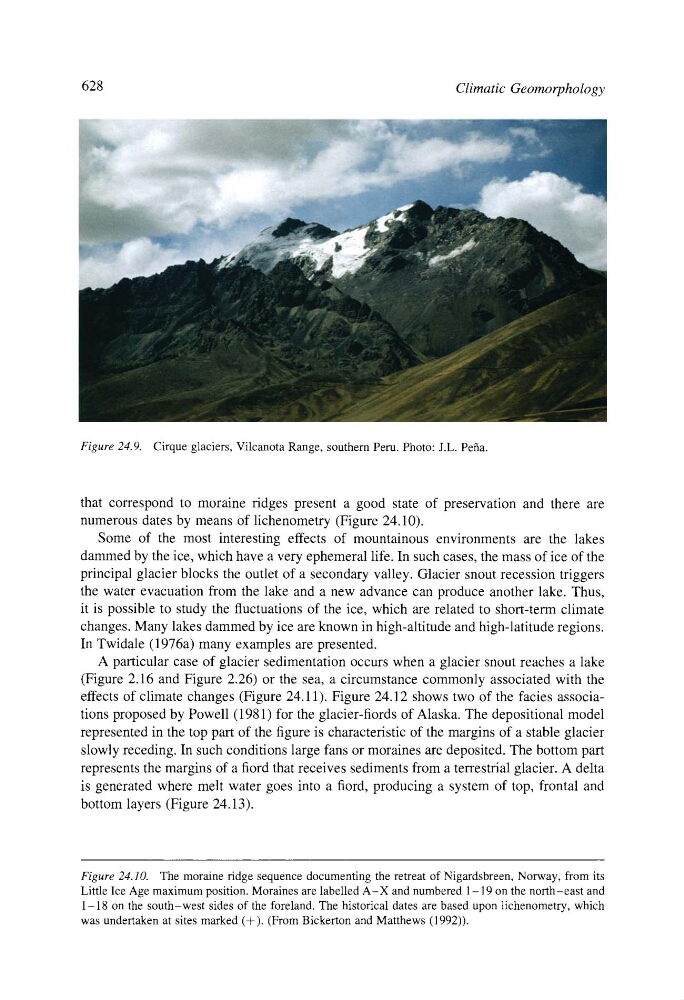
Figure 24.9. Cirque glaciers, Vilcanota Range, southern Peru. Photo: J.L. Pefia.
that correspond to moraine ridges present a good state of preservation and there are
numerous dates by means of lichenometry (Figure 24.10).
Some of the most interesting effects of mountainous environments are the lakes
dammed by the ice, which have a very ephemeral life. In such cases, the mass of ice of the
principal glacier blocks the outlet of a secondary valley. Glacier snout recession triggers
the water evacuation from the lake and a new advance can produce another lake. Thus,
it is possible to study the fluctuations of the ice, which are related to short-term climate
changes. Many lakes dammed by ice are known in high-altitude and high-latitude regions.
In Twidale (1976a) many examples are presented.
A particular case of glacier sedimentation occurs when a glacier snout reaches a lake
(Figure 2.16 and Figure 2.26) or the sea, a circumstance commonly associated with the
effects of climate changes (Figure 24.11). Figure 24.12 shows two of the facies associations proposed by Powell (1981) for the glacier-fiords of Alaska. The depositional model
represented in the top part of the figure is characteristic of the margins of a stable glacier
slowly receding. In such conditions large fans or moraines are deposited. The bottom part
represents the margins of a fiord that receives sediments from a terrestrial glacier. A delta
is generated where melt water goes into a fiord, producing a system of top, frontal and
bottom layers (Figure 24.13).
Figure 24.10. The moraine ridge sequence documenting the retreat of Nigardsbreen, Norway, from its
Little Ice Age maximum position. Moraines are labelled A-X and numbered 1-19 on the north-east and
1-18 on the south-west sides of the foreland. The historical dates are based upon lichenometry, which
was undertaken at sites marked (+). (From Bickerton and Matthews (1992)).