

Applied geomorphology in tropical regions
595
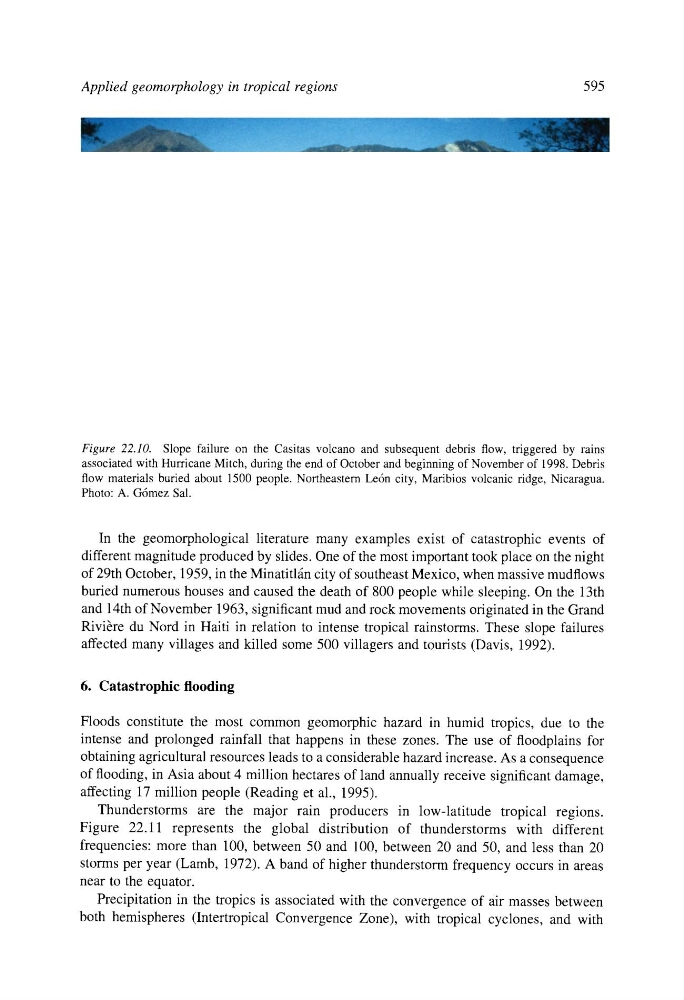
Figure 22.10. Slope failure on the Casitas volcano and subsequent debris flow, triggered by rains
associated with Hurricane Mitch, during the end of October and beginning of November of 1998. Debris
flow materials buried about 1500 people. Northeastern Le6n city, Maribios volcanic ridge, Nicaragua.
Photo: A. G6mez Sal.
In the geomorphological literature many examples exist of catastrophic events of
different magnitude produced by slides. One of the most important took place on the night
of 29th October, 1959, in the Minatitl~in city of southeast Mexico, when massive mudflows
buried numerous houses and caused the death of 800 people while sleeping. On the 13th
and 14th of November 1963, significant mud and rock movements originated in the Grand
Rivibre du Nord in Haiti in relation to intense tropical rainstorms. These slope failures
affected many villages and killed some 500 villagers and tourists (Davis, 1992).
6. Catastrophic flooding
Floods constitute the most common geomorphic hazard in humid tropics, due to the
intense and prolonged rainfall that happens in these zones. The use of floodplains for
obtaining agricultural resources leads to a considerable hazard increase. As a consequence
of flooding, in Asia about 4 million hectares of land annually receive significant damage,
affecting 17 million people (Reading et al., 1995).
Thunderstorms are the major rain producers in low-latitude tropical regions.
Figure 22.11 represents the global distribution of thunderstorms with different
frequencies: more than 100, between 50 and 100, between 20 and 50, and less than 20
storms per year (Lamb, 1972). A band of higher thunderstorm frequency occurs in areas
near to the equator.
Precipitation in the tropics is associated with the convergence of air masses between
both hemispheres (Intertropical Convergence Zone), with tropical cyclones, and with