

498
Climatic Geomorphology
,,
.
.
,,z.
.
.'..':.~' %."
-~,"
"""
", ~.'.'.'.
,~.:. "zi:: ," .~ ".
.. ~!.1
%
~r o..
J
*
**.
9 S
* -* *':.
" 9
"-. ,,
/
*...,'..
J'..;:,, 9
!
.... 9 .....
/
,I!
/-.,~
"'-" '.'',%'.'.j,:'...9149
'.
I
.,
""
/
" "-,.
,," ": :. ~ .'7 ~'~:" "."::.'11.',.'. :':'.'.'.""9
. e
"" ..!
",, t
.-.::. ,,..9149
".'.'.-..'..
I
.'.'"1
~'~-,, 9 "..9 ~'~ ". ""9 " :;4: :.~'.': 9 ""9 .... "..I%
:':." "1
",".'.:
....
.'. . : 9 ." . .~.
""9
x
.. ""9 ."
,/'
" ",..-.".''9
..... : ..... ~.~ ".-'.'." "..9 ,t~.
"-:'.;"1
.,
.:"<'.',.'-'~"::'";'-..':
: . : ".'. ",. :: "a 9 -_
"',,-.:!.1
;:~'.
"~ "<:'.>'.'.'" "'.'
-:" "..'.'.'.,~-"'",.-"
"'1
s ...:
.
|
:..'.. *-... 9 *
". :.
. ."
. 9 ,,
;
~.
9 .
"
: " "" " ""'~"t.""
........
~" ;"
"1"
~'-" '''|
,,.;.
9
,.,.'<-. ,,-":'/
"..
:z-'" I
"-:" "~: ". ".'.'~''9
9
:
".:,;~" ",.
'~**
II
,.4...
L II
*
"%
:*'.:/"~.le.7
: 9
,.
~4
/
-.
..9 ... ~
,~ .:"~,..:..,~...
. .~,'
...
.
,,,,,'.::
.:.
:.a.
"-- ,. -L. /" :.'/.'::9
~"
9 :'..
/I
.:.:.,
:."
i
'",
t ,',."
"~,'.:~, "
9 .....
"4.
I "
""9
9
"."
:';s ,4.
"::
/~.:
"." i.'.
,, ":.:l. 9 :"
9
:..
,'l
9
, '.
""9162
'.
9
","
9
, 9 .....
t
9 4' "(~ II 9 '. '
:'"
9
~ % ",0
9 ...
.....
."
,,
I
9 4 9 4%% .;t('"
9
.'..%
I ::
"::'.', .-"
.} "-': "14". " "~', .,'
':.': 9 : ~
..
L-:,
;?,Y.'::.
~.';,.~: ~, ,4 "~. .,..v. "'. :;:',':.:"" "
l" ,,
[i ~ 13 I'.'--4
0
35 km
L
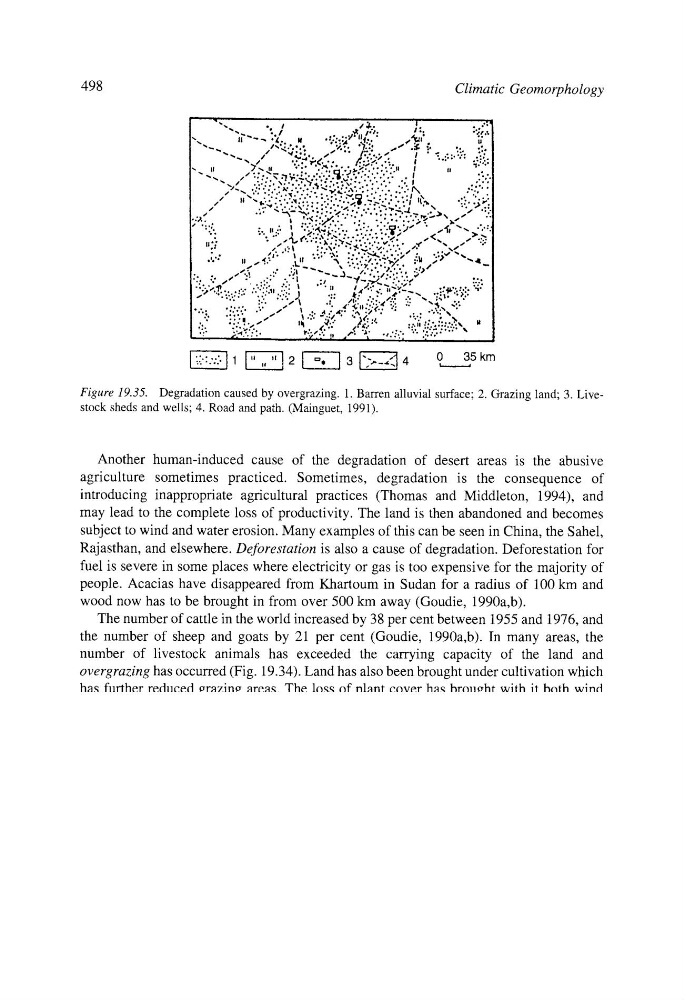
Figure 19.35. Degradation caused by overgrazing. 1. Barren alluvial surface; 2. Grazing land; 3. Livestock sheds and wells" 4. Road and path. (Mainguet, 1991).
Another human-induced cause of the degradation of desert areas is the abusive
agriculture sometimes practiced. Sometimes, degradation is the consequence of
introducing inappropriate agricultural practices (Thomas and Middleton, 1994), and
may lead to the complete loss of productivity. The land is then abandoned and becomes
subject to wind and water erosion. Many examples of this can be seen in China, the Sahel,
Rajasthan, and elsewhere. Deforestation is also a cause of degradation. Deforestation for
fuel is severe in some places where electricity or gas is too expensive for the majority of
people. Acacias have disappeared from Khartoum in Sudan for a radius of 100 km and
wood now has to be brought in from over 500 km away (Goudie, 1990a,b).
The number of cattle in the world increased by 38 per cent between 1955 and 1976, and
the number of sheep and goats by 21 per cent (Goudie, 1990a,b). In many areas, the
number of livestock animals has exceeded the carrying capacity of the land and
overgrazing has occurred (Fig. 19.34). Land has also been brought under cultivation which
has further reduced grazing areas. The loss of plant cover has brought with it both wind
and water erosion. In northern China, steppe vegetation has been degraded by overgrazing
and a series of rings can be seen around wells (Fig. 19.35). These are arranged as a central
area with a radius of 300-500 m where there is little vegetation (often just bare ground), a
second ring with a radius of about 500-1000 m where some resistant grasses and bushes
remain, and then the vegetation returns to normal some 1000-3000 m from the well
(Mainguet, 1991).
Desertification is a serious problem. Technically it can be stopped and many degraded
areas can be restored to production, but the solutions are costly. Preventive measures for
saving plant cover are based on introducing new species more resistant to the lack of water
and the presence of salts. Water usage must also be improved, and wind and water erosion
combated. Ignorance must also be fought, perhaps with social awareness/training
programs aimed at all levels of society.
Climatic Geomorphology
,,
.
.
,,z.
.
.'..':.~' %."
-~,"
"""
", ~.'.'.'.
,~.:. "zi:: ," .~ ".
.. ~!.1
%
~r o..
J
*
**.
9 S
* -* *':.
" 9
"-. ,,
/
*...,'..
J'..;:,, 9
!
.... 9 .....
/
,I!
/-.,~
"'-" '.'',%'.'.j,:'...9149
'.
I
.,
""
/
" "-,.
,," ": :. ~ .'7 ~'~:" "."::.'11.',.'. :':'.'.'.""9
. e
"" ..!
",, t
.-.::. ,,..9149
".'.'.-..'..
I
.'.'"1
~'~-,, 9 "..9 ~'~ ". ""9 " :;4: :.~'.': 9 ""9 .... "..I%
:':." "1
",".'.:
....
.'. . : 9 ." . .~.
""9
x
.. ""9 ."
,/'
" ",..-.".''9
..... : ..... ~.~ ".-'.'." "..9 ,t~.
"-:'.;"1
.,
.:"<'.',.'-'~"::'";'-..':
: . : ".'. ",. :: "a 9 -_
"',,-.:!.1
;:~'.
"~ "<:'.>'.'.'" "'.'
-:" "..'.'.'.,~-"'",.-"
"'1
s ...:
.
|
:..'.. *-... 9 *
". :.
. ."
. 9 ,,
;
~.
9 .
"
: " "" " ""'~"t.""
........
~" ;"
"1"
~'-" '''|
,,.;.
9
,.,.'<-. ,,-":'/
"..
:z-'" I
"-:" "~: ". ".'.'~''9
9
:
".:,;~" ",.
'~**
II
,.4...
L II
*
"%
:*'.:/"~.le.7
: 9
,.
~4
/
-.
..9 ... ~
,~ .:"~,..:..,~...
. .~,'
...
.
,,,,,'.::
.:.
:.a.
"-- ,. -L. /" :.'/.'::9
~"
9 :'..
/I
.:.:.,
:."
i
'",
t ,',."
"~,'.:~, "
9 .....
"4.
I "
""9
9
"."
:';s ,4.
"::
/~.:
"." i.'.
,, ":.:l. 9 :"
9
:..
,'l
9
, '.
""9162
'.
9
","
9
, 9 .....
t
9 4' "(~ II 9 '. '
:'"
9
~ % ",0
9 ...
.....
."
,,
I
9 4 9 4%% .;t('"
9
.'..%
I ::
"::'.', .-"
.} "-': "14". " "~', .,'
':.': 9 : ~
..
L-:,
;?,Y.'::.
~.';,.~: ~, ,4 "~. .,..v. "'. :;:',':.:"" "
l" ,,
[i ~ 13 I'.'--4
0
35 km
L
Figure 19.35. Degradation caused by overgrazing. 1. Barren alluvial surface; 2. Grazing land; 3. Livestock sheds and wells" 4. Road and path. (Mainguet, 1991).
Another human-induced cause of the degradation of desert areas is the abusive
agriculture sometimes practiced. Sometimes, degradation is the consequence of
introducing inappropriate agricultural practices (Thomas and Middleton, 1994), and
may lead to the complete loss of productivity. The land is then abandoned and becomes
subject to wind and water erosion. Many examples of this can be seen in China, the Sahel,
Rajasthan, and elsewhere. Deforestation is also a cause of degradation. Deforestation for
fuel is severe in some places where electricity or gas is too expensive for the majority of
people. Acacias have disappeared from Khartoum in Sudan for a radius of 100 km and
wood now has to be brought in from over 500 km away (Goudie, 1990a,b).
The number of cattle in the world increased by 38 per cent between 1955 and 1976, and
the number of sheep and goats by 21 per cent (Goudie, 1990a,b). In many areas, the
number of livestock animals has exceeded the carrying capacity of the land and
overgrazing has occurred (Fig. 19.34). Land has also been brought under cultivation which
has further reduced grazing areas. The loss of plant cover has brought with it both wind
and water erosion. In northern China, steppe vegetation has been degraded by overgrazing
and a series of rings can be seen around wells (Fig. 19.35). These are arranged as a central
area with a radius of 300-500 m where there is little vegetation (often just bare ground), a
second ring with a radius of about 500-1000 m where some resistant grasses and bushes
remain, and then the vegetation returns to normal some 1000-3000 m from the well
(Mainguet, 1991).
Desertification is a serious problem. Technically it can be stopped and many degraded
areas can be restored to production, but the solutions are costly. Preventive measures for
saving plant cover are based on introducing new species more resistant to the lack of water
and the presence of salts. Water usage must also be improved, and wind and water erosion
combated. Ignorance must also be fought, perhaps with social awareness/training
programs aimed at all levels of society.