

Aeolian processes and erosive landforms
421
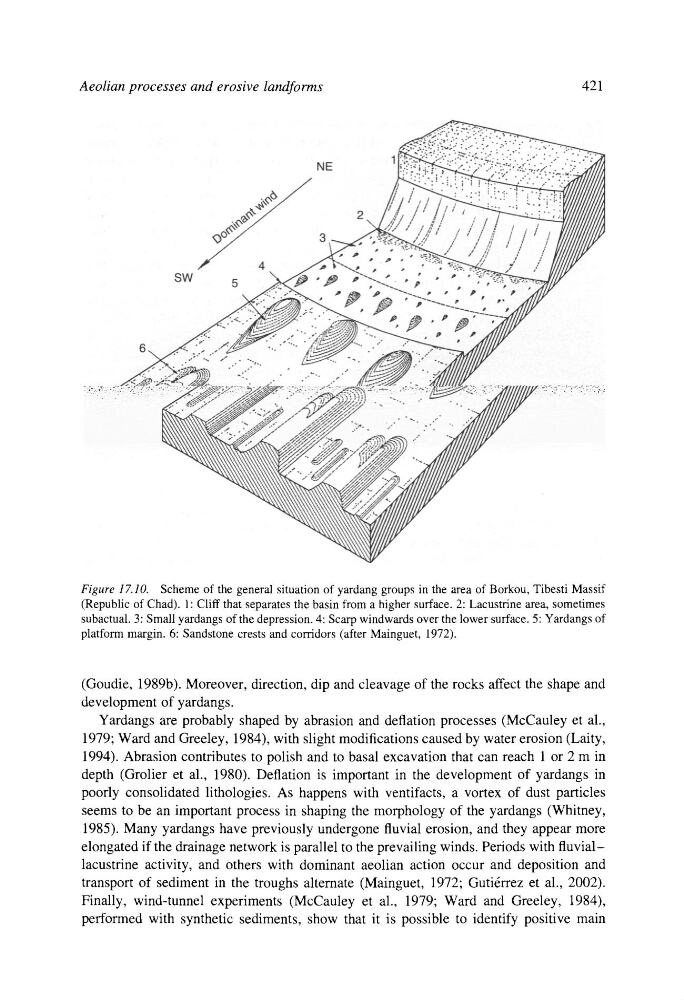
Figure 17.10. Scheme of the general situation of yardang groups in the area of Borkou, Tibesti Massif
(Republic of Chad). 1: Cliff that separates the basin from a higher surface. 2: Lacustrine area, sometimes
subactual. 3: Small yardangs of the depression. 4: Scarp windwards over the lower surface. 5: Yardangs of
platform margin. 6: Sandstone crests and corridors (after Mainguet, 1972).
(Goudie, 1989b). Moreover, direction, dip and cleavage of the rocks affect the shape and
development of yardangs.
Yardangs are probably shaped by abrasion and deflation processes (McCauley et al.,
1979; Ward and Greeley, 1984), with slight modifications caused by water erosion (Laity,
1994). Abrasion contributes to polish and to basal excavation that can reach 1 or 2 m in
depth (Grolier et al., 1980). Deflation is important in the development of yardangs in
poorly consolidated lithologies. As happens with ventifacts, a vortex of dust particles
seems to be an important process in shaping the morphology of the yardangs (Whitney,
1985). Many yardangs have previously undergone fluvial erosion, and they appear more
elongated if the drainage network is parallel to the prevailing winds. Periods with fluviallacustrine activity, and others with dominant aeolian action occur and deposition and
transport of sediment in the troughs alternate (Mainguet, 1972; Guti6rrez et al., 2002).
Finally, wind-tunnel experiments (McCauley et al., 1979; Ward and Greeley, 1984),
performed with synthetic sediments, show that it is possible to identify positive main
421
Figure 17.10. Scheme of the general situation of yardang groups in the area of Borkou, Tibesti Massif
(Republic of Chad). 1: Cliff that separates the basin from a higher surface. 2: Lacustrine area, sometimes
subactual. 3: Small yardangs of the depression. 4: Scarp windwards over the lower surface. 5: Yardangs of
platform margin. 6: Sandstone crests and corridors (after Mainguet, 1972).
(Goudie, 1989b). Moreover, direction, dip and cleavage of the rocks affect the shape and
development of yardangs.
Yardangs are probably shaped by abrasion and deflation processes (McCauley et al.,
1979; Ward and Greeley, 1984), with slight modifications caused by water erosion (Laity,
1994). Abrasion contributes to polish and to basal excavation that can reach 1 or 2 m in
depth (Grolier et al., 1980). Deflation is important in the development of yardangs in
poorly consolidated lithologies. As happens with ventifacts, a vortex of dust particles
seems to be an important process in shaping the morphology of the yardangs (Whitney,
1985). Many yardangs have previously undergone fluvial erosion, and they appear more
elongated if the drainage network is parallel to the prevailing winds. Periods with fluviallacustrine activity, and others with dominant aeolian action occur and deposition and
transport of sediment in the troughs alternate (Mainguet, 1972; Guti6rrez et al., 2002).
Finally, wind-tunnel experiments (McCauley et al., 1979; Ward and Greeley, 1984),
performed with synthetic sediments, show that it is possible to identify positive main