

398
Climatic Geomorphology
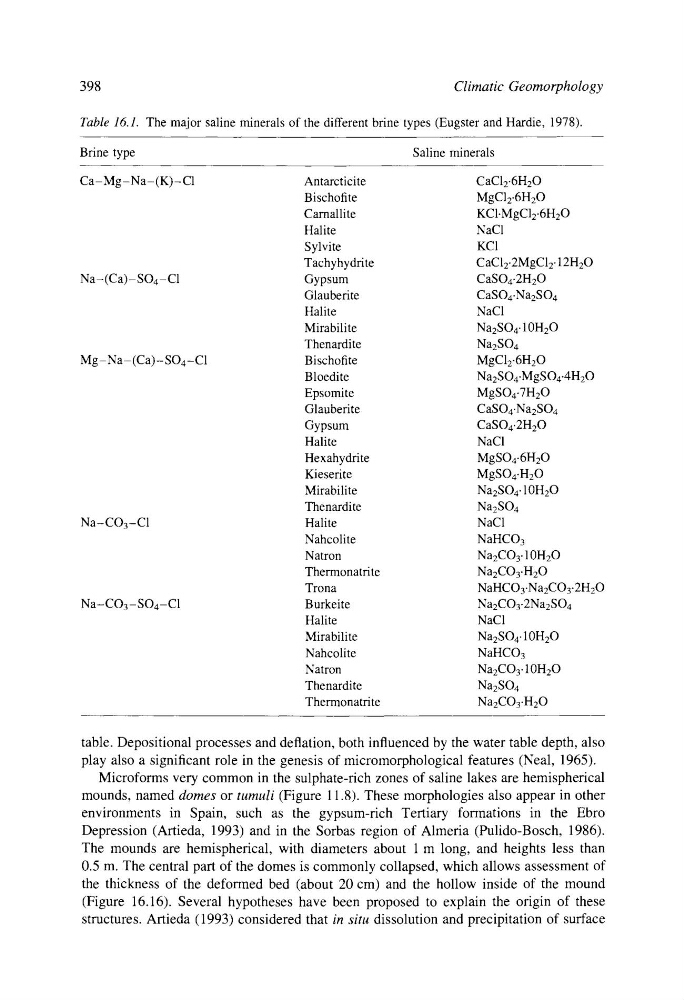
Table 16.1. The major saline minerals of the different brine types (Eugster and Hardie, 1978).
Brine type
Saline minerals
Ca-Mg-Na-(K)-C1
Na-(Ca)-SO4-C1
Mg-Na-(Ca)-SO4-C1
Na-CO3-C1
Na-CO3-SO4-C1
Antarcticite
CaC12.6H20
Bischofite
MgC12.6H20
Carnallite
KC1.MgClz.6H20
Halite
NaC1
Sylvite
KC1
Tachyhydrite
CaClz.2MgCI2.12H20
Gypsum
CaSOa-2H20
Glauberite
CaSO4.NazSO4
Halite
NaC1
Mirabilite
NazSO4-10H20
Thenardite
Na2SO4
Bischofite
MgC12.6H20
Bloedite
Na2SO4.MgSO4.4H20
Epsomite
MgSO4.7H20
Glauberite
CaSO4.Na2SO4
Gypsum
CaSO4.2H20
Halite
NaC1
Hexahydrite
MgSO4.6H20
Kieserite
MgSO4.H20
Mirabilite
NazSO4.10H20
Thenardite
NazSO4
Halite
NaCI
Nahcolite
NaHCO3
Natron
Na2CO3.10H20
Thermonatrite
Na2CO 3"H2 ~
Trona
NaHCO3.Na2CO3.2H20
Burkeite
NazCO3.2NazSO4
Halite
NaC1
Mirabilite
NazSO4.10H20
Nahcolite
NaHCO3
Natron
NazCO3.10H20
Thenardite
NazSO4
Thermonatrite
NazCO3.H20
table. Depositional processes and deflation, both influenced by the water table depth, also
play also a significant role in the genesis of micromorphological features (Neal, 1965).
Microforms very common in the sulphate-rich zones of saline lakes are hemispherical
mounds, named domes or tumuli (Figure 11.8). These morphologies also appear in other
environments in Spain, such as the gypsum-rich Tertiary formations in the Ebro
Depression (Artieda, 1993) and in the Sorbas region of Almeria (Pulido-Bosch, 1986).
The mounds are hemispherical, with diameters about 1 m long, and heights less than
0.5 m. The central part of the domes is commonly collapsed, which allows assessment of
the thickness of the deformed bed (about 20 cm) and the hollow inside of the mound
(Figure 16.16). Several hypotheses have been proposed to explain the origin of these
structures. Artieda (1993) considered that in situ dissolution and precipitation of surface
Climatic Geomorphology
Table 16.1. The major saline minerals of the different brine types (Eugster and Hardie, 1978).
Brine type
Saline minerals
Ca-Mg-Na-(K)-C1
Na-(Ca)-SO4-C1
Mg-Na-(Ca)-SO4-C1
Na-CO3-C1
Na-CO3-SO4-C1
Antarcticite
CaC12.6H20
Bischofite
MgC12.6H20
Carnallite
KC1.MgClz.6H20
Halite
NaC1
Sylvite
KC1
Tachyhydrite
CaClz.2MgCI2.12H20
Gypsum
CaSOa-2H20
Glauberite
CaSO4.NazSO4
Halite
NaC1
Mirabilite
NazSO4-10H20
Thenardite
Na2SO4
Bischofite
MgC12.6H20
Bloedite
Na2SO4.MgSO4.4H20
Epsomite
MgSO4.7H20
Glauberite
CaSO4.Na2SO4
Gypsum
CaSO4.2H20
Halite
NaC1
Hexahydrite
MgSO4.6H20
Kieserite
MgSO4.H20
Mirabilite
NazSO4.10H20
Thenardite
NazSO4
Halite
NaCI
Nahcolite
NaHCO3
Natron
Na2CO3.10H20
Thermonatrite
Na2CO 3"H2 ~
Trona
NaHCO3.Na2CO3.2H20
Burkeite
NazCO3.2NazSO4
Halite
NaC1
Mirabilite
NazSO4.10H20
Nahcolite
NaHCO3
Natron
NazCO3.10H20
Thenardite
NazSO4
Thermonatrite
NazCO3.H20
table. Depositional processes and deflation, both influenced by the water table depth, also
play also a significant role in the genesis of micromorphological features (Neal, 1965).
Microforms very common in the sulphate-rich zones of saline lakes are hemispherical
mounds, named domes or tumuli (Figure 11.8). These morphologies also appear in other
environments in Spain, such as the gypsum-rich Tertiary formations in the Ebro
Depression (Artieda, 1993) and in the Sorbas region of Almeria (Pulido-Bosch, 1986).
The mounds are hemispherical, with diameters about 1 m long, and heights less than
0.5 m. The central part of the domes is commonly collapsed, which allows assessment of
the thickness of the deformed bed (about 20 cm) and the hollow inside of the mound
(Figure 16.16). Several hypotheses have been proposed to explain the origin of these
structures. Artieda (1993) considered that in situ dissolution and precipitation of surface