

376
Climatic Geomorphology
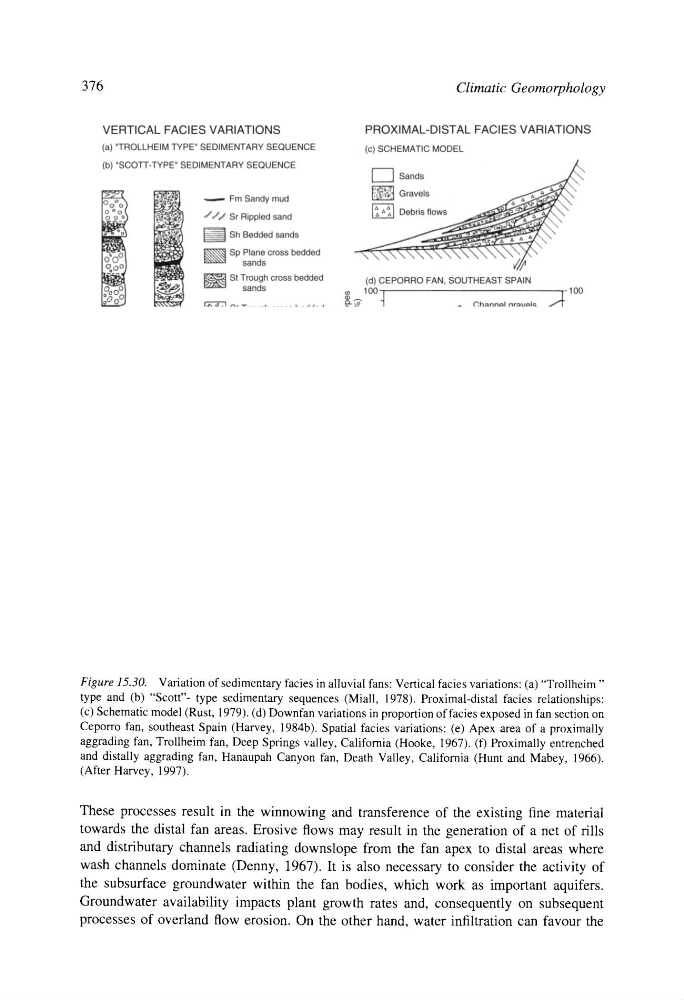
Figure 15.30. Variation of sedimentary facies in alluvial fans: Vertical facies variations: (a) "Trollheim"
type and (b) "Scott"- type sedimentary sequences (Miall, 1978). Proximal-distal facies relationships:
(c) Schematic model (Rust, 1979). (d) Downfan variations in proportion offacies exposed in fan section on
Ceporro fan, southeast Spain (Harvey, 1984b). Spatial facies variations: (e) Apex area of a proximally
aggrading fan, Trollheim fan, Deep Springs valley, California (Hooke, 1967). (f) Proximally entrenched
and distally aggrading fan, Hanaupah Canyon fan, Death Valley, California (Hunt and Mabey, 1966).
(After Harvey, 1997).
These processes result in the winnowing and transference of the existing fine material
towards the distal fan areas. Erosive flows may result in the generation of a net of rills
and distributary channels radiating downslope from the fan apex to distal areas where
wash channels dominate (Denny, 1967). It is also necessary to consider the activity of
the subsurface groundwater within the fan bodies, which work as important aquifers.
Groundwater availability impacts plant growth rates and, consequently on subsequent
processes of overland flow erosion. On the other hand, water infiltration can favour the
Climatic Geomorphology
Figure 15.30. Variation of sedimentary facies in alluvial fans: Vertical facies variations: (a) "Trollheim"
type and (b) "Scott"- type sedimentary sequences (Miall, 1978). Proximal-distal facies relationships:
(c) Schematic model (Rust, 1979). (d) Downfan variations in proportion offacies exposed in fan section on
Ceporro fan, southeast Spain (Harvey, 1984b). Spatial facies variations: (e) Apex area of a proximally
aggrading fan, Trollheim fan, Deep Springs valley, California (Hooke, 1967). (f) Proximally entrenched
and distally aggrading fan, Hanaupah Canyon fan, Death Valley, California (Hunt and Mabey, 1966).
(After Harvey, 1997).
These processes result in the winnowing and transference of the existing fine material
towards the distal fan areas. Erosive flows may result in the generation of a net of rills
and distributary channels radiating downslope from the fan apex to distal areas where
wash channels dominate (Denny, 1967). It is also necessary to consider the activity of
the subsurface groundwater within the fan bodies, which work as important aquifers.
Groundwater availability impacts plant growth rates and, consequently on subsequent
processes of overland flow erosion. On the other hand, water infiltration can favour the