

310
Climatic Geomorphology
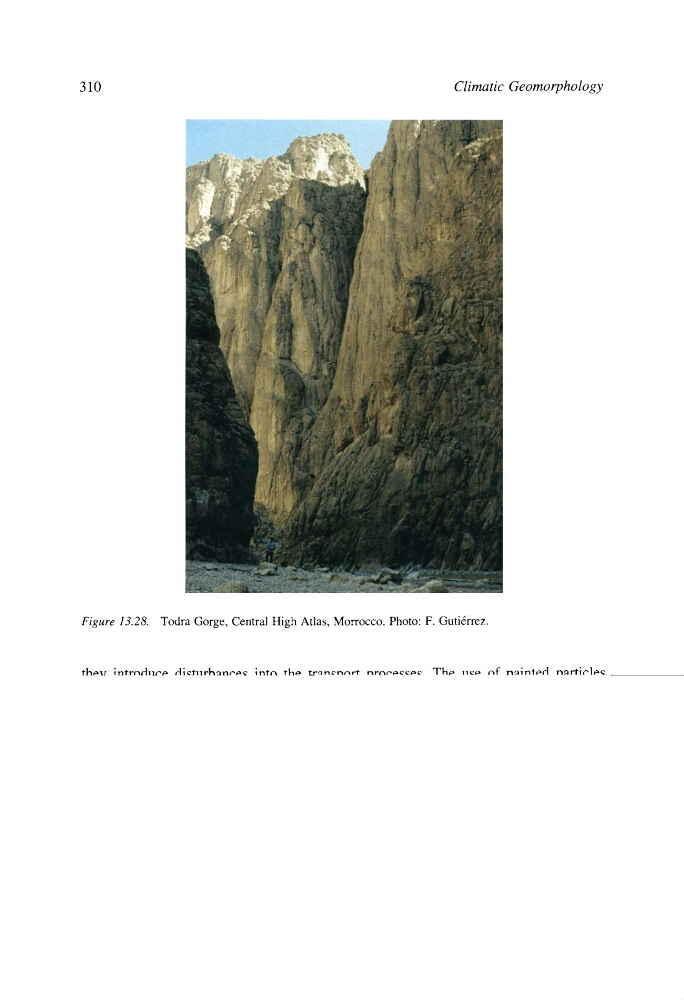
Figure 13.28. Todra Gorge, Central High Atlas, Morrocco. Photo: F. Guti6rrez.
they introduce disturbances into the transport processes. The use of painted particles
(Leopold et al., 1964) or magnetized pebbles that enable the clasts to be found with a metal
detector after the flow, allows the movement of these marked clasts to be studied. Leopold
et al. (1966) found movements of clasts up to 3 km downstream during a flood in a
predominantly sand-bed channel. Schick et al. (1987) used marked clasts and a detector
in a gravel channel to locate where they were buried. Over various floods the importance
of excavation and deposition in the transport of buried particles towards the surface and
vice versa (Figure 13.33) was apparent.
A typical model for ephemeral rivers was described by Bull (1991, 1997) for arroyos
of the southeastern USA. This author found a sequence that repeated itself along the
arroyo of alternating reaches dominated by processes of aggradation and degradation.
The sequence described is the following: a headcut reach (Figure 13.34) that concentrates
sheetflow; a channel with vertical walls then directs the flow towards the apex of a channel
fan; braided channels that end in an area of divergent sheetflow, and the sequence is closed
by convergent sheetflow that again drains towards a headcut reach (Figure 13.35).
Climatic Geomorphology
Figure 13.28. Todra Gorge, Central High Atlas, Morrocco. Photo: F. Guti6rrez.
they introduce disturbances into the transport processes. The use of painted particles
(Leopold et al., 1964) or magnetized pebbles that enable the clasts to be found with a metal
detector after the flow, allows the movement of these marked clasts to be studied. Leopold
et al. (1966) found movements of clasts up to 3 km downstream during a flood in a
predominantly sand-bed channel. Schick et al. (1987) used marked clasts and a detector
in a gravel channel to locate where they were buried. Over various floods the importance
of excavation and deposition in the transport of buried particles towards the surface and
vice versa (Figure 13.33) was apparent.
A typical model for ephemeral rivers was described by Bull (1991, 1997) for arroyos
of the southeastern USA. This author found a sequence that repeated itself along the
arroyo of alternating reaches dominated by processes of aggradation and degradation.
The sequence described is the following: a headcut reach (Figure 13.34) that concentrates
sheetflow; a channel with vertical walls then directs the flow towards the apex of a channel
fan; braided channels that end in an area of divergent sheetflow, and the sequence is closed
by convergent sheetflow that again drains towards a headcut reach (Figure 13.35).