

Desert surfaces: pavements, patterned ground, varnishes and crusts
271
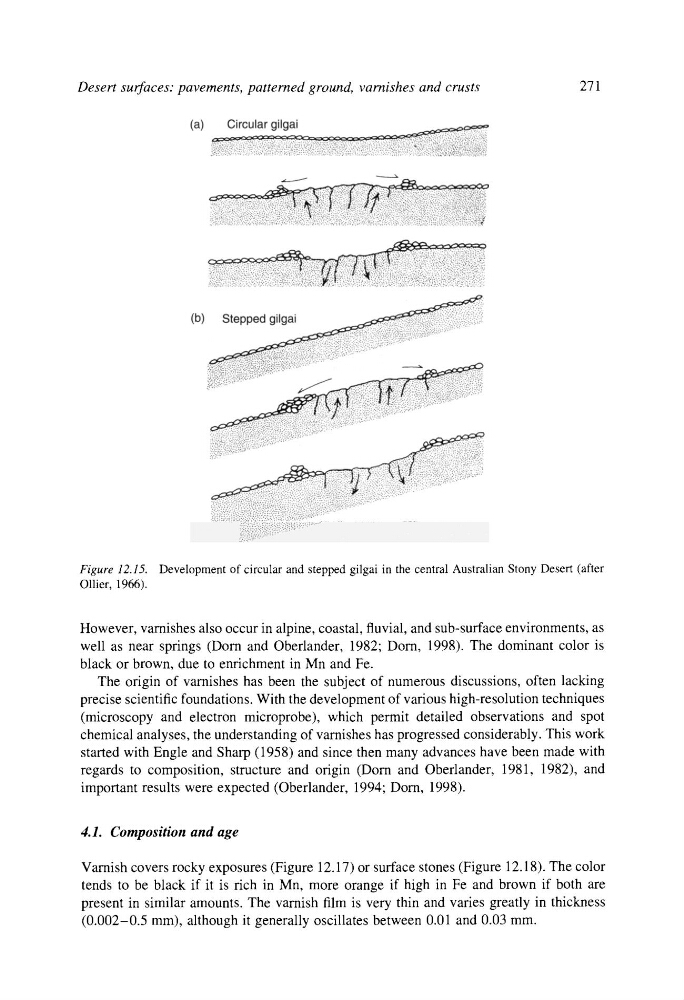
Figure 12.15. Development of circular and stepped gilgai in the central Australian Stony Desert (after
Oilier, 1966).
However, varnishes also occur in alpine, coastal, fluvial, and sub-surface environments, as
well as near springs (Dorn and Oberlander, 1982; Dorn, 1998). The dominant color is
black or brown, due to enrichment in Mn and Fe.
The origin of varnishes has been the subject of numerous discussions, often lacking
precise scientific foundations. With the development of various high-resolution techniques
(microscopy and electron microprobe), which permit detailed observations and spot
chemical analyses, the understanding of varnishes has progressed considerably. This work
started with Engle and Sharp (1958) and since then many advances have been made with
regards to composition, structure and origin (Dorn and Oberlander, 1981, 1982), and
important results were expected (Oberlander, 1994; Dorn, 1998).
4.1. Composition and age
Varnish covers rocky exposures (Figure 12.17) or surface stones (Figure 12.18). The color
tends to be black if it is rich in Mn, more orange if high in Fe and brown if both are
present in similar amounts. The varnish film is very thin and varies greatly in thickness
(0.002-0.5 mm), although it generally oscillates between 0.01 and 0.03 mm.
271
Figure 12.15. Development of circular and stepped gilgai in the central Australian Stony Desert (after
Oilier, 1966).
However, varnishes also occur in alpine, coastal, fluvial, and sub-surface environments, as
well as near springs (Dorn and Oberlander, 1982; Dorn, 1998). The dominant color is
black or brown, due to enrichment in Mn and Fe.
The origin of varnishes has been the subject of numerous discussions, often lacking
precise scientific foundations. With the development of various high-resolution techniques
(microscopy and electron microprobe), which permit detailed observations and spot
chemical analyses, the understanding of varnishes has progressed considerably. This work
started with Engle and Sharp (1958) and since then many advances have been made with
regards to composition, structure and origin (Dorn and Oberlander, 1981, 1982), and
important results were expected (Oberlander, 1994; Dorn, 1998).
4.1. Composition and age
Varnish covers rocky exposures (Figure 12.17) or surface stones (Figure 12.18). The color
tends to be black if it is rich in Mn, more orange if high in Fe and brown if both are
present in similar amounts. The varnish film is very thin and varies greatly in thickness
(0.002-0.5 mm), although it generally oscillates between 0.01 and 0.03 mm.