

176
Climatic Geomorphology
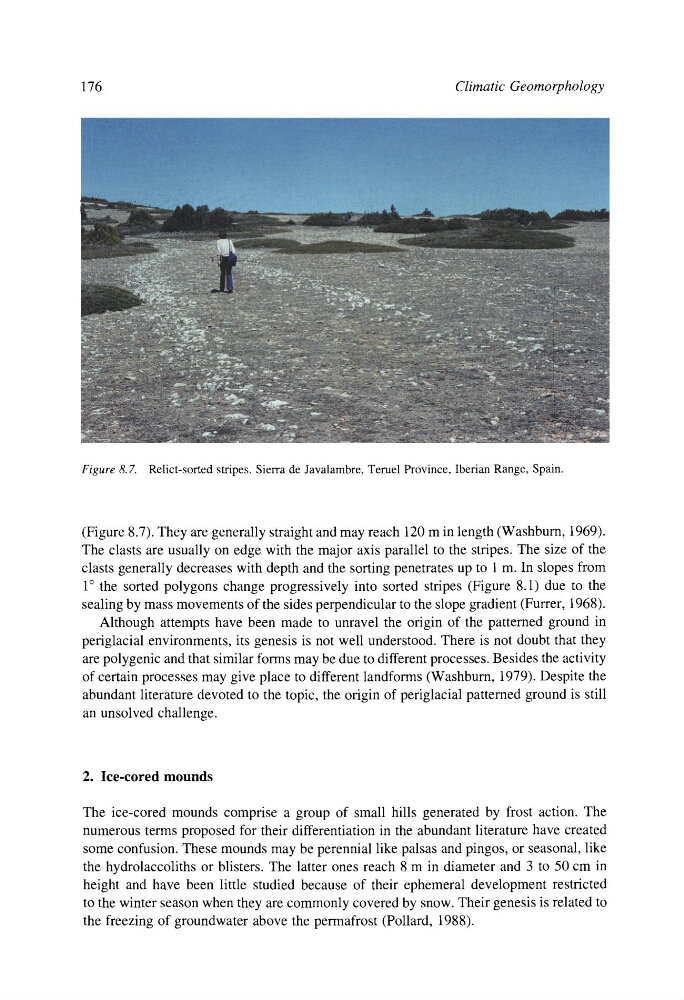
Figure 8.7. Relict-sorted stripes. Sierra de Javalambre, Teruel Province, Iberian Range, Spain.
(Figure 8.7). They are generally straight and may reach 120 m in length (Washburn, 1969).
The clasts are usually on edge with the major axis parallel to the stripes. The size of the
clasts generally decreases with depth and the sorting penetrates up to 1 m. In slopes from
1 ~ the sorted polygons change progressively into sorted stripes (Figure 8.1) due to the
sealing by mass movements of the sides perpendicular to the slope gradient (Furrer, 1968).
Although attempts have been made to unravel the origin of the patterned ground in
periglacial environments, its genesis is not well understood. There is not doubt that they
are polygenic and that similar forms may be due to different processes. Besides the activity
of certain processes may give place to different landforms (Washburn, 1979). Despite the
abundant literature devoted to the topic, the origin of periglacial patterned ground is still
an unsolved challenge.
2. Ice-cored mounds
The ice-cored mounds comprise a group of small hills generated by frost action. The
numerous terms proposed for their differentiation in the abundant literature have created
some confusion. These mounds may be perennial like palsas and pingos, or seasonal, like
the hydrolaccoliths or blisters. The latter ones reach 8 m in diameter and 3 to 50 cm in
height and have been little studied because of their ephemeral development restricted
to the winter season when they are commonly covered by snow. Their genesis is related to
the freezing of groundwater above the permafrost (Pollard, 1988).
Climatic Geomorphology
Figure 8.7. Relict-sorted stripes. Sierra de Javalambre, Teruel Province, Iberian Range, Spain.
(Figure 8.7). They are generally straight and may reach 120 m in length (Washburn, 1969).
The clasts are usually on edge with the major axis parallel to the stripes. The size of the
clasts generally decreases with depth and the sorting penetrates up to 1 m. In slopes from
1 ~ the sorted polygons change progressively into sorted stripes (Figure 8.1) due to the
sealing by mass movements of the sides perpendicular to the slope gradient (Furrer, 1968).
Although attempts have been made to unravel the origin of the patterned ground in
periglacial environments, its genesis is not well understood. There is not doubt that they
are polygenic and that similar forms may be due to different processes. Besides the activity
of certain processes may give place to different landforms (Washburn, 1979). Despite the
abundant literature devoted to the topic, the origin of periglacial patterned ground is still
an unsolved challenge.
2. Ice-cored mounds
The ice-cored mounds comprise a group of small hills generated by frost action. The
numerous terms proposed for their differentiation in the abundant literature have created
some confusion. These mounds may be perennial like palsas and pingos, or seasonal, like
the hydrolaccoliths or blisters. The latter ones reach 8 m in diameter and 3 to 50 cm in
height and have been little studied because of their ephemeral development restricted
to the winter season when they are commonly covered by snow. Their genesis is related to
the freezing of groundwater above the permafrost (Pollard, 1988).