

140
Climatic Geomorphology
by freshwater, cohesion reduces, the clays liquefy and they can flow through long
distances, even at low gradients. They are called quick clays due to this change in
behaviour and subsequent flow, and are very common in Canada and Scandinavia
(Veder, 1981; Aune, 1983).
One of the most important failures linked to the activity of quick clays is that triggered
in the coastal city of Anchorage, Alaska, on 27 March 1964, which was triggered by
the greatest earthquake recorded in North America. The failure seems to be due to the
presence of water-saturated glaciomarine clays (Figure 6.14). The landslide went into the
valleys and inlets and destroyed 75 houses of a residential area. In this type of failure
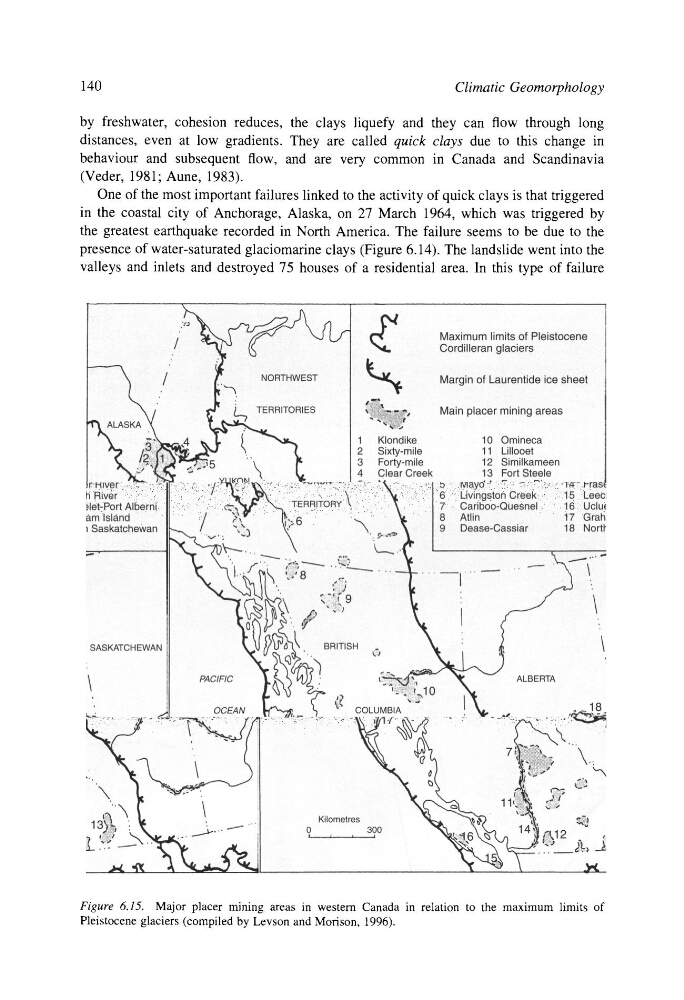
Figure 6.15. Major placer mining areas in western Canada in relation to the maximum limits of
Pleistocene glaciers (compiled by Levson and Morison, 1996).
Climatic Geomorphology
by freshwater, cohesion reduces, the clays liquefy and they can flow through long
distances, even at low gradients. They are called quick clays due to this change in
behaviour and subsequent flow, and are very common in Canada and Scandinavia
(Veder, 1981; Aune, 1983).
One of the most important failures linked to the activity of quick clays is that triggered
in the coastal city of Anchorage, Alaska, on 27 March 1964, which was triggered by
the greatest earthquake recorded in North America. The failure seems to be due to the
presence of water-saturated glaciomarine clays (Figure 6.14). The landslide went into the
valleys and inlets and destroyed 75 houses of a residential area. In this type of failure
Figure 6.15. Major placer mining areas in western Canada in relation to the maximum limits of
Pleistocene glaciers (compiled by Levson and Morison, 1996).