

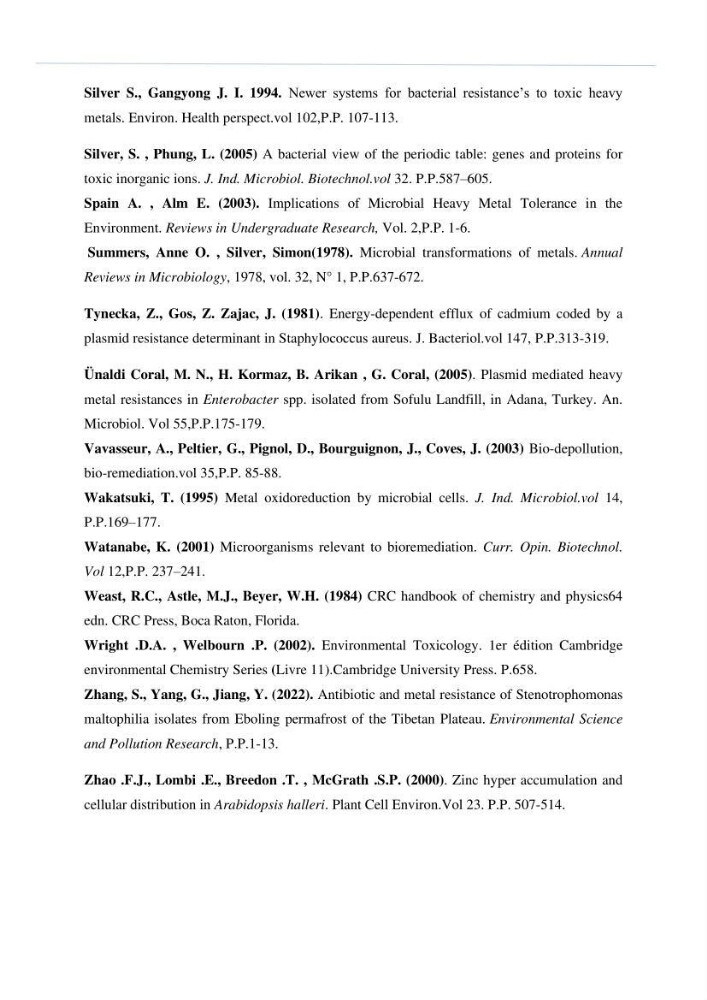
Silver S., Gangyong J. I. 1994. Newer systems for bacterial resistance’s to toxic heavy
metals. Environ. Health perspect.vol 102,P.P. 107-113.
Silver, S. , Phung, L. (2005) A bacterial view of the periodic table: genes and proteins for
toxic inorganic ions. J. Ind. Microbiol. Biotechnol.vol 32. P.P.587–605.
Spain A. , Alm E. (2003). Implications of Microbial Heavy Metal Tolerance in the
Environment. Reviews in Undergraduate Research, Vol. 2,P.P. 1-6.
Summers, Anne O. , Silver, Simon(1978). Microbial transformations of metals. Annual
Reviews in Microbiology, 1978, vol. 32, N° 1, P.P.637-672.
Tynecka, Z., Gos, Z. Zajac, J. (1981). Energy-dependent efflux of cadmium coded by a
plasmid resistance determinant in Staphylococcus aureus. J. Bacteriol.vol 147, P.P.313-319.
Ünaldi Coral, M. N., H. Kormaz, B. Arikan , G. Coral, (2005). Plasmid mediated heavy
metal resistances in Enterobacter spp. isolated from Sofulu Landfill, in Adana, Turkey. An.
Microbiol. Vol 55,P.P.175-179.
Vavasseur, A., Peltier, G., Pignol, D., Bourguignon, J., Coves, J. (2003) Bio-depollution,
bio-remediation.vol 35,P.P. 85-88.
Wakatsuki, T. (1995) Metal oxidoreduction by microbial cells. J. Ind. Microbiol.vol 14,
P.P.169–177.
Watanabe, K. (2001) Microorganisms relevant to bioremediation. Curr. Opin. Biotechnol.
Vol 12,P.P. 237–241.
Weast, R.C., Astle, M.J., Beyer, W.H. (1984) CRC handbook of chemistry and physics64
edn. CRC Press, Boca Raton, Florida.
Wright .D.A. , Welbourn .P. (2002). Environmental Toxicology. 1er édition Cambridge
environmental Chemistry Series (Livre 11).Cambridge University Press. P.658.
Zhang, S., Yang, G., Jiang, Y. (2022). Antibiotic and metal resistance of Stenotrophomonas
maltophilia isolates from Eboling permafrost of the Tibetan Plateau. Environmental Science
and Pollution Research, P.P.1-13.
Zhao .F.J., Lombi .E., Breedon .T. , McGrath .S.P. (2000). Zinc hyper accumulation and
cellular distribution in Arabidopsis halleri. Plant Cell Environ.Vol 23. P.P. 507-514.
metals. Environ. Health perspect.vol 102,P.P. 107-113.
Silver, S. , Phung, L. (2005) A bacterial view of the periodic table: genes and proteins for
toxic inorganic ions. J. Ind. Microbiol. Biotechnol.vol 32. P.P.587–605.
Spain A. , Alm E. (2003). Implications of Microbial Heavy Metal Tolerance in the
Environment. Reviews in Undergraduate Research, Vol. 2,P.P. 1-6.
Summers, Anne O. , Silver, Simon(1978). Microbial transformations of metals. Annual
Reviews in Microbiology, 1978, vol. 32, N° 1, P.P.637-672.
Tynecka, Z., Gos, Z. Zajac, J. (1981). Energy-dependent efflux of cadmium coded by a
plasmid resistance determinant in Staphylococcus aureus. J. Bacteriol.vol 147, P.P.313-319.
Ünaldi Coral, M. N., H. Kormaz, B. Arikan , G. Coral, (2005). Plasmid mediated heavy
metal resistances in Enterobacter spp. isolated from Sofulu Landfill, in Adana, Turkey. An.
Microbiol. Vol 55,P.P.175-179.
Vavasseur, A., Peltier, G., Pignol, D., Bourguignon, J., Coves, J. (2003) Bio-depollution,
bio-remediation.vol 35,P.P. 85-88.
Wakatsuki, T. (1995) Metal oxidoreduction by microbial cells. J. Ind. Microbiol.vol 14,
P.P.169–177.
Watanabe, K. (2001) Microorganisms relevant to bioremediation. Curr. Opin. Biotechnol.
Vol 12,P.P. 237–241.
Weast, R.C., Astle, M.J., Beyer, W.H. (1984) CRC handbook of chemistry and physics64
edn. CRC Press, Boca Raton, Florida.
Wright .D.A. , Welbourn .P. (2002). Environmental Toxicology. 1er édition Cambridge
environmental Chemistry Series (Livre 11).Cambridge University Press. P.658.
Zhang, S., Yang, G., Jiang, Y. (2022). Antibiotic and metal resistance of Stenotrophomonas
maltophilia isolates from Eboling permafrost of the Tibetan Plateau. Environmental Science
and Pollution Research, P.P.1-13.
Zhao .F.J., Lombi .E., Breedon .T. , McGrath .S.P. (2000). Zinc hyper accumulation and
cellular distribution in Arabidopsis halleri. Plant Cell Environ.Vol 23. P.P. 507-514.