

Aquatic Organic Matter Fluorescence
99
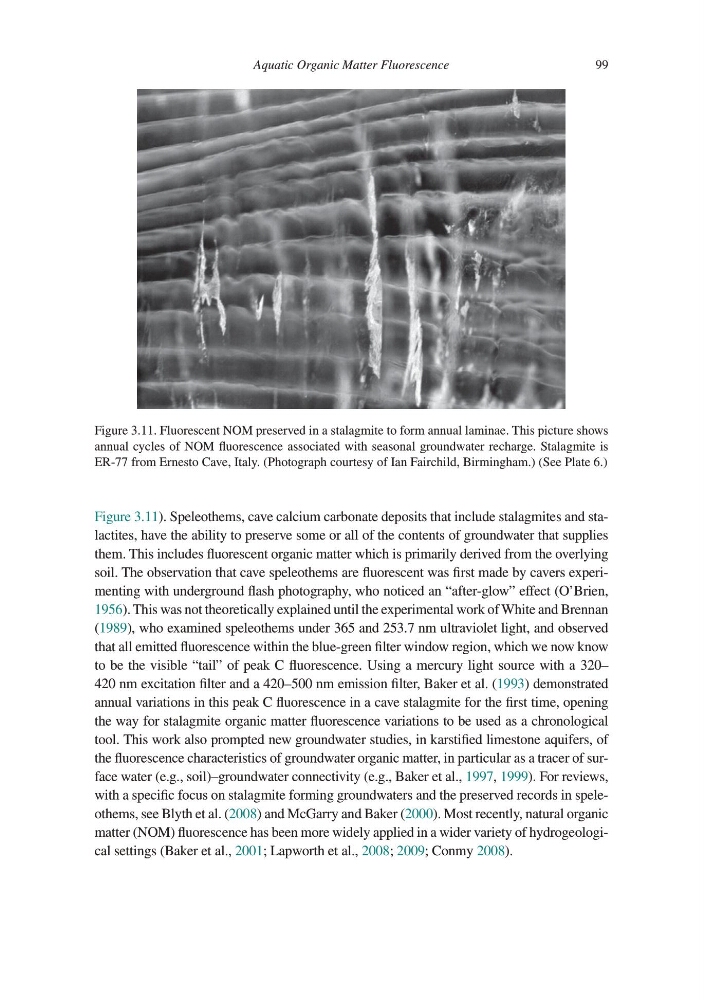
Figure 3.11). Speleothems, cave calcium carbonate deposits that include stalagmites and stalactites, have the ability to preserve some or all of the contents of groundwater that supplies
them. This includes fluorescent organic matter which is primarily derived from the overlying
soil. The observation that cave speleothems are fluorescent was first made by cavers experimenting with underground flash photography, who noticed an “after-glow” effect (O’Brien,
1956). This was not theoretically explained until the experimental work of White and Brennan
(1989), who examined speleothems under 365 and 253.7 nm ultraviolet light, and observed
that all emitted fluorescence within the blue-green filter window region, which we now know
to be the visible “tail” of peak C fluorescence. Using a mercury light source with a 320–
420 nm excitation filter and a 420–500 nm emission filter, Baker et al. (1993) demonstrated
annual variations in this peak C fluorescence in a cave stalagmite for the first time, opening
the way for stalagmite organic matter fluorescence variations to be used as a chronological
tool. This work also prompted new groundwater studies, in karstified limestone aquifers, of
the fluorescence characteristics of groundwater organic matter, in particular as a tracer of surface water (e.g., soil)–groundwater connectivity (e.g., Baker et al., 1997, 1999). For reviews,
with a specific focus on stalagmite forming groundwaters and the preserved records in speleothems, see Blyth et al. (2008) and McGarry and Baker (2000). Most recently, natural organic
matter (NOM) fluorescence has been more widely applied in a wider variety of hydrogeological settings (Baker et al., 2001; Lapworth et al., 2008; 2009; Conmy 2008).
Figure 3.11. Fluorescent NOM preserved in a stalagmite to form annual laminae. This picture shows
annual cycles of NOM fluorescence associated with seasonal groundwater recharge. Stalagmite is
ER-77 from Ernesto Cave, Italy. (Photograph courtesy of Ian Fairchild, Birmingham.) (See Plate 6.)
99
Figure 3.11). Speleothems, cave calcium carbonate deposits that include stalagmites and stalactites, have the ability to preserve some or all of the contents of groundwater that supplies
them. This includes fluorescent organic matter which is primarily derived from the overlying
soil. The observation that cave speleothems are fluorescent was first made by cavers experimenting with underground flash photography, who noticed an “after-glow” effect (O’Brien,
1956). This was not theoretically explained until the experimental work of White and Brennan
(1989), who examined speleothems under 365 and 253.7 nm ultraviolet light, and observed
that all emitted fluorescence within the blue-green filter window region, which we now know
to be the visible “tail” of peak C fluorescence. Using a mercury light source with a 320–
420 nm excitation filter and a 420–500 nm emission filter, Baker et al. (1993) demonstrated
annual variations in this peak C fluorescence in a cave stalagmite for the first time, opening
the way for stalagmite organic matter fluorescence variations to be used as a chronological
tool. This work also prompted new groundwater studies, in karstified limestone aquifers, of
the fluorescence characteristics of groundwater organic matter, in particular as a tracer of surface water (e.g., soil)–groundwater connectivity (e.g., Baker et al., 1997, 1999). For reviews,
with a specific focus on stalagmite forming groundwaters and the preserved records in speleothems, see Blyth et al. (2008) and McGarry and Baker (2000). Most recently, natural organic
matter (NOM) fluorescence has been more widely applied in a wider variety of hydrogeological settings (Baker et al., 2001; Lapworth et al., 2008; 2009; Conmy 2008).
Figure 3.11. Fluorescent NOM preserved in a stalagmite to form annual laminae. This picture shows
annual cycles of NOM fluorescence associated with seasonal groundwater recharge. Stalagmite is
ER-77 from Ernesto Cave, Italy. (Photograph courtesy of Ian Fairchild, Birmingham.) (See Plate 6.)