

The molecular structure of the H cluster represented a new type of
bioinorganic cluster. The involvement of two toxic compounds, carbon
monoxide and cyanide, in the reduction reaction to form the H 2 bond was
without precedent. Research to unambiguously identify all of the ligands
and to understand the enzymatic mechanism is ongoing (Armstrong 2004).
Efforts to mimic this unusual cluster have been successful as a synthetic
compound was synthesized in a configuration similar to that of the H
cluster (Figure 11.9). By activating an initial Fe–Fe unit with a thioacetyl
group and protecting the 4Fe–4S cluster with a large ligand, the cluster
could be assembled despite the sensitivity of these inorganic materials, as
well as of the natural enzyme, to oxygen (Tanti et al. 2005). Although
the efficiency was limited, the synthetic cluster was able to catalyze the
reduction of H
+ to H 2 . Comparison of the properties, including the infrared
spectra, of the synthesized compound with that of the natural system should
greatly aid in our understanding of hydrogenases.
234
PART 2
QUANTUM MECHANICS AND SPECTROSCOPY
2095
2077
2000
1986
1971
1947
1810
2095
1971
1974
2017
1810
2077
1971
1948
2072
2086
1802
2150
(c)
(b)
(a)
2100
CN
0.01
Terminal CO
Bridging CO
2050 2000 1950 1900 1850 1800 1750
Absorbance
Wavenumber (cm
Ϫ1
)
13
CO added
12
CO added
Oxidized
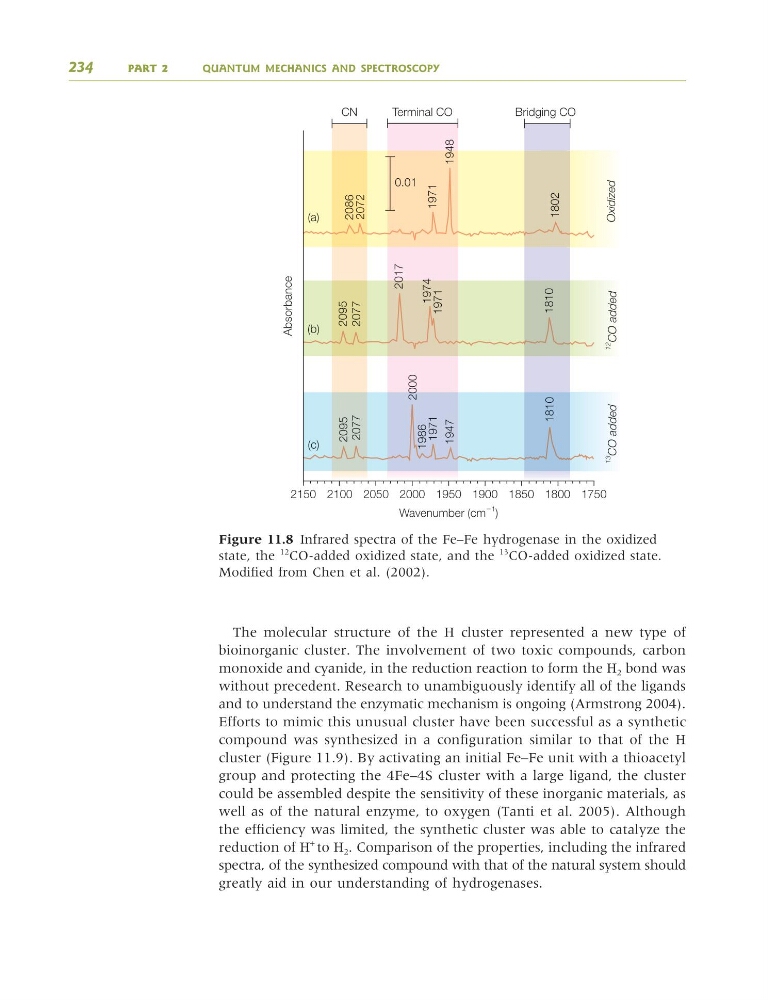
Figure 11.8 Infrared spectra of the Fe–Fe hydrogenase in the oxidized
state, the
12 CO-added oxidized state, and the
13 CO-added oxidized state.
Modified from Chen et al. (2002).
9781405124362_4_011.qxd 4/29/08 9:11 Page 234
bioinorganic cluster. The involvement of two toxic compounds, carbon
monoxide and cyanide, in the reduction reaction to form the H 2 bond was
without precedent. Research to unambiguously identify all of the ligands
and to understand the enzymatic mechanism is ongoing (Armstrong 2004).
Efforts to mimic this unusual cluster have been successful as a synthetic
compound was synthesized in a configuration similar to that of the H
cluster (Figure 11.9). By activating an initial Fe–Fe unit with a thioacetyl
group and protecting the 4Fe–4S cluster with a large ligand, the cluster
could be assembled despite the sensitivity of these inorganic materials, as
well as of the natural enzyme, to oxygen (Tanti et al. 2005). Although
the efficiency was limited, the synthetic cluster was able to catalyze the
reduction of H
+ to H 2 . Comparison of the properties, including the infrared
spectra, of the synthesized compound with that of the natural system should
greatly aid in our understanding of hydrogenases.
234
PART 2
QUANTUM MECHANICS AND SPECTROSCOPY
2095
2077
2000
1986
1971
1947
1810
2095
1971
1974
2017
1810
2077
1971
1948
2072
2086
1802
2150
(c)
(b)
(a)
2100
CN
0.01
Terminal CO
Bridging CO
2050 2000 1950 1900 1850 1800 1750
Absorbance
Wavenumber (cm
Ϫ1
)
13
CO added
12
CO added
Oxidized
Figure 11.8 Infrared spectra of the Fe–Fe hydrogenase in the oxidized
state, the
12 CO-added oxidized state, and the
13 CO-added oxidized state.
Modified from Chen et al. (2002).
9781405124362_4_011.qxd 4/29/08 9:11 Page 234