

192
9.
X—RAYS
“
penetrating power or wave-length. The latter also determines
,
the energy
content in each quantum.
X-rays are of the same
‘
nature as light rays except that their wave—lengths are much less,
of the order of one angstrom (lO*8 centimeter), as compared with
'
5000 for light rays, and the energy in each of their quanta is much
.
greater.
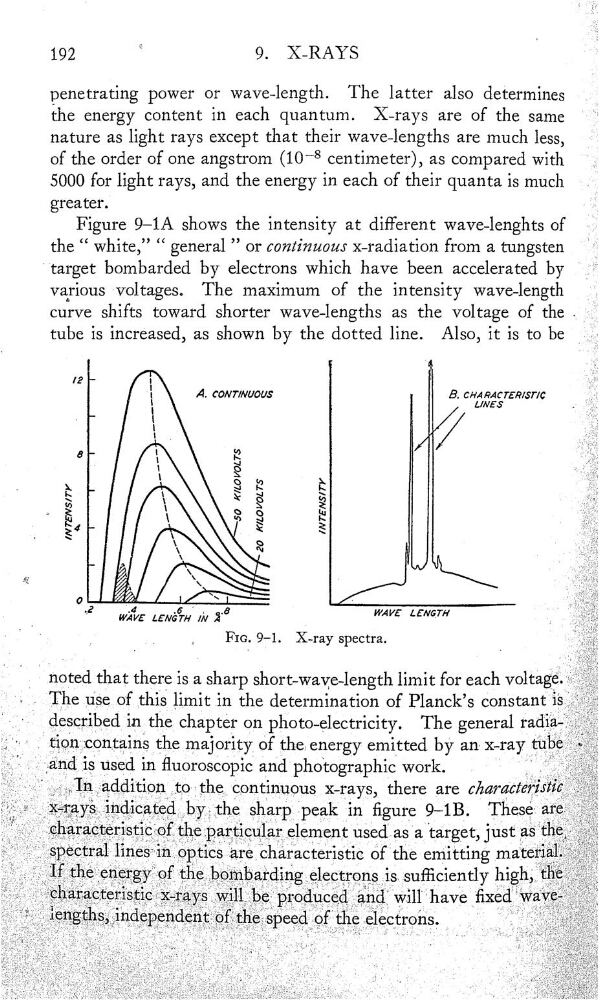
Figure 9—1A shows the intensity at different wave-lenghts of
the
“
White,”
“
general
”
or continuous X—radiation from a tungsten
"target bombarded by electrons which have been accelerated by
various -voltages. The maximum of the intensity wave-length
curve
shifts toward shorter wave-lengths as the voltage of the
._
tube is increased, as shown by the dotted line. Also, it is to be
A. CONTINUÛUS
B. CHÛÂÎÊÊTER/SÏ/Ç
a
‘.‘3
/
.
x
3 :?
È
ë
%
.
“
Ë
%
3
E
,
ä“
"
È
%
.
"2
Wii/£
2'8
WAVE
“”””
‘
’
_
FIG. 9—1.
X-ray spectra.
…
noted. that there is a sharp short—wave—length limit for each
The uSe of this limit in the determination of Planck’s constant 18
described inthe chapter on _photo-electricity. The general radiathe majority of
energy emitted by an X—ray
and is used in uorosCopic and photographie work.
Ïn
continuous x-rays_, there are charactmsz‘zc
sharp Êpea1< în gure 9—1B- Thesé are
CharaCterlstlc®fthePamwk“elsment used aS
juSf asthe
emitting material
œngthsmdePendetoftheSpeed0fthe electrons
…
_
9.
X—RAYS
“
penetrating power or wave-length. The latter also determines
,
the energy
content in each quantum.
X-rays are of the same
‘
nature as light rays except that their wave—lengths are much less,
of the order of one angstrom (lO*8 centimeter), as compared with
'
5000 for light rays, and the energy in each of their quanta is much
.
greater.
Figure 9—1A shows the intensity at different wave-lenghts of
the
“
White,”
“
general
”
or continuous X—radiation from a tungsten
"target bombarded by electrons which have been accelerated by
various -voltages. The maximum of the intensity wave-length
curve
shifts toward shorter wave-lengths as the voltage of the
._
tube is increased, as shown by the dotted line. Also, it is to be
A. CONTINUÛUS
B. CHÛÂÎÊÊTER/SÏ/Ç
a
‘.‘3
/
.
x
3 :?
È
ë
%
.
“
Ë
%
3
E
,
ä“
"
È
%
.
"2
Wii/£
2'8
WAVE
“”””
‘
’
_
FIG. 9—1.
X-ray spectra.
…
noted. that there is a sharp short—wave—length limit for each
The uSe of this limit in the determination of Planck’s constant 18
described inthe chapter on _photo-electricity. The general radiathe majority of
energy emitted by an X—ray
and is used in uorosCopic and photographie work.
Ïn
continuous x-rays_, there are charactmsz‘zc
sharp Êpea1< în gure 9—1B- Thesé are
CharaCterlstlc®fthePamwk“elsment used aS
juSf asthe
emitting material
œngthsmdePendetoftheSpeed0fthe electrons
…
_