

24
F. A. Khan et al.
high NPK concentrations reduced the population growth of
Lemna minor and Spirodela polyrrhiza (Hashmi 2006). The
nutrient availability directly affects natality, mortality, density, growth pattern, life form, longevity and age structure of
the plant population (Kormondy 2003).
The optimum concentrations of NPK usually influence
natality, mortality, density and growth of plants. The concentration of the nutrients below and beyond the ecological amplitude may have influenced most or all these characteristics
adversely. Laboratory experiments revealed that high NPK
concentration induced early mortality and lower concentrations increased natality of Lemna and Spirodela (Hashmi
2006). Morishita et al. (2001) noted that high irradiance
and water temperature in the month of summer hampered
the growth and biomass of phytoplankton in Dokai Bay of
Japan. In Tokyo bay (Japan), an oscillatory high and low
particulate phosphorus and ortho-phosphorus was recorded.
The wind speed in summer advected and mixed up the nutrients of sediments and upper and lower water layers which in
turn altered the water quality parameters (Miyata and Hattori
1986). Alterations in water quality and related seasonal variability of phytoplankton and zooplankton have been noted in
fresh and marine water ecosystem from various parts of Asia
(Emir and Demirsoy 1996, Shin 2003). In a degraded reef,
the hydrological condition in hot season caused eutrophication and reduced floral vitality (Naim 1993). Algal rain and
wind caused nutrient fluctuation and thereby altered salinity,
DO, nutrients and chlorophyll-a in the Messolonghi Lagoon
of Greece (Friligos 1989). The harvesting of Typha angustata
as cattle feed transferred part of nutrients bound in organic
form back to terrestrial environment. Consistent removal of
aquatic plants from spring fed stream in Hiroshima (Japan)
receiving sewage input paved the way for seasonal peaks in
population of microzooplanktons in early summer (Nomura
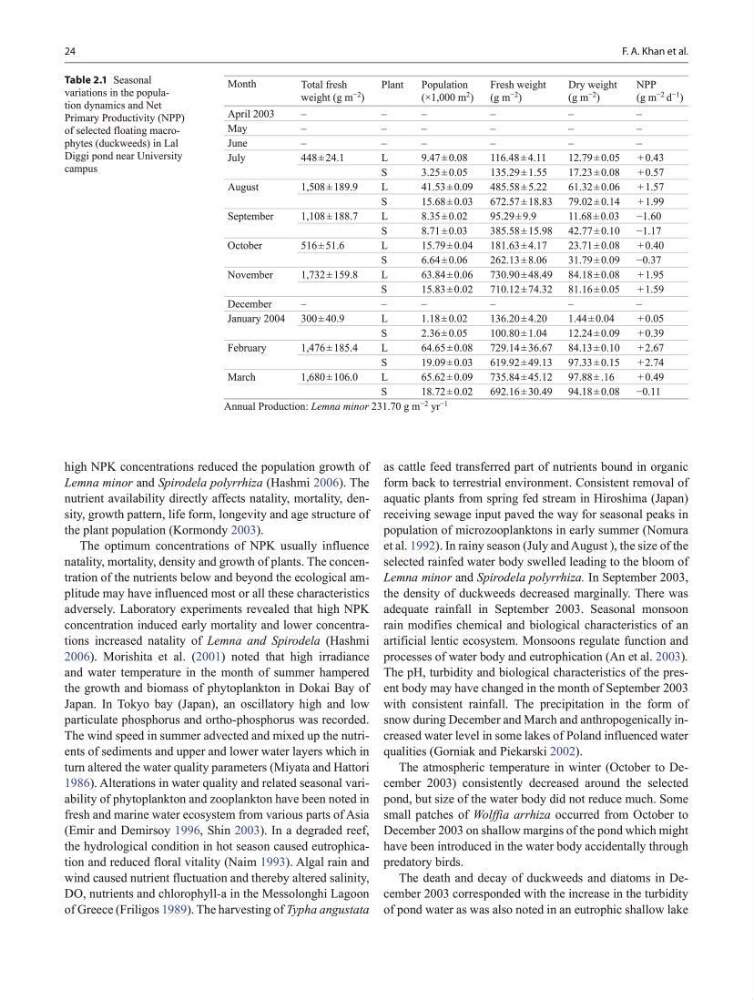
et al. 1992). In rainy season (July and August ), the size of the
selected rainfed water body swelled leading to the bloom of
Lemna minor and Spirodela polyrrhiza. In September 2003,
the density of duckweeds decreased marginally. There was
adequate rainfall in September 2003. Seasonal monsoon
rain modifies chemical and biological characteristics of an
artificial lentic ecosystem. Monsoons regulate function and
processes of water body and eutrophication (An et al. 2003).
The pH, turbidity and biological characteristics of the present body may have changed in the month of September 2003
with consistent rainfall. The precipitation in the form of
snow during December and March and anthropogenically increased water level in some lakes of Poland influenced water
qualities (Gorniak and Piekarski 2002).
The atmospheric temperature in winter (October to December 2003) consistently decreased around the selected
pond, but size of the water body did not reduce much. Some
small patches of Wolffia arrhiza occurred from October to
December 2003 on shallow margins of the pond which might
have been introduced in the water body accidentally through
predatory birds.
The death and decay of duckweeds and diatoms in December 2003 corresponded with the increase in the turbidity
of pond water as was also noted in an eutrophic shallow lake
Month
Total fresh
weight (g m −2 )
Plant
Population
(×1,000 m
2
)
Fresh weight
(g m
−2
)
Dry weight
(g m
−2
)
NPP
(g m
−2
d
−1
)
April 2003
–
–
–
–
–
–
May
–
–
–
–
–
–
June
–
–
–
–
–
–
July
448 ± 24.1
L
9.47 ± 0.08
116.48 ± 4.11
12.79 ± 0.05
+ 0.43
S
3.25 ± 0.05
135.29 ± 1.55
17.23 ± 0.08
+ 0.57
August
1,508 ± 189.9
L
41.53 ± 0.09
485.58 ± 5.22
61.32 ± 0.06
+ 1.57
S
15.68 ± 0.03
672.57 ± 18.83 79.02 ± 0.14
+ 1.99
September
1,108 ± 188.7
L
8.35 ± 0.02
95.29 ± 9.9
11.68 ± 0.03
−1.60
S
8.71 ± 0.03
385.58 ± 15.98 42.77 ± 0.10
−1.17
October
516 ± 51.6
L
15.79 ± 0.04
181.63 ± 4.17
23.71 ± 0.08
+ 0.40
S
6.64 ± 0.06
262.13 ± 8.06
31.79 ± 0.09
−0.37
November
1,732 ± 159.8
L
63.84 ± 0.06
730.90 ± 48.49 84.18 ± 0.08
+ 1.95
S
15.83 ± 0.02
710.12 ± 74.32 81.16 ± 0.05
+ 1.59
December
–
–
–
–
–
–
January 2004 300 ± 40.9
L
1.18 ± 0.02
136.20 ± 4.20
1.44 ± 0.04
+ 0.05
S
2.36 ± 0.05
100.80 ± 1.04
12.24 ± 0.09
+ 0.39
February
1,476 ± 185.4
L
64.65 ± 0.08
729.14 ± 36.67 84.13 ± 0.10
+ 2.67
S
19.09 ± 0.03
619.92 ± 49.13 97.33 ± 0.15
+ 2.74
March
1,680 ± 106.0
L
65.62 ± 0.09
735.84 ± 45.12 97.88 ± .16
+ 0.49
S
18.72 ± 0.02
692.16 ± 30.49 94.18 ± 0.08
−0.11
Annual Production: Lemna minor 231.70 g m −2 yr
−1
Table 2.1 Seasonal
variations in the population dynamics and Net
Primary Productivity (NPP)
of selected floating macrophytes (duckweeds) in Lal
Diggi pond near University
campus
F. A. Khan et al.
high NPK concentrations reduced the population growth of
Lemna minor and Spirodela polyrrhiza (Hashmi 2006). The
nutrient availability directly affects natality, mortality, density, growth pattern, life form, longevity and age structure of
the plant population (Kormondy 2003).
The optimum concentrations of NPK usually influence
natality, mortality, density and growth of plants. The concentration of the nutrients below and beyond the ecological amplitude may have influenced most or all these characteristics
adversely. Laboratory experiments revealed that high NPK
concentration induced early mortality and lower concentrations increased natality of Lemna and Spirodela (Hashmi
2006). Morishita et al. (2001) noted that high irradiance
and water temperature in the month of summer hampered
the growth and biomass of phytoplankton in Dokai Bay of
Japan. In Tokyo bay (Japan), an oscillatory high and low
particulate phosphorus and ortho-phosphorus was recorded.
The wind speed in summer advected and mixed up the nutrients of sediments and upper and lower water layers which in
turn altered the water quality parameters (Miyata and Hattori
1986). Alterations in water quality and related seasonal variability of phytoplankton and zooplankton have been noted in
fresh and marine water ecosystem from various parts of Asia
(Emir and Demirsoy 1996, Shin 2003). In a degraded reef,
the hydrological condition in hot season caused eutrophication and reduced floral vitality (Naim 1993). Algal rain and
wind caused nutrient fluctuation and thereby altered salinity,
DO, nutrients and chlorophyll-a in the Messolonghi Lagoon
of Greece (Friligos 1989). The harvesting of Typha angustata
as cattle feed transferred part of nutrients bound in organic
form back to terrestrial environment. Consistent removal of
aquatic plants from spring fed stream in Hiroshima (Japan)
receiving sewage input paved the way for seasonal peaks in
population of microzooplanktons in early summer (Nomura
et al. 1992). In rainy season (July and August ), the size of the
selected rainfed water body swelled leading to the bloom of
Lemna minor and Spirodela polyrrhiza. In September 2003,
the density of duckweeds decreased marginally. There was
adequate rainfall in September 2003. Seasonal monsoon
rain modifies chemical and biological characteristics of an
artificial lentic ecosystem. Monsoons regulate function and
processes of water body and eutrophication (An et al. 2003).
The pH, turbidity and biological characteristics of the present body may have changed in the month of September 2003
with consistent rainfall. The precipitation in the form of
snow during December and March and anthropogenically increased water level in some lakes of Poland influenced water
qualities (Gorniak and Piekarski 2002).
The atmospheric temperature in winter (October to December 2003) consistently decreased around the selected
pond, but size of the water body did not reduce much. Some
small patches of Wolffia arrhiza occurred from October to
December 2003 on shallow margins of the pond which might
have been introduced in the water body accidentally through
predatory birds.
The death and decay of duckweeds and diatoms in December 2003 corresponded with the increase in the turbidity
of pond water as was also noted in an eutrophic shallow lake
Month
Total fresh
weight (g m −2 )
Plant
Population
(×1,000 m
2
)
Fresh weight
(g m
−2
)
Dry weight
(g m
−2
)
NPP
(g m
−2
d
−1
)
April 2003
–
–
–
–
–
–
May
–
–
–
–
–
–
June
–
–
–
–
–
–
July
448 ± 24.1
L
9.47 ± 0.08
116.48 ± 4.11
12.79 ± 0.05
+ 0.43
S
3.25 ± 0.05
135.29 ± 1.55
17.23 ± 0.08
+ 0.57
August
1,508 ± 189.9
L
41.53 ± 0.09
485.58 ± 5.22
61.32 ± 0.06
+ 1.57
S
15.68 ± 0.03
672.57 ± 18.83 79.02 ± 0.14
+ 1.99
September
1,108 ± 188.7
L
8.35 ± 0.02
95.29 ± 9.9
11.68 ± 0.03
−1.60
S
8.71 ± 0.03
385.58 ± 15.98 42.77 ± 0.10
−1.17
October
516 ± 51.6
L
15.79 ± 0.04
181.63 ± 4.17
23.71 ± 0.08
+ 0.40
S
6.64 ± 0.06
262.13 ± 8.06
31.79 ± 0.09
−0.37
November
1,732 ± 159.8
L
63.84 ± 0.06
730.90 ± 48.49 84.18 ± 0.08
+ 1.95
S
15.83 ± 0.02
710.12 ± 74.32 81.16 ± 0.05
+ 1.59
December
–
–
–
–
–
–
January 2004 300 ± 40.9
L
1.18 ± 0.02
136.20 ± 4.20
1.44 ± 0.04
+ 0.05
S
2.36 ± 0.05
100.80 ± 1.04
12.24 ± 0.09
+ 0.39
February
1,476 ± 185.4
L
64.65 ± 0.08
729.14 ± 36.67 84.13 ± 0.10
+ 2.67
S
19.09 ± 0.03
619.92 ± 49.13 97.33 ± 0.15
+ 2.74
March
1,680 ± 106.0
L
65.62 ± 0.09
735.84 ± 45.12 97.88 ± .16
+ 0.49
S
18.72 ± 0.02
692.16 ± 30.49 94.18 ± 0.08
−0.11
Annual Production: Lemna minor 231.70 g m −2 yr
−1
Table 2.1 Seasonal
variations in the population dynamics and Net
Primary Productivity (NPP)
of selected floating macrophytes (duckweeds) in Lal
Diggi pond near University
campus