

228
M. Naeem et al.
contribute to eutrophication. Wetlands are increasingly used
to solve the problem of diffuse pollution from agricultural
lands, which causes eutrophication. Both nitrogen and phosphorus may be removed by wetlands. Nitrate is converted to
free nitrogen and released to the air in wetlands. This is not
harmful, as free nitrogen constitutes about four-fifths of the
atmosphere. Phosphorus is removed through its adsorption
by wetland soils; it is subsequently taken up by the plants.
In addition, it is also necessary to control fertilizer usage in
agricultural practices as it may end up in the drainage area;
the inflow coming from these drainage areas may cause diffuse pollution. Rain water contains phosphorus and nitrogen
owing to air pollution. As nitrogen is more mobile in the atmosphere than phosphorus, it is usually over 20 times more
concentrated than phosphorus in the rain water. Nitrogen
content of the rain water can only be reduced by efficient
control of the air pollution in the entire region. When lakes
are used for aquaculture, excessive addition of fish food pollutes the water owing to incomplete use of the fish-food supplied. Nitrogen and phosphorus present in the excess food
is dissolved or suspended in the water. The muddy bottom
layer (sediment) of lakes contains relatively high concentrations of nitrogen and phosphorus. The nutrients in the sediment originate from settling of algae and dead organic matter. These nutrients are released into water, particularly under
conditions of low oxygen concentrations. The nutrients released from sediments are referred to as internal loading of
the lake. Lakes and other water reservoirs can be classified
according to the extent of their eutrophication levels into
four main classes: oligotrophic, mesotrophic, eutrophic, and
hypereutrophic (Table 16.1, Janus and Vollenweider 1981).
This classification was laid down from extensive examination of eutrophication in countries within the Organization
for Economic Cooperation and Development (OECD) in
the 1970s and early 1980s. It was based on concentrations
of phosphorus, nitrogen, and chlorophyll a; chlorophyll a
roughly indicates the concentration of plant biomass (on an
average chlorophyll a is 1 % of the algae biomass).
16.4 Mineral Nutrients and their Role in
Eutrophication
Plants, like all other living things, need food (mineral nutrients, photosynthates, metabolites.) for their growth and
development. Plants require 19 essential elements. Carbon,
hydrogen, and oxygen are derived from the atmosphere and
soil water. The remaining 16 essential elements (nitrogen,
phosphorus, potassium, calcium, magnesium, sulfur, iron,
zinc, manganese, copper, boron, molybdenum, chlorine,
sodium, nickel, and silicon) are supplied either from soil
minerals and soil organic matter or by organic or inorganic
fertilizers. The sodium is required for C-4 and CAM plants
(Subbarao et al. 2003). Silicon is essential for diatoms and
members of Equisetaceae (horsetails or scouring rushes); it
is semiessential for such important crops as rice and sugarcane (Epstein 2001; Epstein and Bloom 2005; Rains et al.
2006). Plants utilize these nutrients efficiently. Each type of
plant is unique and has an optimum nutrient range as well as
a minimum requirement level. Below this minimum level,
plants start to show nutrient deficiency symptoms. Excessive nutrient uptake can also cause poor growth because of
toxicity. Therefore, the proper amount of application and the
placement of nutrients are important. Soil and plant tissue
tests have been developed to assess the nutrient content. By
analyzing this information, plant scientists can determine the
nutrient need of a given plant in a given soil. In addition to
the levels of plant-available nutrients in soils, the soil pH
plays an important role in nutrient availability and elemental
toxicity.
16.4.1 Sources and Functions of Nitrogen
Nitrogen (N) is available to plants as ions of nitrate (NO 3
–
)
and ammonium (NH 4 + ). N is biologically combined with
C, H, O, and S to form amino acids, which are the building blocks of proteins. Amino acids are used in formation of
protoplasm, which is the site for cell division and, thus, for
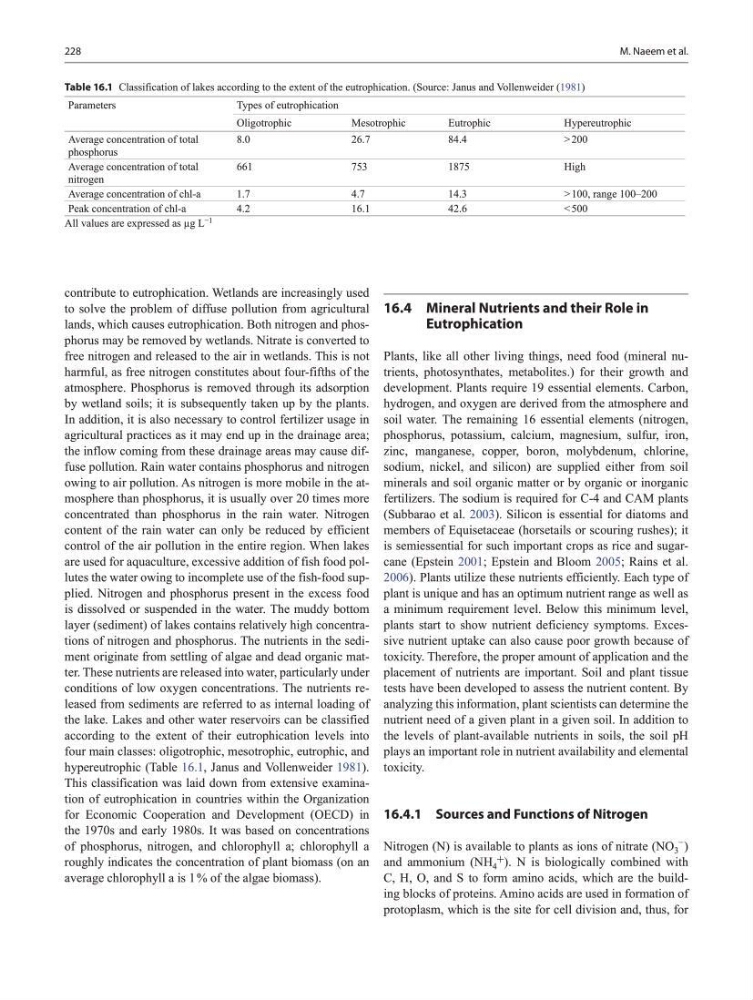
Table 16.1 Classification of lakes according to the extent of the eutrophication. (Source: Janus and Vollenweider (1981)
Parameters
Types of eutrophication
Oligotrophic
Mesotrophic
Eutrophic
Hypereutrophic
Average concentration of total
phosphorus
8.0
26.7
84.4
> 200
Average concentration of total
nitrogen
661
753
1875
High
Average concentration of chl-a
1.7
4.7
14.3
> 100, range 100–200
Peak concentration of chl-a
4.2
16.1
42.6
< 500
All values are expressed as µg L −1
M. Naeem et al.
contribute to eutrophication. Wetlands are increasingly used
to solve the problem of diffuse pollution from agricultural
lands, which causes eutrophication. Both nitrogen and phosphorus may be removed by wetlands. Nitrate is converted to
free nitrogen and released to the air in wetlands. This is not
harmful, as free nitrogen constitutes about four-fifths of the
atmosphere. Phosphorus is removed through its adsorption
by wetland soils; it is subsequently taken up by the plants.
In addition, it is also necessary to control fertilizer usage in
agricultural practices as it may end up in the drainage area;
the inflow coming from these drainage areas may cause diffuse pollution. Rain water contains phosphorus and nitrogen
owing to air pollution. As nitrogen is more mobile in the atmosphere than phosphorus, it is usually over 20 times more
concentrated than phosphorus in the rain water. Nitrogen
content of the rain water can only be reduced by efficient
control of the air pollution in the entire region. When lakes
are used for aquaculture, excessive addition of fish food pollutes the water owing to incomplete use of the fish-food supplied. Nitrogen and phosphorus present in the excess food
is dissolved or suspended in the water. The muddy bottom
layer (sediment) of lakes contains relatively high concentrations of nitrogen and phosphorus. The nutrients in the sediment originate from settling of algae and dead organic matter. These nutrients are released into water, particularly under
conditions of low oxygen concentrations. The nutrients released from sediments are referred to as internal loading of
the lake. Lakes and other water reservoirs can be classified
according to the extent of their eutrophication levels into
four main classes: oligotrophic, mesotrophic, eutrophic, and
hypereutrophic (Table 16.1, Janus and Vollenweider 1981).
This classification was laid down from extensive examination of eutrophication in countries within the Organization
for Economic Cooperation and Development (OECD) in
the 1970s and early 1980s. It was based on concentrations
of phosphorus, nitrogen, and chlorophyll a; chlorophyll a
roughly indicates the concentration of plant biomass (on an
average chlorophyll a is 1 % of the algae biomass).
16.4 Mineral Nutrients and their Role in
Eutrophication
Plants, like all other living things, need food (mineral nutrients, photosynthates, metabolites.) for their growth and
development. Plants require 19 essential elements. Carbon,
hydrogen, and oxygen are derived from the atmosphere and
soil water. The remaining 16 essential elements (nitrogen,
phosphorus, potassium, calcium, magnesium, sulfur, iron,
zinc, manganese, copper, boron, molybdenum, chlorine,
sodium, nickel, and silicon) are supplied either from soil
minerals and soil organic matter or by organic or inorganic
fertilizers. The sodium is required for C-4 and CAM plants
(Subbarao et al. 2003). Silicon is essential for diatoms and
members of Equisetaceae (horsetails or scouring rushes); it
is semiessential for such important crops as rice and sugarcane (Epstein 2001; Epstein and Bloom 2005; Rains et al.
2006). Plants utilize these nutrients efficiently. Each type of
plant is unique and has an optimum nutrient range as well as
a minimum requirement level. Below this minimum level,
plants start to show nutrient deficiency symptoms. Excessive nutrient uptake can also cause poor growth because of
toxicity. Therefore, the proper amount of application and the
placement of nutrients are important. Soil and plant tissue
tests have been developed to assess the nutrient content. By
analyzing this information, plant scientists can determine the
nutrient need of a given plant in a given soil. In addition to
the levels of plant-available nutrients in soils, the soil pH
plays an important role in nutrient availability and elemental
toxicity.
16.4.1 Sources and Functions of Nitrogen
Nitrogen (N) is available to plants as ions of nitrate (NO 3
–
)
and ammonium (NH 4 + ). N is biologically combined with
C, H, O, and S to form amino acids, which are the building blocks of proteins. Amino acids are used in formation of
protoplasm, which is the site for cell division and, thus, for
Table 16.1 Classification of lakes according to the extent of the eutrophication. (Source: Janus and Vollenweider (1981)
Parameters
Types of eutrophication
Oligotrophic
Mesotrophic
Eutrophic
Hypereutrophic
Average concentration of total
phosphorus
8.0
26.7
84.4
> 200
Average concentration of total
nitrogen
661
753
1875
High
Average concentration of chl-a
1.7
4.7
14.3
> 100, range 100–200
Peak concentration of chl-a
4.2
16.1
42.6
< 500
All values are expressed as µg L −1