

78
requires a complete set of seatruth observations for the interpretation of the satellite signal
received on earth. Early intercalibrations for chi a alone often showed enormous
discrepancies (Schlittenhardt, 1980; Larsson et al., 1978; Nusch, 1984), but progress has
apparently been made and the results of the participants in Bidigare's intercalibration exercise
are surprisingly close to each other (Fig. lOb». One of the tests conducted by Bidigare reveals
that it is possible to keep the concentration of pigments unchanged for many months after
sealing and refrigeration at liquid nitrogen temperatures. We have the experience that pigment
loss is kept to a minimum (at most 20% after 1 year) under normal deep-freeze conditions of
-30°C. Freeze-drying is not allowed (Lenz and Fritsche, 1980).
APPLICATION OF PIGMENT ANALYSIS IN PLANKTON ECOLOGY
Adaptation of phytoplankton populations to environmental conditions
The adaptation of phytoplankton to environmental conditions is often expressed in the pigment
composition. For example, zeaxanthin is produced in green algae that are nitrogen-limited
(Czygan, 1968; Weber and Wettern, 1980) and in Synchococcus (cyanobacteria),
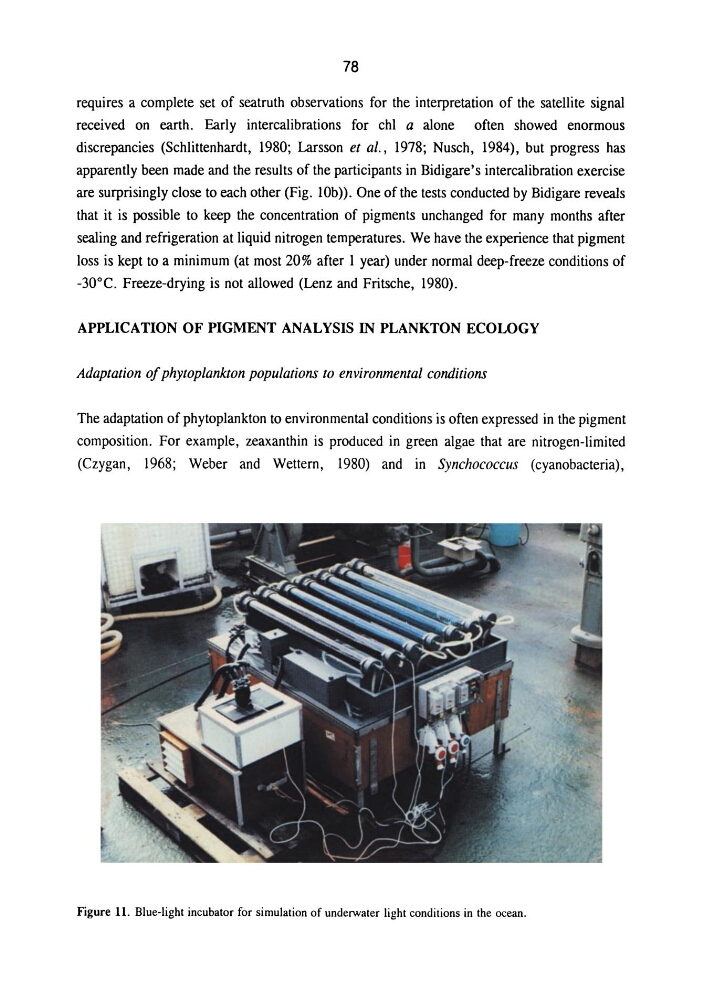
Figure 11. Blue-light incubator for simulation of underwater light conditions in the ocean.
requires a complete set of seatruth observations for the interpretation of the satellite signal
received on earth. Early intercalibrations for chi a alone often showed enormous
discrepancies (Schlittenhardt, 1980; Larsson et al., 1978; Nusch, 1984), but progress has
apparently been made and the results of the participants in Bidigare's intercalibration exercise
are surprisingly close to each other (Fig. lOb». One of the tests conducted by Bidigare reveals
that it is possible to keep the concentration of pigments unchanged for many months after
sealing and refrigeration at liquid nitrogen temperatures. We have the experience that pigment
loss is kept to a minimum (at most 20% after 1 year) under normal deep-freeze conditions of
-30°C. Freeze-drying is not allowed (Lenz and Fritsche, 1980).
APPLICATION OF PIGMENT ANALYSIS IN PLANKTON ECOLOGY
Adaptation of phytoplankton populations to environmental conditions
The adaptation of phytoplankton to environmental conditions is often expressed in the pigment
composition. For example, zeaxanthin is produced in green algae that are nitrogen-limited
(Czygan, 1968; Weber and Wettern, 1980) and in Synchococcus (cyanobacteria),
Figure 11. Blue-light incubator for simulation of underwater light conditions in the ocean.