

386
of different components of the community. Fluorescently labelled antibodies can be used to
identify and enumerate specific organisms, or even specific molecules within cells. It is not
necessary to isolate the antigen to generate antibodies to a specific organism; the entire
organism can be used (Campbell et at. 1983), although extensive testing to determine the
specificity of the antibody obtained is then required.
Perhaps the best example of the use of fluorescentiy-Iabelled antibodies to marine bacteria has
been the study of nitrifiers, a restricted class of chemoautotrophs responsible for the
regeneration of nitrate from reduced forms of nitrogen (e.g., Ward et al. 1982). Studies
Phyto
beads
Syn
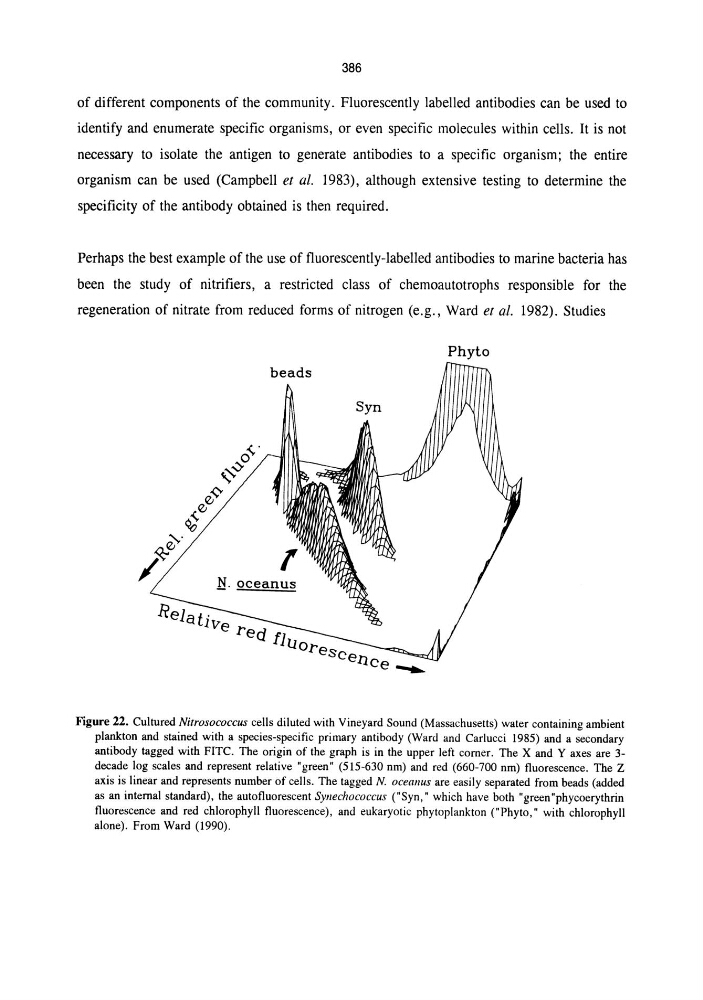
Figure 22. Cultured Nitrosococcus cells diluted with Vineyard Sound (Massachusetts) water containing ambient
plankton and stained with a species-specific primary antibody (Ward and Carlucci 1985) and a secondary
antibody tagged with FITC. The origin of the graph is in the upper left comer. The X and Y axes are 3decade log scales and represent relative "green" (515-630 nm) and red (660-700 nm) fluorescence. The Z
axis is linear and represents number of cells. The tagged N. oceallus are easily separated from beads (added
as an internal standard), the autofluorescent SYllechococcus ("Syn," which have both "green"phycoerythrin
fluorescence and red chlorophyll fluorescence), and eukaryotic phytoplankton ("Phyto," with chlorophyll
alone). From Ward (1990).
of different components of the community. Fluorescently labelled antibodies can be used to
identify and enumerate specific organisms, or even specific molecules within cells. It is not
necessary to isolate the antigen to generate antibodies to a specific organism; the entire
organism can be used (Campbell et at. 1983), although extensive testing to determine the
specificity of the antibody obtained is then required.
Perhaps the best example of the use of fluorescentiy-Iabelled antibodies to marine bacteria has
been the study of nitrifiers, a restricted class of chemoautotrophs responsible for the
regeneration of nitrate from reduced forms of nitrogen (e.g., Ward et al. 1982). Studies
Phyto
beads
Syn
Figure 22. Cultured Nitrosococcus cells diluted with Vineyard Sound (Massachusetts) water containing ambient
plankton and stained with a species-specific primary antibody (Ward and Carlucci 1985) and a secondary
antibody tagged with FITC. The origin of the graph is in the upper left comer. The X and Y axes are 3decade log scales and represent relative "green" (515-630 nm) and red (660-700 nm) fluorescence. The Z
axis is linear and represents number of cells. The tagged N. oceallus are easily separated from beads (added
as an internal standard), the autofluorescent SYllechococcus ("Syn," which have both "green"phycoerythrin
fluorescence and red chlorophyll fluorescence), and eukaryotic phytoplankton ("Phyto," with chlorophyll
alone). From Ward (1990).