

2
Study Area
o·
----- ......
/'
,
/ '
/ ~
Straits of Magellan
90' 0
I
I
,
", BalJeny Is.
/'
/'
/'
/'
/'
/
/
/
Tasmania
I K8tguelen Is.
I
I
I
I
I
I
90' E
N. zealand (l
180'
D
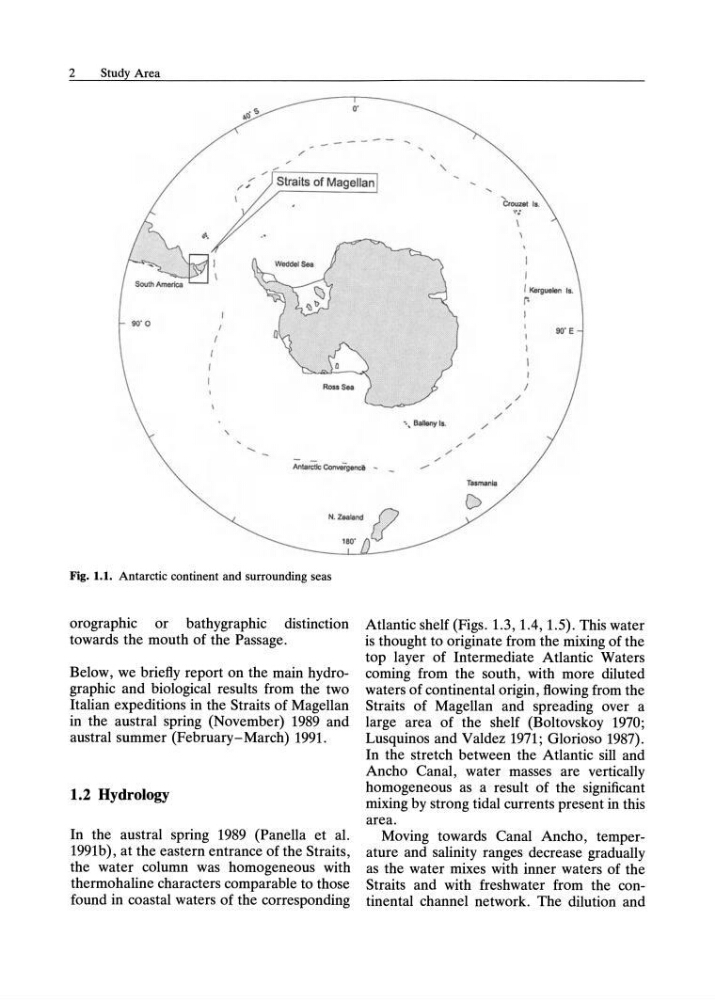
Fig. 1.1. Antarctic continent and surrounding seas
orographic or bathygraphic distinction
towards the mouth of the Passage.
Below, we briefly report on the main hydrographic and biological results from the two
Italian expeditions in the Straits of Magellan
in the austral spring (November) 1989 and
austral summer (February-March) 1991.
1.2 Hydrology
In the austral spring 1989 (Panella et al.
1991b), at the eastern entrance of the Straits,
the water column was homogeneous with
thermohaline characters comparable to those
found in coastal waters of the corresponding
Atlantic shelf (Figs. 1.3, 1.4, 1.5). This water
is thought to originate from the mixing of the
top layer of Intermediate Atlantic Waters
coming from the south, with more diluted
waters of continental origin, flowing from the
Straits of Magellan and spreading over a
large area of the shelf (Boltovskoy 1970;
Lusquinos and Valdez 1971; Glorioso 1987).
In the stretch between the Atlantic sill and
Ancho Canal, water masses are vertically
homogeneous as a result of the significant
mixing by strong tidal currents present in this
area.
Moving towards Canal Ancho, temperature and salinity ranges decrease gradually
as the water mixes with inner waters of the
Straits and with freshwater from the continental channel network. The dilution and
Study Area
o·
----- ......
/'
,
/ '
/ ~
Straits of Magellan
90' 0
I
I
,
", BalJeny Is.
/'
/'
/'
/'
/'
/
/
/
Tasmania
I K8tguelen Is.
I
I
I
I
I
I
90' E
N. zealand (l
180'
D
Fig. 1.1. Antarctic continent and surrounding seas
orographic or bathygraphic distinction
towards the mouth of the Passage.
Below, we briefly report on the main hydrographic and biological results from the two
Italian expeditions in the Straits of Magellan
in the austral spring (November) 1989 and
austral summer (February-March) 1991.
1.2 Hydrology
In the austral spring 1989 (Panella et al.
1991b), at the eastern entrance of the Straits,
the water column was homogeneous with
thermohaline characters comparable to those
found in coastal waters of the corresponding
Atlantic shelf (Figs. 1.3, 1.4, 1.5). This water
is thought to originate from the mixing of the
top layer of Intermediate Atlantic Waters
coming from the south, with more diluted
waters of continental origin, flowing from the
Straits of Magellan and spreading over a
large area of the shelf (Boltovskoy 1970;
Lusquinos and Valdez 1971; Glorioso 1987).
In the stretch between the Atlantic sill and
Ancho Canal, water masses are vertically
homogeneous as a result of the significant
mixing by strong tidal currents present in this
area.
Moving towards Canal Ancho, temperature and salinity ranges decrease gradually
as the water mixes with inner waters of the
Straits and with freshwater from the continental channel network. The dilution and