

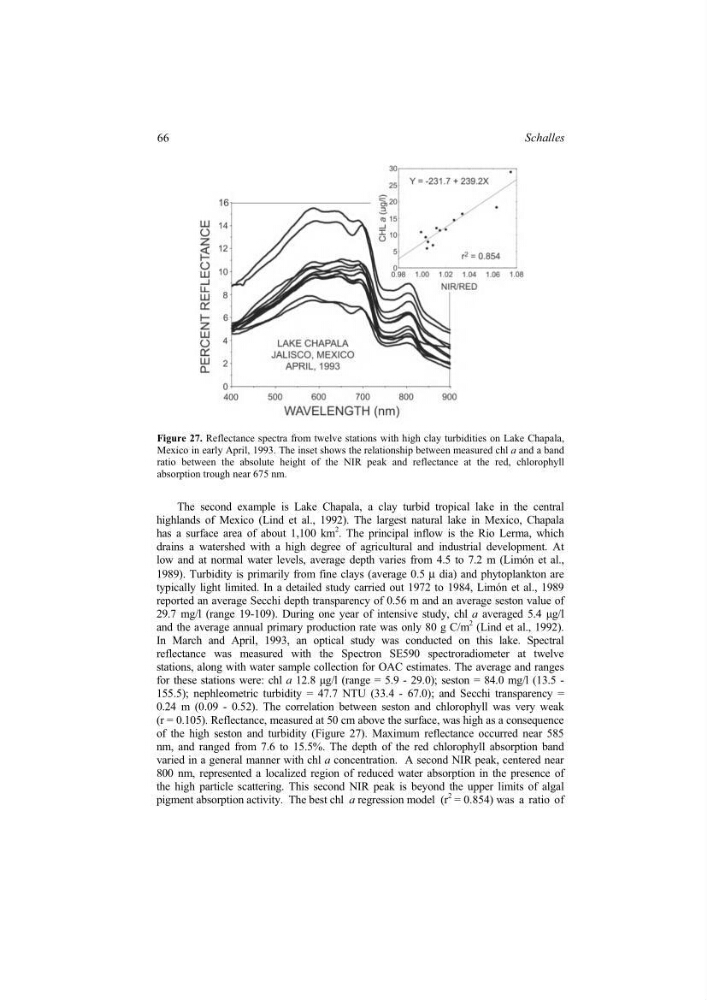
Figure 27. Reflectance spectra from twelve stations with high clay turbidities on Lake Chapala,
Mexico in early April, 1993. The inset shows the relationship between measured chl a and a band
ratio between the absolute height of the NIR peak and reflectance at the red, chlorophyll
absorption trough near 675 nm.
The second example is Lake Chapala, a clay turbid tropical lake in the central
highlands of Mexico (Lind et al., 1992). The largest natural lake in Mexico, Chapala
has a surface area of about 1,100 km
2
. The principal inflow is the Rio Lerma, which
drains a watershed with a high degree of agricultural and industrial development. At
low and at normal water levels, average depth varies from 4.5 to 7.2 m (Limón et al.,
1989). Turbidity is primarily from fine clays (average 0.5 µ dia) and phytoplankton are
typically light limited. In a detailed study carried out 1972 to 1984, Limón et al., 1989
reported an average Secchi depth transparency of 0.56 m and an average seston value of
29.7 mg/l (range 19-109). During one year of intensive study, chl a averaged 5.4 µg/l
and the average annual primary production rate was only 80 g C/m
2 (Lind et al., 1992).
In March and April, 1993, an optical study was conducted on this lake. Spectral
reflectance was measured with the Spectron SE590 spectroradiometer at twelve
stations, along with water sample collection for OAC estimates. The average and ranges
for these stations were: chl a 12.8 µg/l (range = 5.9 - 29.0); seston = 84.0 mg/l (13.5 -
155.5); nephleometric turbidity = 47.7 NTU (33.4 - 67.0); and Secchi transparency =
0.24 m (0.09 - 0.52). The correlation between seston and chlorophyll was very weak
(r = 0.105). Reflectance, measured at 50 cm above the surface, was high as a consequence
of the high seston and turbidity (Figure 27). Maximum reflectance occurred near 585
nm, and ranged from 7.6 to 15.5%. The depth of the red chlorophyll absorption band
varied in a general manner with chl a concentration. A second NIR peak, centered near
800 nm, represented a localized region of reduced water absorption in the presence of
the high particle scattering. This second NIR peak is beyond the upper limits of algal
pigment absorption activity. The best chl a regression model (r
2 = 0.854) was a ratio of
66
Schalles
Mexico in early April, 1993. The inset shows the relationship between measured chl a and a band
ratio between the absolute height of the NIR peak and reflectance at the red, chlorophyll
absorption trough near 675 nm.
The second example is Lake Chapala, a clay turbid tropical lake in the central
highlands of Mexico (Lind et al., 1992). The largest natural lake in Mexico, Chapala
has a surface area of about 1,100 km
2
. The principal inflow is the Rio Lerma, which
drains a watershed with a high degree of agricultural and industrial development. At
low and at normal water levels, average depth varies from 4.5 to 7.2 m (Limón et al.,
1989). Turbidity is primarily from fine clays (average 0.5 µ dia) and phytoplankton are
typically light limited. In a detailed study carried out 1972 to 1984, Limón et al., 1989
reported an average Secchi depth transparency of 0.56 m and an average seston value of
29.7 mg/l (range 19-109). During one year of intensive study, chl a averaged 5.4 µg/l
and the average annual primary production rate was only 80 g C/m
2 (Lind et al., 1992).
In March and April, 1993, an optical study was conducted on this lake. Spectral
reflectance was measured with the Spectron SE590 spectroradiometer at twelve
stations, along with water sample collection for OAC estimates. The average and ranges
for these stations were: chl a 12.8 µg/l (range = 5.9 - 29.0); seston = 84.0 mg/l (13.5 -
155.5); nephleometric turbidity = 47.7 NTU (33.4 - 67.0); and Secchi transparency =
0.24 m (0.09 - 0.52). The correlation between seston and chlorophyll was very weak
(r = 0.105). Reflectance, measured at 50 cm above the surface, was high as a consequence
of the high seston and turbidity (Figure 27). Maximum reflectance occurred near 585
nm, and ranged from 7.6 to 15.5%. The depth of the red chlorophyll absorption band
varied in a general manner with chl a concentration. A second NIR peak, centered near
800 nm, represented a localized region of reduced water absorption in the presence of
the high particle scattering. This second NIR peak is beyond the upper limits of algal
pigment absorption activity. The best chl a regression model (r
2 = 0.854) was a ratio of
66
Schalles