

228
The Indo-Bhutan Manas Tiger Conservation Landscape
(IBMTCL) and Its Conservation Significance
The IBMTCL lies at the critical juncture of the Indo-Malayan and the Indo-Gangetic
bio-geographical pathways and has been lauded for its outstanding natural beauty
and unparalleled diversity as a UNESCO World Heritage site (UNESCO 2008). The
IBMTCL forms an important connecting link between the Buxa, Nameri and Pakke
Tiger Reserves in India and the Hukaung Valley Tiger Reserve in Myanmar. Within
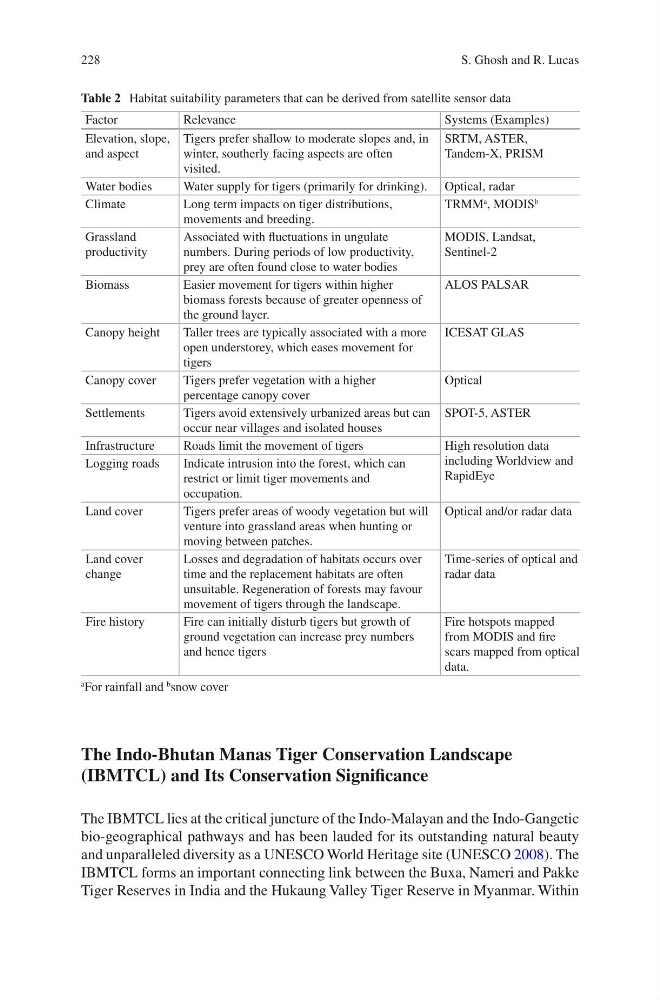
Table 2 Habitat suitability parameters that can be derived from satellite sensor data
Factor
Relevance
Systems (Examples)
Elevation, slope,
and aspect
Tigers prefer shallow to moderate slopes and, in
winter, southerly facing aspects are often
visited.
SRTM, ASTER,
Tandem-X, PRISM
Water bodies
Water supply for tigers (primarily for drinking). Optical, radar
Climate
Long term impacts on tiger distributions,
movements and breeding.
TRMM
a , MODIS
b
Grassland
productivity
Associated with fluctuations in ungulate
numbers. During periods of low productivity,
prey are often found close to water bodies
MODIS, Landsat,
Sentinel-2
Biomass
Easier movement for tigers within higher
biomass forests because of greater openness of
the ground layer.
ALOS PALSAR
Canopy height
Taller trees are typically associated with a more
open understorey, which eases movement for
tigers
ICESAT GLAS
Canopy cover
Tigers prefer vegetation with a higher
percentage canopy cover
Optical
Settlements
Tigers avoid extensively urbanized areas but can
occur near villages and isolated houses
SPOT-5, ASTER
Infrastructure
Roads limit the movement of tigers
High resolution data
including Worldview and
RapidEye
Logging roads
Indicate intrusion into the forest, which can
restrict or limit tiger movements and
occupation.
Land cover
Tigers prefer areas of woody vegetation but will
venture into grassland areas when hunting or
moving between patches.
Optical and/or radar data
Land cover
change
Losses and degradation of habitats occurs over
time and the replacement habitats are often
unsuitable. Regeneration of forests may favour
movement of tigers through the landscape.
Time-series of optical and
radar data
Fire history
Fire can initially disturb tigers but growth of
ground vegetation can increase prey numbers
and hence tigers
Fire hotspots mapped
from MODIS and fire
scars mapped from optical
data.
a For rainfall and
b snow cover
S. Ghosh and R. Lucas
The Indo-Bhutan Manas Tiger Conservation Landscape
(IBMTCL) and Its Conservation Significance
The IBMTCL lies at the critical juncture of the Indo-Malayan and the Indo-Gangetic
bio-geographical pathways and has been lauded for its outstanding natural beauty
and unparalleled diversity as a UNESCO World Heritage site (UNESCO 2008). The
IBMTCL forms an important connecting link between the Buxa, Nameri and Pakke
Tiger Reserves in India and the Hukaung Valley Tiger Reserve in Myanmar. Within
Table 2 Habitat suitability parameters that can be derived from satellite sensor data
Factor
Relevance
Systems (Examples)
Elevation, slope,
and aspect
Tigers prefer shallow to moderate slopes and, in
winter, southerly facing aspects are often
visited.
SRTM, ASTER,
Tandem-X, PRISM
Water bodies
Water supply for tigers (primarily for drinking). Optical, radar
Climate
Long term impacts on tiger distributions,
movements and breeding.
TRMM
a , MODIS
b
Grassland
productivity
Associated with fluctuations in ungulate
numbers. During periods of low productivity,
prey are often found close to water bodies
MODIS, Landsat,
Sentinel-2
Biomass
Easier movement for tigers within higher
biomass forests because of greater openness of
the ground layer.
ALOS PALSAR
Canopy height
Taller trees are typically associated with a more
open understorey, which eases movement for
tigers
ICESAT GLAS
Canopy cover
Tigers prefer vegetation with a higher
percentage canopy cover
Optical
Settlements
Tigers avoid extensively urbanized areas but can
occur near villages and isolated houses
SPOT-5, ASTER
Infrastructure
Roads limit the movement of tigers
High resolution data
including Worldview and
RapidEye
Logging roads
Indicate intrusion into the forest, which can
restrict or limit tiger movements and
occupation.
Land cover
Tigers prefer areas of woody vegetation but will
venture into grassland areas when hunting or
moving between patches.
Optical and/or radar data
Land cover
change
Losses and degradation of habitats occurs over
time and the replacement habitats are often
unsuitable. Regeneration of forests may favour
movement of tigers through the landscape.
Time-series of optical and
radar data
Fire history
Fire can initially disturb tigers but growth of
ground vegetation can increase prey numbers
and hence tigers
Fire hotspots mapped
from MODIS and fire
scars mapped from optical
data.
a For rainfall and
b snow cover
S. Ghosh and R. Lucas