

126
Matt Duckham and Mike Worboys
Built-up
area
Forest
Woodland
Urban
Intensional
information
Extensional
information
Woodland
Built-up
area
Woodland
Forest &
Urban
Woodland
Data set A
Data set B
Fused data set
Woodland Urban
Forest Built-up
area
Forest Urban
Woodland Forest &
Urban
Built-up
area
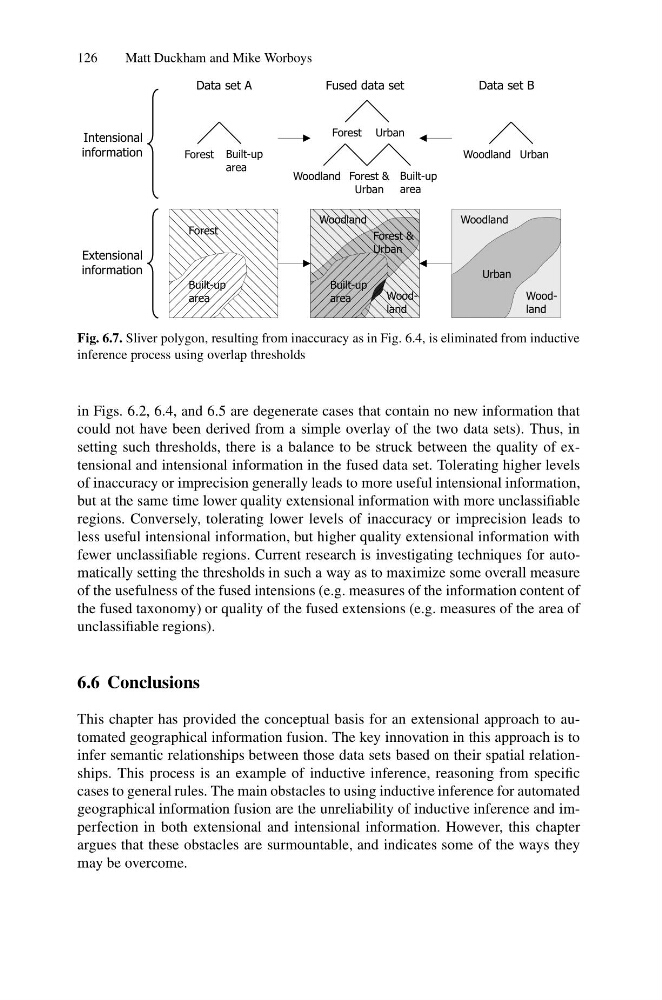
Fig. 6.7. Sliver polygon, resulting from inaccuracy as in Fig. 6.4, is eliminated from inductive
inference process using overlap thresholds
in Figs. 6.2, 6.4, and 6.5 are degenerate cases that contain no new information that
could not have been derived from a simple overlay of the two data sets). Thus, in
setting such thresholds, there is a balance to be struck between the quality of extensional and intensional information in the fused data set. Tolerating higher levels
of inaccuracy or imprecision generally leads to more useful intensional information,
but at the same time lower quality extensional information with more unclassifiable
regions. Conversely, tolerating lower levels of inaccuracy or imprecision leads to
less useful intensional information, but higher quality extensional information with
fewer unclassifiable regions. Current research is investigating techniques for automatically setting the thresholds in such a way as to maximize some overall measure
of the usefulness of the fused intensions (e.g. measures of the information content of
the fused taxonomy) or quality of the fused extensions (e.g. measures of the area of
unclassifiable regions).
6.6 Conclusions
This chapter has provided the conceptual basis for an extensional approach to automated geographical information fusion. The key innovation in this approach is to
infer semantic relationships between those data sets based on their spatial relationships. This process is an example of inductive inference, reasoning from specific
cases to general rules. The main obstacles to using inductive inference for automated
geographical information fusion are the unreliability of inductive inference and imperfection in both extensional and intensional information. However, this chapter
argues that these obstacles are surmountable, and indicates some of the ways they
may be overcome.
Matt Duckham and Mike Worboys
Built-up
area
Forest
Woodland
Urban
Intensional
information
Extensional
information
Woodland
Built-up
area
Woodland
Forest &
Urban
Woodland
Data set A
Data set B
Fused data set
Woodland Urban
Forest Built-up
area
Forest Urban
Woodland Forest &
Urban
Built-up
area
Fig. 6.7. Sliver polygon, resulting from inaccuracy as in Fig. 6.4, is eliminated from inductive
inference process using overlap thresholds
in Figs. 6.2, 6.4, and 6.5 are degenerate cases that contain no new information that
could not have been derived from a simple overlay of the two data sets). Thus, in
setting such thresholds, there is a balance to be struck between the quality of extensional and intensional information in the fused data set. Tolerating higher levels
of inaccuracy or imprecision generally leads to more useful intensional information,
but at the same time lower quality extensional information with more unclassifiable
regions. Conversely, tolerating lower levels of inaccuracy or imprecision leads to
less useful intensional information, but higher quality extensional information with
fewer unclassifiable regions. Current research is investigating techniques for automatically setting the thresholds in such a way as to maximize some overall measure
of the usefulness of the fused intensions (e.g. measures of the information content of
the fused taxonomy) or quality of the fused extensions (e.g. measures of the area of
unclassifiable regions).
6.6 Conclusions
This chapter has provided the conceptual basis for an extensional approach to automated geographical information fusion. The key innovation in this approach is to
infer semantic relationships between those data sets based on their spatial relationships. This process is an example of inductive inference, reasoning from specific
cases to general rules. The main obstacles to using inductive inference for automated
geographical information fusion are the unreliability of inductive inference and imperfection in both extensional and intensional information. However, this chapter
argues that these obstacles are surmountable, and indicates some of the ways they
may be overcome.