

or gravity sedimentation. (2) Thickening, concentration of the slurry using filtration and centrifugation. This step needs more energy than bulk harvesting. The
possible techniques for harvesting are discussed below.
Centrifugation Centrifugation is a common method for microalgae harvest in
laboratories, however, it is recommended principally for small volumes because
of its high energy demand. The energy input alone has been estimated at
3,000 kW/ton (Benemann and Oswald 1996). However, this technique is very
efficient as a secondary harvesting method to concentrate initial slurry to an algal
paste (Gouveia 2011).
Gravity Sedimentation Sedimentation is a simple process, commonly applied
for separating microalgae. Density and size of microalgae cells determine the
sedimentation velocity, but mostly this process is slow (0.1–2.6 m/h) and in hightemperature environments, the biomass could be deteriorated (Gouveia 2011).
Flocculation and Autoflocculation Coagulation and flocculation are used to
increase sedimentation velocity of cells. Microalgae cells are stabilized by negative
electric charges on its surface; this condition drives back the surrounding neighbor
particles in a similar way as two magnetic poles with the same charge. In this
situation bigger masses called floccules are formed. These masses do not sink.
Coagulation destabilizes floccules by neutralization of separating forces. This goal
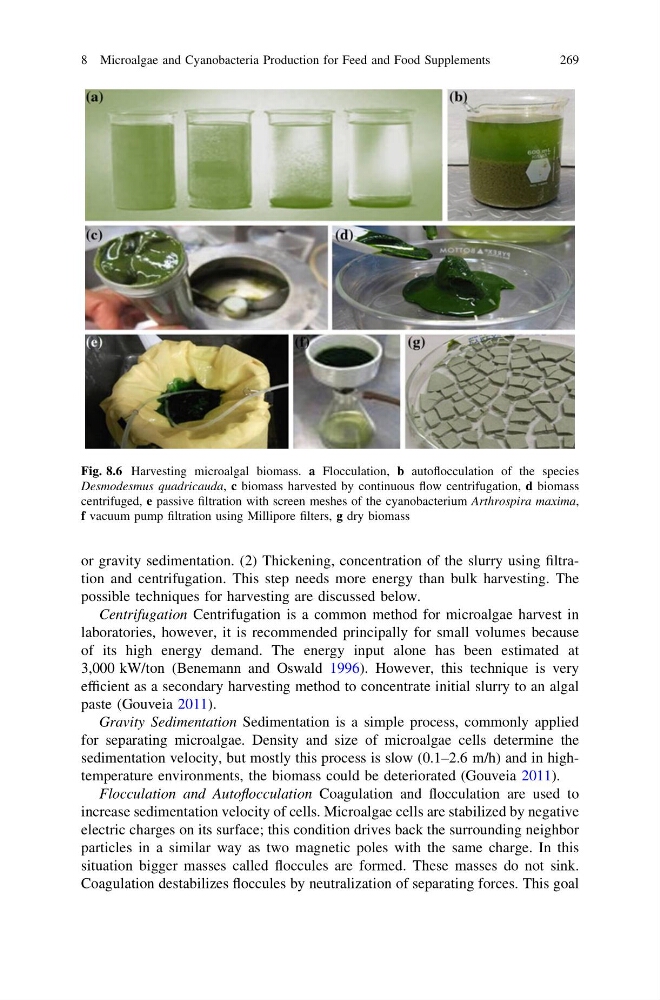
Fig. 8.6 Harvesting microalgal biomass. a Flocculation, b autoflocculation of the species
Desmodesmus quadricauda, c biomass harvested by continuous flow centrifugation, d biomass
centrifuged, e passive filtration with screen meshes of the cyanobacterium Arthrospira maxima,
f vacuum pump filtration using Millipore filters, g dry biomass
8 Microalgae and Cyanobacteria Production for Feed and Food Supplements
269
possible techniques for harvesting are discussed below.
Centrifugation Centrifugation is a common method for microalgae harvest in
laboratories, however, it is recommended principally for small volumes because
of its high energy demand. The energy input alone has been estimated at
3,000 kW/ton (Benemann and Oswald 1996). However, this technique is very
efficient as a secondary harvesting method to concentrate initial slurry to an algal
paste (Gouveia 2011).
Gravity Sedimentation Sedimentation is a simple process, commonly applied
for separating microalgae. Density and size of microalgae cells determine the
sedimentation velocity, but mostly this process is slow (0.1–2.6 m/h) and in hightemperature environments, the biomass could be deteriorated (Gouveia 2011).
Flocculation and Autoflocculation Coagulation and flocculation are used to
increase sedimentation velocity of cells. Microalgae cells are stabilized by negative
electric charges on its surface; this condition drives back the surrounding neighbor
particles in a similar way as two magnetic poles with the same charge. In this
situation bigger masses called floccules are formed. These masses do not sink.
Coagulation destabilizes floccules by neutralization of separating forces. This goal
Fig. 8.6 Harvesting microalgal biomass. a Flocculation, b autoflocculation of the species
Desmodesmus quadricauda, c biomass harvested by continuous flow centrifugation, d biomass
centrifuged, e passive filtration with screen meshes of the cyanobacterium Arthrospira maxima,
f vacuum pump filtration using Millipore filters, g dry biomass
8 Microalgae and Cyanobacteria Production for Feed and Food Supplements
269