

people, who are some of the poorest in the world. Biotech crops are essential but not
a panacea and adherence to good farming practices, such as rotations and resistance
management, are a must for biotech crops as they are for conventional crops
(ISAAA 2012).
1.3.2.3 Economic Benefits of Principal Biotech Crops
Currently Grown
Principal biotech crops currently grown are maize, soybean, cotton, canola, and
alfalfa. According to Kitch et al. (2002), of the 100 million ha of biotech soybean
planted globally 81 % or (80.7 million ha) were biotech. During the 16-year
period 1996–2011 the increase in income benefits for farmers growing biotech
soybean was US$32.2 billion and for 2011 alone, it was US$3.9 billion (Brookes
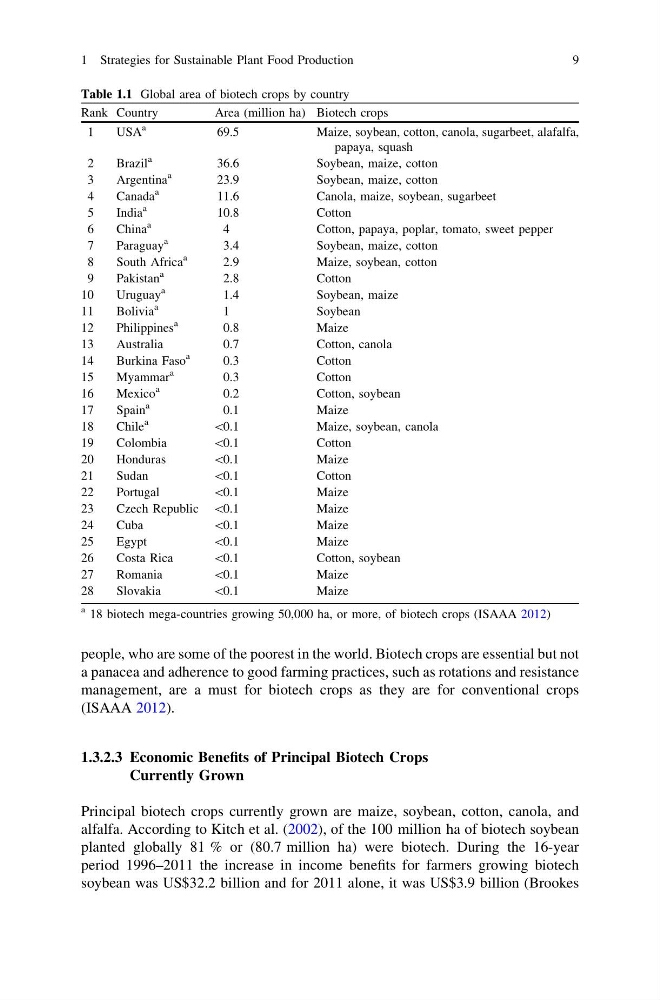
Table 1.1 Global area of biotech crops by country
Rank Country
Area (million ha) Biotech crops
1
USA
a
69.5
Maize, soybean, cotton, canola, sugarbeet, alafalfa,
papaya, squash
2
Brazil
a
36.6
Soybean, maize, cotton
3
Argentina
a
23.9
Soybean, maize, cotton
4
Canada
a
11.6
Canola, maize, soybean, sugarbeet
5
India
a
10.8
Cotton
6
China
a
4
Cotton, papaya, poplar, tomato, sweet pepper
7
Paraguay
a
3.4
Soybean, maize, cotton
8
South Africa
a
2.9
Maize, soybean, cotton
9
Pakistan
a
2.8
Cotton
10
Uruguay
a
1.4
Soybean, maize
11
Bolivia
a
1
Soybean
12
Philippines
a
0.8
Maize
13
Australia
0.7
Cotton, canola
14
Burkina Faso
a
0.3
Cotton
15
Myammar
a
0.3
Cotton
16
Mexico
a
0.2
Cotton, soybean
17
Spain
a
0.1
Maize
18
Chile
a
\0.1
Maize, soybean, canola
19
Colombia
\0.1
Cotton
20
Honduras
\0.1
Maize
21
Sudan
\0.1
Cotton
22
Portugal
\0.1
Maize
23
Czech Republic \0.1
Maize
24
Cuba
\0.1
Maize
25
Egypt
\0.1
Maize
26
Costa Rica
\0.1
Cotton, soybean
27
Romania
\0.1
Maize
28
Slovakia
\0.1
Maize
a 18 biotech mega-countries growing 50,000 ha, or more, of biotech crops (ISAAA 2012)
1 Strategies for Sustainable Plant Food Production
9
a panacea and adherence to good farming practices, such as rotations and resistance
management, are a must for biotech crops as they are for conventional crops
(ISAAA 2012).
1.3.2.3 Economic Benefits of Principal Biotech Crops
Currently Grown
Principal biotech crops currently grown are maize, soybean, cotton, canola, and
alfalfa. According to Kitch et al. (2002), of the 100 million ha of biotech soybean
planted globally 81 % or (80.7 million ha) were biotech. During the 16-year
period 1996–2011 the increase in income benefits for farmers growing biotech
soybean was US$32.2 billion and for 2011 alone, it was US$3.9 billion (Brookes
Table 1.1 Global area of biotech crops by country
Rank Country
Area (million ha) Biotech crops
1
USA
a
69.5
Maize, soybean, cotton, canola, sugarbeet, alafalfa,
papaya, squash
2
Brazil
a
36.6
Soybean, maize, cotton
3
Argentina
a
23.9
Soybean, maize, cotton
4
Canada
a
11.6
Canola, maize, soybean, sugarbeet
5
India
a
10.8
Cotton
6
China
a
4
Cotton, papaya, poplar, tomato, sweet pepper
7
Paraguay
a
3.4
Soybean, maize, cotton
8
South Africa
a
2.9
Maize, soybean, cotton
9
Pakistan
a
2.8
Cotton
10
Uruguay
a
1.4
Soybean, maize
11
Bolivia
a
1
Soybean
12
Philippines
a
0.8
Maize
13
Australia
0.7
Cotton, canola
14
Burkina Faso
a
0.3
Cotton
15
Myammar
a
0.3
Cotton
16
Mexico
a
0.2
Cotton, soybean
17
Spain
a
0.1
Maize
18
Chile
a
\0.1
Maize, soybean, canola
19
Colombia
\0.1
Cotton
20
Honduras
\0.1
Maize
21
Sudan
\0.1
Cotton
22
Portugal
\0.1
Maize
23
Czech Republic \0.1
Maize
24
Cuba
\0.1
Maize
25
Egypt
\0.1
Maize
26
Costa Rica
\0.1
Cotton, soybean
27
Romania
\0.1
Maize
28
Slovakia
\0.1
Maize
a 18 biotech mega-countries growing 50,000 ha, or more, of biotech crops (ISAAA 2012)
1 Strategies for Sustainable Plant Food Production
9