

of this chapter, they cannot be directly cultivated on organic substrates under
controlled conditions.
The interest in edible EEMs has recently bloomed, so the literature related to
species like Chanterelle (Cantharellus cibarius s.l.), porcini (Boletus edulis s.l.),
matsutake (Tricholoma matsutake), Caesar’s mushroom (Amanita caesarea s.l.),
or truffles (Tuber spp.) counts thousands of scientific papers and books (Figs. 6.2,
6.3, 6.4). For example, entering B. edulis into Google will return about threequarters a million hits and entering Truffle mushrooms will return 9.8 million hits.
Mushrooms have also been highly appreciated for their medicinal properties; the
first conclusive record being reported 5,300 years ago in what is undoubtedly a
fascinating story.
In 1991, two German hikers discovered in the border of the Austrian and Italian
Alps an extremely well-preserved mummy, which among other objects had two
mushrooms (Fleckinger 2011). These mushrooms were identified by Peintner et al.
(1998) as the birch polypore (Piptoporus betulinus) and the tinder mushroom
(Fomes fomentarius). They constitute the first-aid kit recorded for humans. The
birch polypore which is edible in early stages, has been considered to have in folk
medicine antiparasitic and antimicrobial activities and has been used in the
treatment of wounds, rectal cancer, and stomach diseases (Lemieszek et al. 2009;
Capasso 1998). This species contains an antibacterial compound called polyporenic acid C (Pöder 1993). Tea obtained from this mushroom has antifatiguing,
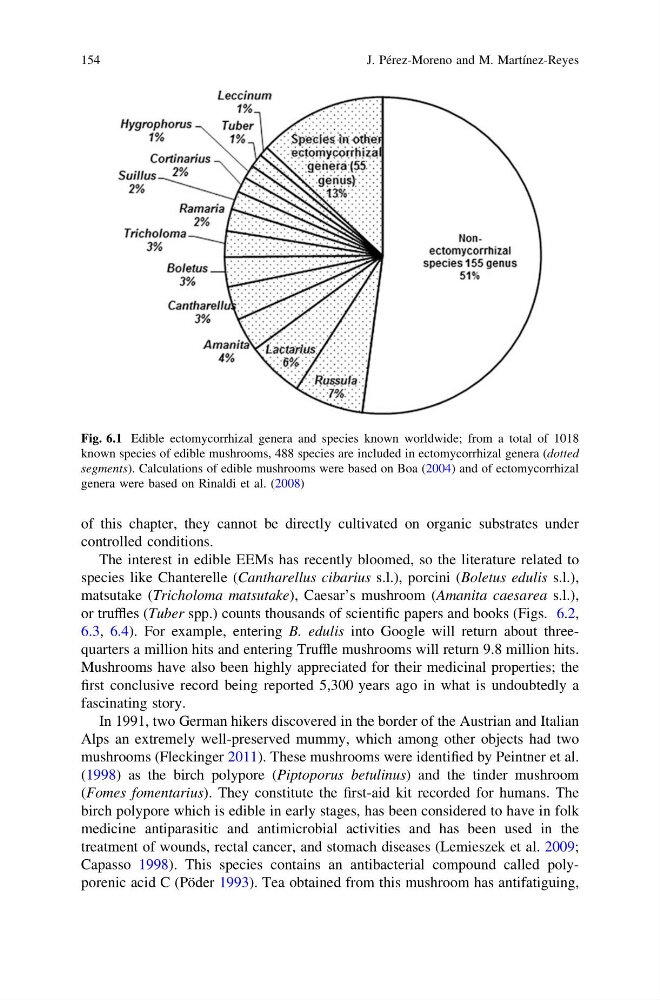
Fig. 6.1 Edible ectomycorrhizal genera and species known worldwide; from a total of 1018
known species of edible mushrooms, 488 species are included in ectomycorrhizal genera (dotted
segments). Calculations of edible mushrooms were based on Boa (2004) and of ectomycorrhizal
genera were based on Rinaldi et al. (2008)
154
J. Pérez-Moreno and M. Martínez-Reyes
controlled conditions.
The interest in edible EEMs has recently bloomed, so the literature related to
species like Chanterelle (Cantharellus cibarius s.l.), porcini (Boletus edulis s.l.),
matsutake (Tricholoma matsutake), Caesar’s mushroom (Amanita caesarea s.l.),
or truffles (Tuber spp.) counts thousands of scientific papers and books (Figs. 6.2,
6.3, 6.4). For example, entering B. edulis into Google will return about threequarters a million hits and entering Truffle mushrooms will return 9.8 million hits.
Mushrooms have also been highly appreciated for their medicinal properties; the
first conclusive record being reported 5,300 years ago in what is undoubtedly a
fascinating story.
In 1991, two German hikers discovered in the border of the Austrian and Italian
Alps an extremely well-preserved mummy, which among other objects had two
mushrooms (Fleckinger 2011). These mushrooms were identified by Peintner et al.
(1998) as the birch polypore (Piptoporus betulinus) and the tinder mushroom
(Fomes fomentarius). They constitute the first-aid kit recorded for humans. The
birch polypore which is edible in early stages, has been considered to have in folk
medicine antiparasitic and antimicrobial activities and has been used in the
treatment of wounds, rectal cancer, and stomach diseases (Lemieszek et al. 2009;
Capasso 1998). This species contains an antibacterial compound called polyporenic acid C (Pöder 1993). Tea obtained from this mushroom has antifatiguing,
Fig. 6.1 Edible ectomycorrhizal genera and species known worldwide; from a total of 1018
known species of edible mushrooms, 488 species are included in ectomycorrhizal genera (dotted
segments). Calculations of edible mushrooms were based on Boa (2004) and of ectomycorrhizal
genera were based on Rinaldi et al. (2008)
154
J. Pérez-Moreno and M. Martínez-Reyes