

20 Remote Sensing of African Lakes: A Review
417
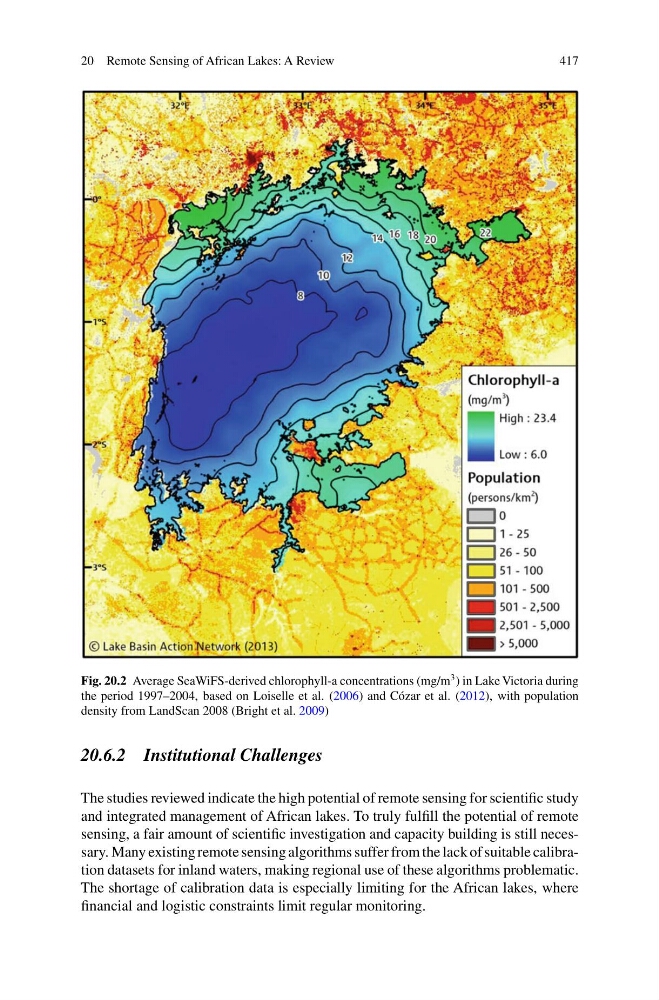
Fig. 20.2 Average SeaWiFS-derived chlorophyll-a concentrations (mg/m
3 ) in Lake Victoria during
the period 1997–2004, based on Loiselle et al. (2006) and Cózar et al. (2012), with population
density from LandScan 2008 (Bright et al. 2009)
20.6.2 Institutional Challenges
The studies reviewed indicate the high potential of remote sensing for scientific study
and integrated management of African lakes. To truly fulfill the potential of remote
sensing, a fair amount of scientific investigation and capacity building is still necessary. Many existing remote sensing algorithms suffer from the lack of suitable calibration datasets for inland waters, making regional use of these algorithms problematic.
The shortage of calibration data is especially limiting for the African lakes, where
financial and logistic constraints limit regular monitoring.
417
Fig. 20.2 Average SeaWiFS-derived chlorophyll-a concentrations (mg/m
3 ) in Lake Victoria during
the period 1997–2004, based on Loiselle et al. (2006) and Cózar et al. (2012), with population
density from LandScan 2008 (Bright et al. 2009)
20.6.2 Institutional Challenges
The studies reviewed indicate the high potential of remote sensing for scientific study
and integrated management of African lakes. To truly fulfill the potential of remote
sensing, a fair amount of scientific investigation and capacity building is still necessary. Many existing remote sensing algorithms suffer from the lack of suitable calibration datasets for inland waters, making regional use of these algorithms problematic.
The shortage of calibration data is especially limiting for the African lakes, where
financial and logistic constraints limit regular monitoring.