

120
T. Ohde and H. Siegel
7
-30
-25
-20
-15
-10
9
11
13
15
17
19
21
NW
Africa
Cape Verde
Islands
Dakar
coastal
open
station
GVAC
sea
Sal
area 2
area 1
latitude/°
longitude/°
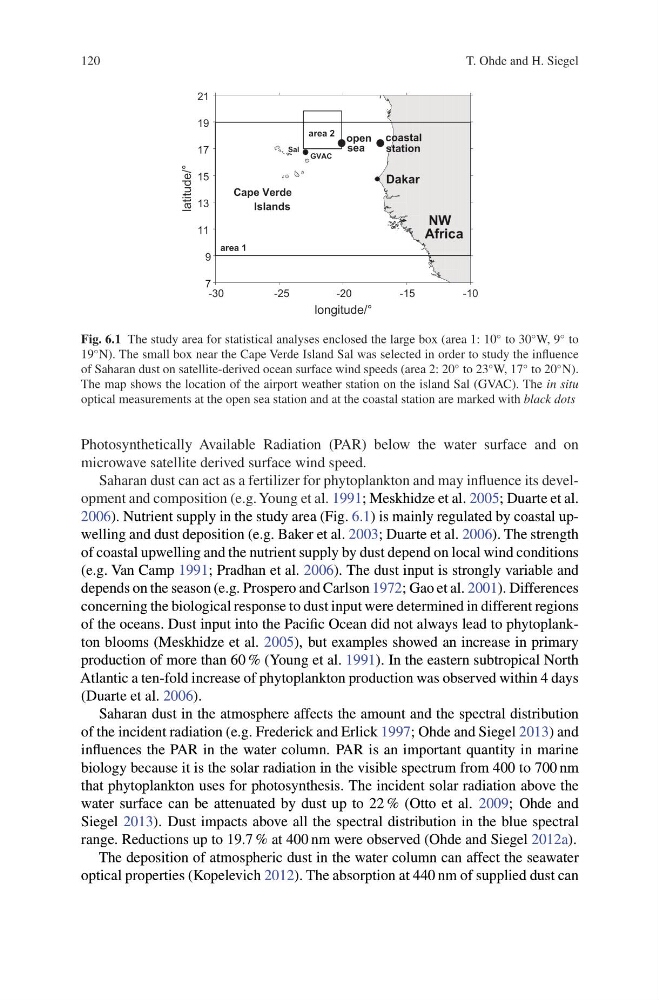
Fig. 6.1 The study area for statistical analyses enclosed the large box (area 1: 10
◦ to 30
◦ W, 9
◦ to
19
◦ N). The small box near the Cape Verde Island Sal was selected in order to study the influence
of Saharan dust on satellite-derived ocean surface wind speeds (area 2: 20
◦ to 23
◦ W, 17
◦ to 20
◦ N).
The map shows the location of the airport weather station on the island Sal (GVAC). The in situ
optical measurements at the open sea station and at the coastal station are marked with black dots
Photosynthetically Available Radiation (PAR) below the water surface and on
microwave satellite derived surface wind speed.
Saharan dust can act as a fertilizer for phytoplankton and may influence its development and composition (e.g. Young et al. 1991; Meskhidze et al. 2005; Duarte et al.
2006). Nutrient supply in the study area (Fig. 6.1) is mainly regulated by coastal upwelling and dust deposition (e.g. Baker et al. 2003; Duarte et al. 2006). The strength
of coastal upwelling and the nutrient supply by dust depend on local wind conditions
(e.g. Van Camp 1991; Pradhan et al. 2006). The dust input is strongly variable and
depends on the season (e.g. Prospero and Carlson 1972; Gao et al. 2001). Differences
concerning the biological response to dust input were determined in different regions
of the oceans. Dust input into the Pacific Ocean did not always lead to phytoplankton blooms (Meskhidze et al. 2005), but examples showed an increase in primary
production of more than 60 % (Young et al. 1991). In the eastern subtropical North
Atlantic a ten-fold increase of phytoplankton production was observed within 4 days
(Duarte et al. 2006).
Saharan dust in the atmosphere affects the amount and the spectral distribution
of the incident radiation (e.g. Frederick and Erlick 1997; Ohde and Siegel 2013) and
influences the PAR in the water column. PAR is an important quantity in marine
biology because it is the solar radiation in the visible spectrum from 400 to 700 nm
that phytoplankton uses for photosynthesis. The incident solar radiation above the
water surface can be attenuated by dust up to 22 % (Otto et al. 2009; Ohde and
Siegel 2013). Dust impacts above all the spectral distribution in the blue spectral
range. Reductions up to 19.7 % at 400 nm were observed (Ohde and Siegel 2012a).
The deposition of atmospheric dust in the water column can affect the seawater
optical properties (Kopelevich 2012). The absorption at 440 nm of supplied dust can
T. Ohde and H. Siegel
7
-30
-25
-20
-15
-10
9
11
13
15
17
19
21
NW
Africa
Cape Verde
Islands
Dakar
coastal
open
station
GVAC
sea
Sal
area 2
area 1
latitude/°
longitude/°
Fig. 6.1 The study area for statistical analyses enclosed the large box (area 1: 10
◦ to 30
◦ W, 9
◦ to
19
◦ N). The small box near the Cape Verde Island Sal was selected in order to study the influence
of Saharan dust on satellite-derived ocean surface wind speeds (area 2: 20
◦ to 23
◦ W, 17
◦ to 20
◦ N).
The map shows the location of the airport weather station on the island Sal (GVAC). The in situ
optical measurements at the open sea station and at the coastal station are marked with black dots
Photosynthetically Available Radiation (PAR) below the water surface and on
microwave satellite derived surface wind speed.
Saharan dust can act as a fertilizer for phytoplankton and may influence its development and composition (e.g. Young et al. 1991; Meskhidze et al. 2005; Duarte et al.
2006). Nutrient supply in the study area (Fig. 6.1) is mainly regulated by coastal upwelling and dust deposition (e.g. Baker et al. 2003; Duarte et al. 2006). The strength
of coastal upwelling and the nutrient supply by dust depend on local wind conditions
(e.g. Van Camp 1991; Pradhan et al. 2006). The dust input is strongly variable and
depends on the season (e.g. Prospero and Carlson 1972; Gao et al. 2001). Differences
concerning the biological response to dust input were determined in different regions
of the oceans. Dust input into the Pacific Ocean did not always lead to phytoplankton blooms (Meskhidze et al. 2005), but examples showed an increase in primary
production of more than 60 % (Young et al. 1991). In the eastern subtropical North
Atlantic a ten-fold increase of phytoplankton production was observed within 4 days
(Duarte et al. 2006).
Saharan dust in the atmosphere affects the amount and the spectral distribution
of the incident radiation (e.g. Frederick and Erlick 1997; Ohde and Siegel 2013) and
influences the PAR in the water column. PAR is an important quantity in marine
biology because it is the solar radiation in the visible spectrum from 400 to 700 nm
that phytoplankton uses for photosynthesis. The incident solar radiation above the
water surface can be attenuated by dust up to 22 % (Otto et al. 2009; Ohde and
Siegel 2013). Dust impacts above all the spectral distribution in the blue spectral
range. Reductions up to 19.7 % at 400 nm were observed (Ohde and Siegel 2012a).
The deposition of atmospheric dust in the water column can affect the seawater
optical properties (Kopelevich 2012). The absorption at 440 nm of supplied dust can