

286
F. Asche et al.
If there is no negative feedback on expected profitability, however, it is unlikely
that the industry will internalise detrimental environmental effects. In this case the
government has to regulate the industry if the effects are to be avoided. The rapid
growth of global aquaculture has represented an environmental challenge for
authorities. First, knowledge about the environmental effects of aquaculture has
been limited, or at worst lacking. This has called for extensive research to identify
causes and effects. Second, in many places local governments do not have the
resources to implement and enforce regulations. Finally, it is desirable with regulations that, on the one hand, are efficient in addressing the externalities and, on the
other, allow the aquaculture industry to be economically sustainable.
The Fishmeal Trap
The ‘fishmeal trap’ is the name of a hypothesis that claims that aquaculture is environmental degrading because it leads to increased fishing effort to satisfy increased
demand for feed (Naylor et al. 2000). Moreover, it follows that the availability of
marine feed will put a limit to how much the aquaculture sector can produce. While
the fishmeal trap is mentioned in relation to aquaculture in general, it is clear that
it is an issue only in some forms of finfish farming, and does not apply to farming
of sea weeds and shellfish. Furthermore, it will only apply to species that are fed
with feed using marine inputs. This is a substantial part of the sector, as this is the
case not only for carnivorous species like salmon and sea bass, but also for omni- or
herbivorous species because the use of feed increases the growth rate. There are,
however, some conditions that must be fulfilled for the fishmeal trap to occur
(Asche and Tveterås 2004).
0
50
100
150
200
250
300
350
400
450
500
1 9 8 0
1 9 8 2
1 9 8 4
1 9 8 6
1 9 8 8
1 9 9 0
1 9 9 2 1 9 9 4 1 9 9 6 1 9 9 8 2 0 0 0 2 0 0 2
1000 tons
0
10000
20000
30000
40000
50000
60000
kilograms
Salmon production
Antibiotics
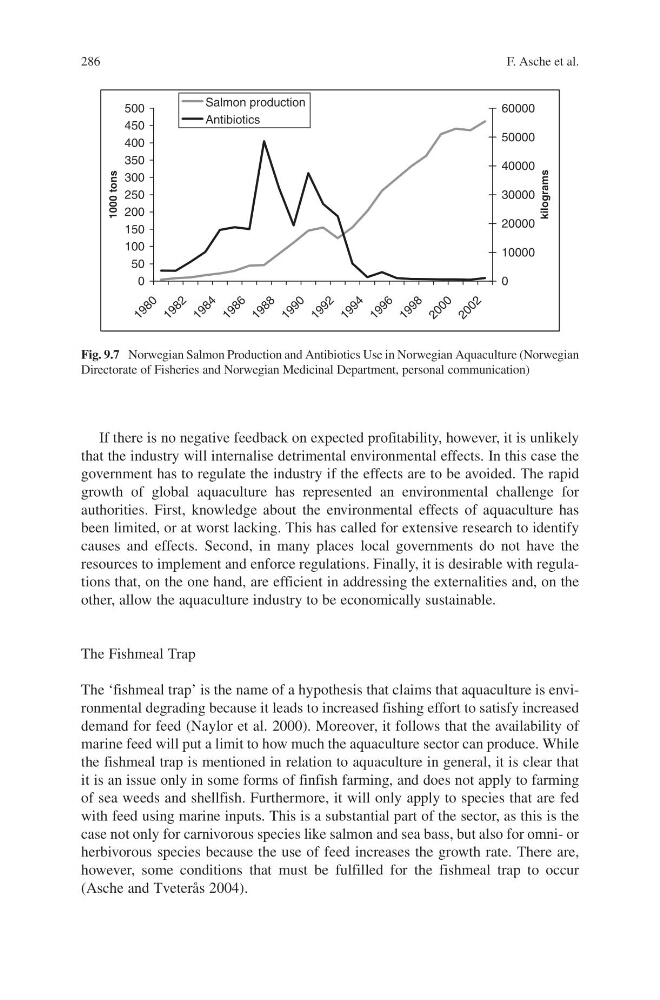
Fig. 9.7 Norwegian Salmon Production and Antibiotics Use in Norwegian Aquaculture (Norwegian
Directorate of Fisheries and Norwegian Medicinal Department, personal communication)
F. Asche et al.
If there is no negative feedback on expected profitability, however, it is unlikely
that the industry will internalise detrimental environmental effects. In this case the
government has to regulate the industry if the effects are to be avoided. The rapid
growth of global aquaculture has represented an environmental challenge for
authorities. First, knowledge about the environmental effects of aquaculture has
been limited, or at worst lacking. This has called for extensive research to identify
causes and effects. Second, in many places local governments do not have the
resources to implement and enforce regulations. Finally, it is desirable with regulations that, on the one hand, are efficient in addressing the externalities and, on the
other, allow the aquaculture industry to be economically sustainable.
The Fishmeal Trap
The ‘fishmeal trap’ is the name of a hypothesis that claims that aquaculture is environmental degrading because it leads to increased fishing effort to satisfy increased
demand for feed (Naylor et al. 2000). Moreover, it follows that the availability of
marine feed will put a limit to how much the aquaculture sector can produce. While
the fishmeal trap is mentioned in relation to aquaculture in general, it is clear that
it is an issue only in some forms of finfish farming, and does not apply to farming
of sea weeds and shellfish. Furthermore, it will only apply to species that are fed
with feed using marine inputs. This is a substantial part of the sector, as this is the
case not only for carnivorous species like salmon and sea bass, but also for omni- or
herbivorous species because the use of feed increases the growth rate. There are,
however, some conditions that must be fulfilled for the fishmeal trap to occur
(Asche and Tveterås 2004).
0
50
100
150
200
250
300
350
400
450
500
1 9 8 0
1 9 8 2
1 9 8 4
1 9 8 6
1 9 8 8
1 9 9 0
1 9 9 2 1 9 9 4 1 9 9 6 1 9 9 8 2 0 0 0 2 0 0 2
1000 tons
0
10000
20000
30000
40000
50000
60000
kilograms
Salmon production
Antibiotics
Fig. 9.7 Norwegian Salmon Production and Antibiotics Use in Norwegian Aquaculture (Norwegian
Directorate of Fisheries and Norwegian Medicinal Department, personal communication)