

280
F. Asche et al.
growth for the fish farm suppliers. This distinction is often missed and the productivity growth for the farmers as well as for their suppliers is somewhat imprecisely
referred to as productivity growth for the whole industry. In addition, while the
focus is on the production process, productivity gains in the distribution chain to
the retail outlet are equally important. In the end, consumers are primarily interested
in the final price for a product of any quality, and whether a price reduction is due
to better feed or better logistics is of little importance.
The most important input in salmon farming is the salmon feed, which represented around 52% of operating costs during the period 1985–2004. Other inputs are
smolts (15% cost share), capital (5%), labour (9%), insurance (2%) and materials
(17%). The share of feed has been increasing (from about 25% in the mid-1980s)
making the production process more feed intensive. As feed is the factor most
closely related to the production volume, this development indicates better exploitation of the capital and labour employed at each farm. This can be explained to a large
extent by increased production on each farm. Several studies using data from the
1980s found that substitution was possible between feed, capital and labour. For
instance, hand feeding was at the time more efficient than machine feeding.
However, with the increased cost share of feed these substitution possibilities have
been reduced. Guttormsen (2002) suggests that they have largely disappeared in the
1990s. This implies that salmon production now, after investments in capital equipment have been made, can be characterised as a technology with a close to fixed relative factor share in the production process. The production process then becomes one
of converting a cheaper feed into a more desirable product for the consumers. So,
even if the substitution possibilities between capital, labour and feed are limited, the
farmers can substitute between different types of feed. Currently, about 35% of the
feed is fishmeal which has been partly substituted with vegetable meals. About 40%
of the feed is oil, of which fish oil currently makes up about two-thirds.
0
10
20
30
40
50
60
70
80
90
1 9 8 5
1 9 8 7
1 9 8 9
1 9 9 1
1 9 9 3
1 9 9 5
1 9 9 7
1 9 9 9
2 0 0 1
2 0 0 3
NOK/kg
Price
Cost
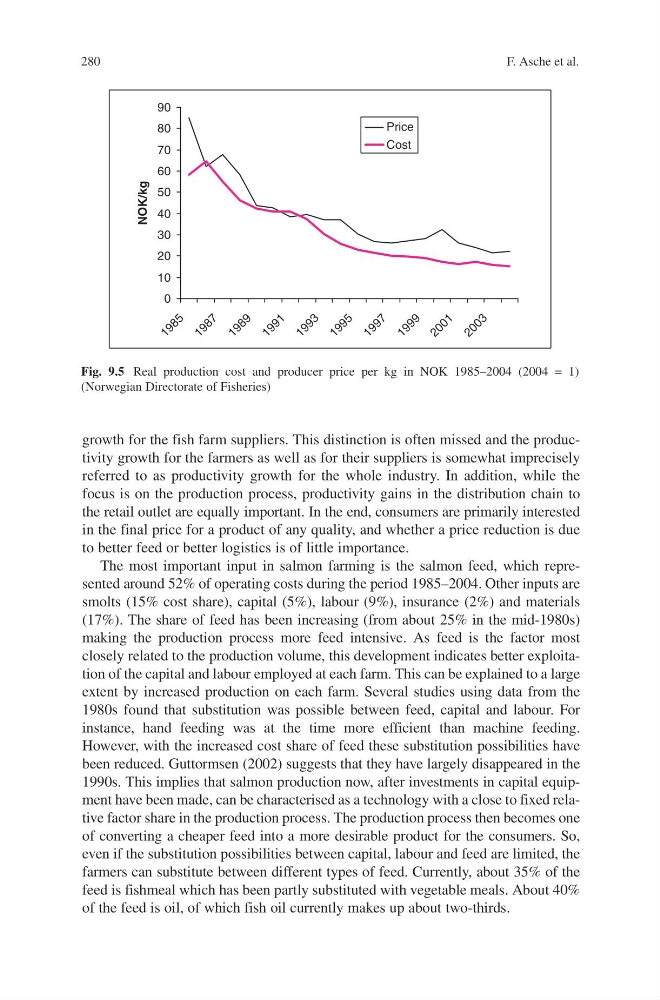
Fig. 9.5 Real production cost and producer price per kg in NOK 1985–2004 (2004 = 1)
(Norwegian Directorate of Fisheries)
F. Asche et al.
growth for the fish farm suppliers. This distinction is often missed and the productivity growth for the farmers as well as for their suppliers is somewhat imprecisely
referred to as productivity growth for the whole industry. In addition, while the
focus is on the production process, productivity gains in the distribution chain to
the retail outlet are equally important. In the end, consumers are primarily interested
in the final price for a product of any quality, and whether a price reduction is due
to better feed or better logistics is of little importance.
The most important input in salmon farming is the salmon feed, which represented around 52% of operating costs during the period 1985–2004. Other inputs are
smolts (15% cost share), capital (5%), labour (9%), insurance (2%) and materials
(17%). The share of feed has been increasing (from about 25% in the mid-1980s)
making the production process more feed intensive. As feed is the factor most
closely related to the production volume, this development indicates better exploitation of the capital and labour employed at each farm. This can be explained to a large
extent by increased production on each farm. Several studies using data from the
1980s found that substitution was possible between feed, capital and labour. For
instance, hand feeding was at the time more efficient than machine feeding.
However, with the increased cost share of feed these substitution possibilities have
been reduced. Guttormsen (2002) suggests that they have largely disappeared in the
1990s. This implies that salmon production now, after investments in capital equipment have been made, can be characterised as a technology with a close to fixed relative factor share in the production process. The production process then becomes one
of converting a cheaper feed into a more desirable product for the consumers. So,
even if the substitution possibilities between capital, labour and feed are limited, the
farmers can substitute between different types of feed. Currently, about 35% of the
feed is fishmeal which has been partly substituted with vegetable meals. About 40%
of the feed is oil, of which fish oil currently makes up about two-thirds.
0
10
20
30
40
50
60
70
80
90
1 9 8 5
1 9 8 7
1 9 8 9
1 9 9 1
1 9 9 3
1 9 9 5
1 9 9 7
1 9 9 9
2 0 0 1
2 0 0 3
NOK/kg
Price
Cost
Fig. 9.5 Real production cost and producer price per kg in NOK 1985–2004 (2004 = 1)
(Norwegian Directorate of Fisheries)