

66
P.P. Molloy et al.
that any given female will fi nd a suitable mate. As far as we are aware, these
predictions remain untested in aggregating fi sh species. Ultimately, if females are
better able to compare mates and select partners of higher quality in larger groups,
both female and offspring fi tness should increase with group size, although realistically, this would be impossible to measure.
Females spawning in aggregations could save time when choosing a mate by
copying other females in their choice of spawning partner; given the relatively narrow
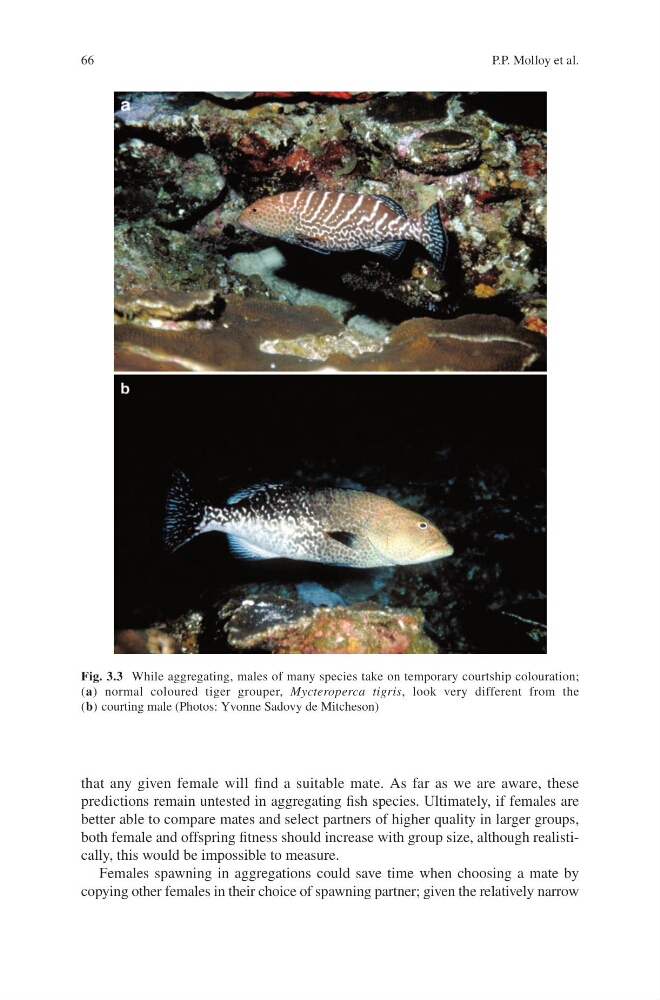
Fig. 3.3 While aggregating, males of many species take on temporary courtship colouration;
( a ) normal coloured tiger grouper, Mycteroperca tigris , look very different from the
( b ) courting male (Photos: Yvonne Sadovy de Mitcheson)
P.P. Molloy et al.
that any given female will fi nd a suitable mate. As far as we are aware, these
predictions remain untested in aggregating fi sh species. Ultimately, if females are
better able to compare mates and select partners of higher quality in larger groups,
both female and offspring fi tness should increase with group size, although realistically, this would be impossible to measure.
Females spawning in aggregations could save time when choosing a mate by
copying other females in their choice of spawning partner; given the relatively narrow
Fig. 3.3 While aggregating, males of many species take on temporary courtship colouration;
( a ) normal coloured tiger grouper, Mycteroperca tigris , look very different from the
( b ) courting male (Photos: Yvonne Sadovy de Mitcheson)